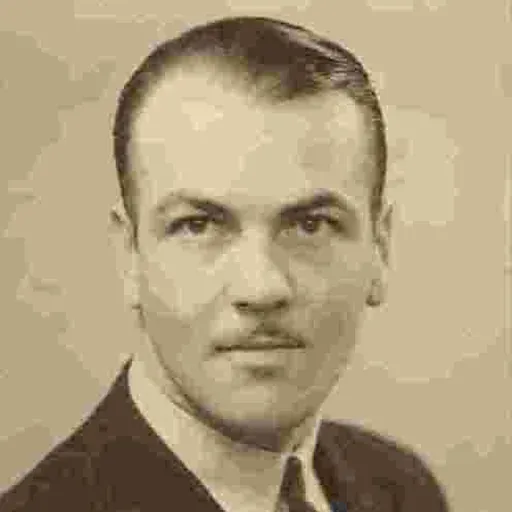
About Adrian Francis Laws
Lived 1912 – 1940 (aged 28). Adrian Francis Laws was a British flying ace.
Adrian Francis Laws, (10 August 1912 – 30 September 1940) was a Royal Air Force pilot and flying ace during the Battle of Britain. He was killed on 30 September 1940 after colliding with another Spitfire while training new pilots.
Early life Laws was born in East Dereham, Norfolk, on 10 August 1912 and attended the County Primary School at Wells-next-the-Sea, Norfolk until the age of 14. His parents ran a sweet shop on Staithe Street. His daughter, Susan Mary Laws, was born two weeks after his death. He learned to shoot using a .410 shotgun to hunt rabbits in the fields around Wells-next-the-sea with his classmate Allan Tuck, who named his first son Adrian Francis in memory of his friend.
Military career Aged 19, Laws enlisted with the Royal Air Force (RAF) in 1931 as an aircrafthand and trained as a storekeeper. He applied and was accepted for pilot training and began flying at No. 4 Flight Training School at RAF Abu Sueir in July 1935. He joined No. 64 Squadron RAF at Ismailia on 20 April 1936, as a sergeant pilot. Equipped with two-seater Demons they were to return to the United Kingdom in September 1936.
By late 1939 Laws was flying Blenheims out of RAF Church Fenton in the Leconfield sector. No. 64 Squadron was then converted to the new Spitfire Mark I, which a nearly promoted flight sergeant Laws then flew.
Battle of Britain 12 June 1940 Laws first success came on 12 June 1940 while participating in the hunt and destruction of what appeared to be a lone He 111. The Battle of Britain was still in its early days and this is reflected by the length and detail of the combat reports. Later on in the battle a more sanguine Laws is to comment "closed into attack and usual dog-fight ensued". But here, both he and Gilbert describe every twist and turn of the engagement.
The incident also shows the deadly effect of radar and observer tracking. The lone bomber trying to sneak out at zero feet was not allowed to escape. Laws and Gilbert, supposed to fly in section, actually left the ground ten minutes apart. So it was Gilbert who found the raider first and emptied his guns into the enemy aircraft. One engine was damaged and one gunner was killed or injured.
A short time later the He 111 was to become the object of Laws' attention. He hounded the damaged bomber to wave-top height with two passes. While two other Spitfires arrived to take shots at what was now a wallowing enemy, Laws emptied his guns and watched the bomber settle on the water. His reluctance to leave his first kill is evident as he describes circling the plane and seeing the crew inflating their dinghy.
29 July 1940 By this time No. 64 Squadron were being led by Donald MacDonell, a man who would go on to have a distinguished RAF career. He had been heavily involved in the fighting over the convoys on 25 July. He had bagged a Ju 87 Stuka before he himself was badly shot up in combat with a Ju 88 off Dover. MacDonnell however was unhurt and managed to land safely. MacDonell, official head of the Glengarry clan, was to say about his squadron's pilots "...it's like holding a team of wild horses when there are Germans near".
On this day the pilots of No. 64 Squadron found their action amongst the German fighters when they engaged a flight of Messerschmitt Bf 109s over St. Margaret's Bay at eight o'clock in the morning and Laws downed an Bf 109.
11 August 1940 The German's planned "Eagle Day" was cancelled for the second day running due to the cloudy weather that prevailed. In place of this operation the Luftwaffe mounted a "free chase" over Sussex. The formation consisted of more than 30 fighters and the German plan was to draw the RAF interceptors away from bombing raids going into Weymouth and Portland. Four squadrons took the bait and No. 64 Squadron was vectored to intercept the force as it started to make its way home.
The rear section was the first to spot the enemy who had a height advantage. It seems the squadron had found about half the retreating force of Bf 109s. There then followed a strange processional attack by the Germans which overshot the 8 Spitfires of No. 64 Squadron who then pounced to their own attack.
The Bf 109 that Laws attacked was on the tail of Blue 1. Assuming the Messerschmitt had some ammunition left, the pilot of Blue 1 had reason to be thankful. It was Pilot Officer Gilbert, who was destined to survive the war. The cloudy conditions meant that none of the aircraft engaged could be confirmed as destroyed.
13 August 1940 – Eagle Day Bomber attacks were directed towards British airfields on this day but a combination of fighter resistance and thick clouds served to foil them.
Death Law's fatal accident was witnessed by American pilot Art Donahue. His diaries, later published as Tally-Ho! – A Yankee in a Spitfire noted:
Later, Donahue writes:
The accident The character described as "Nels" in Donahue's account was in fact Sergeant Frederick Fenton Vinyard. This 24-year-old from Birmingham had joined 64 Squadron on 15 September. Laws was flying Spitfire P9564 and Vinyard piloted K9805. Both were acting as a target formation for a section of Spitfires who were carrying out practise fighter attacks. Who were the other pilots is not recorded, but it is known that Sergeant Hopgood, Sergeant Limpenny and Pilot Officer Stanley were new arrivals at 64 Squadron at the end of September. They may well have made up the "attacking section".
Laws and Vinyard were flying at an altitude of when the accident occurred at 10.45. The following is from an Air Ministry and sources quoted by the Ministry were the RAF casualty index and the P file held in archive at Hayes:
Exactly how the accident happened is unknown. The following is from another Air Ministry letter written to the author.
Vinyard's other two section members on that day were Flying Officer A. J. A. Laing and Pilot Officer Arthur Gerald Donahue.
His body was buried in Wells-next-the-sea Cemetery.
Don’t just read it —
keep it.
Full-length biographies made to live with: read them, listen on the way to work, watch them tonight.
- E-book
- Audio
- Video
Instant download · yours to keep · every purchase keeps this site free
Important facts
People in Adrian Francis Laws's life
Named in this biography and alive at the same time



Related people
Same field, nearest in time

Contemporaries
People whose lives overlapped Adrian Francis Laws's






Frequently asked questions
Who was Adrian Francis Laws?
RAF Pilot in WW2
When was Adrian Francis Laws born?
Adrian Francis Laws was born on 10 August 1912 in Dereham.
When did Adrian Francis Laws die?
Adrian Francis Laws died on 30 September 1940 in Wells-next-the-Sea.
What was Adrian Francis Laws's occupation?
Adrian Francis Laws was a flying ace.
What nationality was Adrian Francis Laws?
Adrian Francis Laws was British.
Sources & further reading
· Wikipedia: Adrian Francis Laws
· DBpedia: Adrian Francis Laws
Cite this page
APA: Biography.guide. (2026). Adrian Francis Laws. https://biography.guide/adrian-francis-laws/
MLA: "Adrian Francis Laws." Biography.guide, https://biography.guide/adrian-francis-laws/.
Chicago: "Adrian Francis Laws." Biography.guide. https://biography.guide/adrian-francis-laws/.
Data last updated: 2026-09-20 · Spot an error? Report a correction.
Portrait: Wikimedia Commons · author & licence
Page generated 2026-09-27 04:58 UTC