
About Adrian Cole
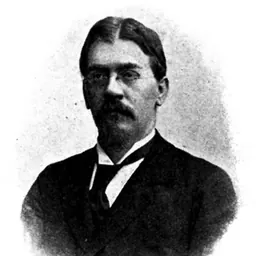
Lived 1895 – 1966 (aged 70). Adrian Cole was an Australian aircraft pilot and board of directors.
Air Vice Marshal Adrian Lindley Trevor Cole, CBE, DSO, MC, DFC (19 June 1895 – 14 February 1966) was a senior commander in the Royal Australian Air Force (RAAF). Joining the army at the outbreak of World War I, he transferred to the Australian Flying Corps in 1916 and flew with No. 1 Squadron in the Middle East and No. 2 Squadron on the Western Front. He became an ace, credited with victories over ten enemy aircraft, and earned the Military Cross and the Distinguished Flying Cross. In 1921, he was a founding member of the RAAF.
"King" Cole rose to the position of Air Member for Supply in 1933 and gained promotion to group captain in 1935. The following year he was appointed the first commanding officer of Headquarters RAAF Station Richmond. During World War II, he led North-Western Area Command in Darwin, Northern Territory, and held a series of overseas posts in North Africa, England, Northern Ireland, and Ceylon. As Forward Air Controller during the Dieppe Raid in 1942, he was wounded in action and awarded the Distinguished Service Order. Cole served on corporate boards of directors following his retirement from the RAAF in 1946. He died in 1966 at the age of seventy.
Early life and World War I Adrian Cole was born in Glen Iris, a suburb of Melbourne, to barrister and doctor Robert Cole and his wife Helen (née Hake). He was educated at Geelong Grammar School and Melbourne Grammar School, where he was a member of the cadet corps. When World War I broke out in August 1914, Cole gained a commission in the Australian Military Forces, serving with the 55th (Collingwood) Infantry Regiment. He resigned his commission to join the Australian Imperial Force on 28 January 1916, intending to become a pilot in the Australian Flying Corps.
Middle East
Posted to No. 1 Squadron (also known until 1918 as No. 67 Squadron, Royal Flying Corps), Cole departed Melbourne aboard HMAT A67 Orsova on 16 March 1916, bound for Egypt. He was commissioned a second lieutenant in June and began his pilot training in August. He took part in an early example of Allied air-sea cooperation on 25 February, directing French naval fire against the coastal town of Jaffa by radio from his B.E.2 biplane. On 20 April, Cole and fellow squadron member Lieutenant Roy Maxwell Drummond attacked six enemy aircraft that were threatening to bomb Allied cavalry, scattering their formation and chasing them back to their own lines. Both airmen were awarded the Military Cross for their actions; Cole's citation was published in a supplement to the London Gazette on 16 August 1917:
The day after the action that earned him the Military Cross, Cole was flying a Martinsyde G.100 "Elephant" over Tel el Sheria when he was hit by ground fire and forced to crash land behind enemy lines; after setting his aircraft alight he was picked up and rescued by Captain Richard Williams. On 26 June, following an eight-plane raid on Turkish Fourth Army headquarters in Jerusalem, Cole and another pilot suffered engine seizures while undertaking a similar rescue of a downed comrade; all three airmen were forced to walk through no man's land before being picked up by an Australian Light Horse patrol.
Western Front
Promoted to captain in August 1917, Cole was posted to France as a flight commander with No. 2 Squadron AFC (also known until 1918 as No. 68 Squadron RFC). Flying S.E.5 fighters on the Western Front, he was credited with destroying or sending out of control ten enemy aircraft between July and October 1918, making him an ace. In a single sortie over the Lys Valley on 19 August, Cole shot down two German fighters and narrowly avoided being shot down himself immediately afterwards, when he was attacked by five Fokker Triplanes that were being pursued by Allied Bristol Fighters. On 24 September, he led into battle a patrol of fifteen S.E.5s that destroyed or damaged eight German fighters over Haubourdin and Pérenchies, claiming one Pfalz D.III for himself.
Cole was awarded the Distinguished Flying Cross for his actions on 7 October 1918, when he led No. 2 Squadron through "a tornado of anti-aircraft fire" in a major assault on transport infrastructure in Lille. During the raid he successfully bombed a goods engine and a troop train, and put several anti-aircraft batteries out of action, before leading his formation back to base at low level. The announcement and accompanying citation for his decoration was gazetted on 8 February 1919:
Between the wars
Returning to Australia in February 1919, He transferred to the Royal Australian Air Force as a flight lieutenant in March 1921, becoming one of its original twenty-one officers. On 30 November, he married his cousin Katherine Cole in St Peter's Chapel at Melbourne Grammar School; the couple had two sons and two daughters. returning to Australia in 1925 to become Director of Personnel and Training. Promoted to wing commander, he was in charge of No. 1 Flying Training School (No. 1 FTS) at RAAF Station Point Cook, Victoria, from 1926 to 1929. The first Citizens Air Force (reserve) pilots' course took place during Cole's tenure at No. 1 FTS; although twenty-four accidents occurred, injuries were minor, leading him to remark at the graduation ceremony that the students were either made of India rubber or had learned how to crash "moderately safely".
Cole held command of RAAF Station Laverton from 1929 until his appointment as Air Member for Supply (AMS) in January 1933. In March 1932, Cole accepted an invitation from the Lord Mayor of Melbourne to serve as Deputy Chairman of the 1934 MacRobertson Air Race from England to Australia, to celebrate Melbourne's Centenary. Provision of the RAAF's radio facilities and technicians was considered a boon for contestants, though Cole later recorded that his role involved "twenty months' hard work, without pay ... with loads of scurrilous and other criticism". Cole was appointed a Commander of the Order of the British Empire in the Coronation Honours of 11 May 1937, and attended the Imperial Defence College in London the following year.
World War II As part of the RAAF's reorganisation following the outbreak of World War II in September 1939, No. 2 Group was formed in Sydney on 20 November, with Cole in command. The group controlled Air Force units in New South Wales. Cole was raised to temporary air commodore in December, and took charge of Central Area Command, which supplanted No. 2 Group, when it was established in the new year. In September 1941, he was sent to North Africa as Officer Commanding No. 235 Wing RAF of the Desert Air Force, where he helped establish a new anti-submarine warfare unit, No. 459 Squadron RAAF. Posted to England with Headquarters No. 11 Group in May 1942, he served as Forward Air Controller of the Dieppe Raid on 19 August, responsible for co-ordinating Allied air cover off the French coast aboard HMS Calpe. In doing so, he was seriously wounded in the jaw and upper body when German fighters strafed the ship; he required plastic surgery and spent several weeks recuperating. the announcement being published in a supplement to the London Gazette on 2 October 1942. The same month, he was made Air Officer Commanding (AOC) RAF Northern Ireland, with the acting rank of air vice marshal,
In May 1943, Cole returned to Australia, taking over as AOC North-Western Area Command from Air Commodore Frank Bladin in July. Based in Darwin, Northern Territory, he was responsible for regional air defence, reconnaissance, protection of Allied shipping and, later, offensive operations in the New Guinea campaign. Cole found the command in "good shape" but considered its air defence capability inadequate, recommending augmentation by long-range fighters such as the P-38 Lightning. He nevertheless had to make do with the three squadrons of Spitfires already on his strength, and the possibility of calling on the USAAF's Fifth Air Force for reinforcements as necessary. In May, he directed bombing from North-Western Area on Surabaya as part of Operation Transom.
Cole handed over North-Western Area to Air Commodore Alan Charlesworth in September 1944. He took up an appointment as Air Member for Personnel (AMP) in October, Under pressure from the Federal government, Jones dismissed Cole from the position of AMP and posted him to Ceylon in January 1945 as RAAF Liaison Officer to South East Asia Command. Cole, for his part, later wrote to the Melbourne Herald that he considered the RAAF's administration during World War II to be "weak", and that as a consequence he felt "a lot happier to serve most of the War with the Royal Air Force".
Ranked substantive air commodore and honorary air vice marshal, He resented being forcibly retired, and stood for election as the Liberal Party candidate for Drakeford's seat, the Victorian Division of Maribyrnong, in the federal election that year. Cole stated that his candidacy was "an endeavour to bring some sense and stability to Government administration" but was unsuccessful, and Drakeford retained the seat. Cole subsequently served as a director with Pacific Insurance and Guinea Airways. He died in Melbourne of chronic respiratory disease on 14 February 1966. Survived by his wife and four children, he was buried in Camperdown Cemetery, Victoria, following a funeral at RAAF Base Laverton. His decorations were held by the Naval and Military Club, Melbourne, where he had been a long-standing member. In July 2009, following the club's dissolution, the medals were to be auctioned along with other memorabilia. This action was challenged by Cole's family, who argued that his decorations were only on loan to the club, and should be donated to the Australian War Memorial (AWM).
Don’t just read it —
keep it.
Full-length biographies made to live with: read them, listen on the way to work, watch them tonight.
- E-book
- Audio
- Video
Instant download · yours to keep · every purchase keeps this site free
Important facts
People in Adrian Cole's life
Named in this biography and alive at the same time




Related people
Same field, nearest in time

Contemporaries
People whose lives overlapped Adrian Cole's

Frequently asked questions
Who was Adrian Cole?
RAAF senior commander (1895-1966)
When was Adrian Cole born?
Adrian Cole was born on 19 June 1895 in Glen Iris.
When did Adrian Cole die?
Adrian Cole died on 14 February 1966 in Melbourne.
What was Adrian Cole's occupation?
Adrian Cole was an aircraft pilot and board of directors.
What nationality was Adrian Cole?
Adrian Cole was Australian.
Sources & further reading
· DBpedia: Adrian Cole (RAAF officer)
Cite this page
APA: Biography.guide. (2026). Adrian Cole. https://biography.guide/adrian-cole/
MLA: "Adrian Cole." Biography.guide, https://biography.guide/adrian-cole/.
Chicago: "Adrian Cole." Biography.guide. https://biography.guide/adrian-cole/.
Data last updated: 2026-09-20 · Spot an error? Report a correction.
Page generated 2026-09-27 05:28 UTC