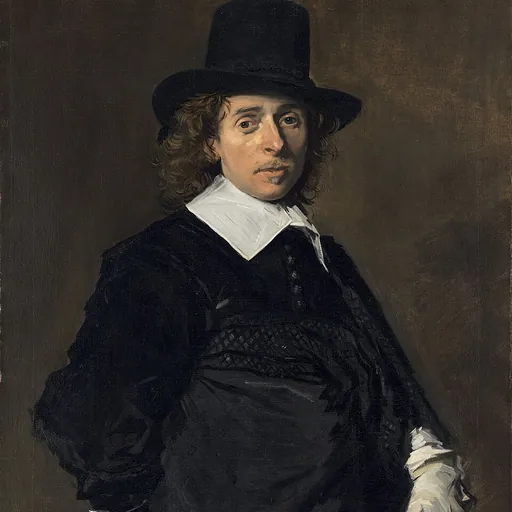
About Adriaen van Ostade
Lived 1610 – 1685 (aged 74). Adriaen van Ostade was a Dutch painter, engraver, artist, graphic artist, visual artist and etcher.
Adriaen van Ostade (baptized as Adriaen Jansz Hendricx 10 December 1610 – buried 2 May 1685) was a Dutch Golden Age painter of genre works, showing the everyday life of ordinary men and women.
Life
According to Arnold Houbraken, he and his brother were pupils of Frans Hals and like him, spent most of their lives in Haarlem. He thought they were "Lubekkers" by birth, though this has since found to be false. He was the eldest son of Jan Hendricx Ostade, a weaver from the hamlet of Ostade near Eindhoven. Although Adriaen and his brother Isaack were born in Haarlem, they adopted the name "van Ostade" as painters. According to the RKD, he became a pupil in 1627 of the portrait painter Frans Hals, at that time the master of Jan Miense Molenaer. In 1632, he is registered in Utrecht (where, like Jacob Duck, he was probably influenced by the village scenes of Joost Cornelisz Droochsloot, which were popular in his day), but in 1634 he was back in Haarlem where he joined the Haarlem Guild of St. Luke. He opened a workshop and took on pupils. His notable pupils were Cornelis Pietersz Bega, Cornelis Dusart, Jan de Groot, Frans de Jongh, Michiel van Musscher, Isaac van Ostade, Evert Oudendijck, and Jan Steen. In the rampjaar (1672), he packed up his goods with the intention of fleeing to Lübeck, which is why Houbraken felt he had family there. a mother tending her cradled child, her husband sitting nearby, beside a great chimney; the darkness of a country loft dimly illumined by a sunbeam shining on the casement. One might think the painter intended to depict the Nativity; but there is nothing holy in the surroundings, nothing attractive, indeed, except the wonderful Rembrandtesque transparency, the brownish tone, and the admirable keeping of the minutest parts. Ostade was more at home in a similar effect applied to the commonplace incident of the Slaughtering of a Pig, one of the masterpieces of 1643, and once in the Gsell collection. In this and similar subjects of the previous and succeeding years, he returned to the homely themes in which his power and wonderful observation had made him a master. He does not seem to have gone back to gospel illustrations until 1667, when he produced an admirable Nativity which is only surpassed in arrangement and colour by Rembrandt's Carpenter's Family at the Louvre, or by the Woodcutter and Children in the gallery of Cassel. Almost innumerable are the more familiar themes to which he devoted his brush during this interval: from small single figures, representing smokers or drinkers, to allegories of the five senses (Hermitage and Brunswick galleries), half-lengths of fishmongers and bakers, cottage brawls, scenes of gambling, itinerant players and quacks, and ninepins players in the open air.
The humor in some of these pieces is contagious, as in the Tavern Scene of the La Caze Collection (Louvre, 1653). His art may be studied in the large series of dated pieces which adorn every European capital from Saint Petersburg to London. Buckingham Palace has a large number, and many a good specimen lies hidden in private collections in England. Should we select a few as peculiarly worthy of attention, we might point to the Rustics in a Tavern of 1662 at The Hague, the Village School of the same year at the Louvre, the Tavern Court-yard of 1670 at Cassel, the Sportsmen's Rest of 1671 at Amsterdam, and the Fiddler and his Audience of 1673 at the Hague.
At Amsterdam we have the likeness of a painter, sitting with his back to the spectator, at his easel. The colour-grinder is at work in a corner, a pupil prepares a palette, and a black dog sleeps on the ground. A replica of this picture, with the date 1666, is in the Dresden gallery. Both depictions are supposed to represent Ostade himself, but unfortunately we see the artist's back and not his face. In an etching (Bartsch, 32), the painter shows himself in profile at work on a canvas. Two of his latest dated works, the Village Street and the Skittle Players, noteworthy items in the Ashburton and Ellesmere collections, were executed in 1676 without any sign of declining powers. He died in 1685 in Haarlem.
Legacy The number of Ostade's pictures was given by the art dealer John Smith at 385, but by Hofstede de Groot (1910) at over 900. At his death, the stock of his unsold pieces was over 200. His engraved plates were put up to auction with the pictures. Fifty etched plates, most of them dated 1647–1648, were disposed of in 1686. there are 220 of his pictures in public and private collections, of which 104 are signed and dated, while seventeen are signed with the name but not with the date. The prices which Ostade received are not known; but pictures which were worth £40 in 1750 were worth £1,000 a century later, and Earl Dudley gave £4,120 for a cottage interior in 1876.
The signatures of Ostade vary at different periods, but the first two letters are generally interlaced. Up to 1635, Ostade writes himself Ostaden, e.g. in the Bagpiper of 1635 in the Liechtenstein collection at Vienna. Later on, he uses the long s (ſ), and occasionally he signs in capital letters. His pupils are his own brother Isaack, Cornelis Bega, Cornelis Dusart, and Richard Brakenburg.
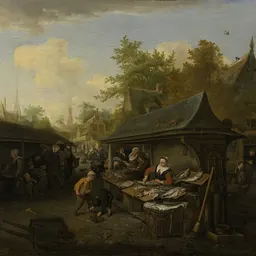
List of works Barber Extracting a Tooth The Fish Market Customers Conversing in a Tavern
Don’t just read it —
keep it.
Full-length biographies made to live with: read them, listen on the way to work, watch them tonight.
- E-book
- Audio
- Video
Instant download · yours to keep · every purchase keeps this site free
Important facts
more
Ariaen van Ostade, Adriaan van Ostade, Adriaen Van Ostade, Adriaen Jansz. Van Ostade, Adriaen von Ostade, Ad. Van Ostade, Adr. v Oostaade, A. v Ostade, A. Ostaade, Adriaan v. Oostade, Adr. Ostade, Adriaen van Oostade, Ad. V... Ostade, Adriaen Jansz van Ostade, A:v:oostade, A. V Ostaade, von alten Ostade, Adrian von Ostade, A Ostade, A. v. Oostade, AdrPeople in Adriaen van Ostade's life
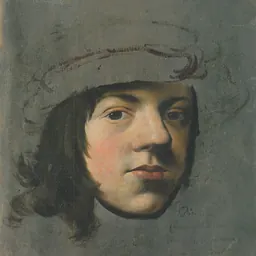
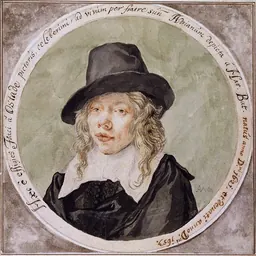
Named in this biography and alive at the same time


Related people
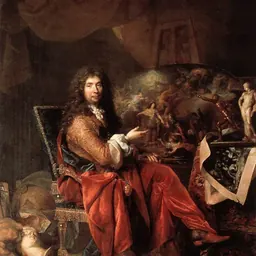
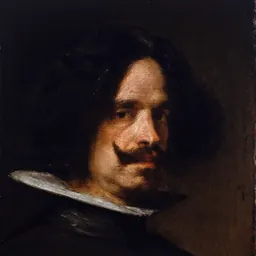
Same field, nearest in time

Contemporaries
People whose lives overlapped Adriaen van Ostade's






Frequently asked questions
Who was Adriaen van Ostade?
Dutch painter (1610–1685)
When was Adriaen van Ostade born?
Adriaen van Ostade was born on 10 December 1610 in Haarlem.
When did Adriaen van Ostade die?
Adriaen van Ostade died on 2 May 1685 in Haarlem.
What was Adriaen van Ostade's occupation?
Adriaen van Ostade was a painter, engraver, artist, graphic artist, visual artist and etcher.
What nationality was Adriaen van Ostade?
Adriaen van Ostade was Dutch.
Sources & further reading
· Wikipedia: Adriaen van Ostade
Cite this page
APA: Biography.guide. (2026). Adriaen van Ostade. https://biography.guide/adriaen-van-ostade/
MLA: "Adriaen van Ostade." Biography.guide, https://biography.guide/adriaen-van-ostade/.
Chicago: "Adriaen van Ostade." Biography.guide. https://biography.guide/adriaen-van-ostade/.
Data last updated: 2026-09-21 · Spot an error? Report a correction.
Portrait: Wikimedia Commons · author & licence
Page generated 2026-09-27 04:59 UTC