
Adoor Gopalakrishnan
Indian film director (born 1941)
About Adoor Gopalakrishnan
Born 1941. Adoor Gopalakrishnan is an Indian film director, screenwriter, film producer and camera operator.
Mouttathu Unnithan Gopalakrishnan (born 3 July 1941), known professionally as Adoor Gopalakrishnan, is an Indian film director, screenwriter, and producer who works in Malayalam cinema. With the release of his first feature film Swayamvaram, Gopalakrishnan pioneered the "new wave" in Malayalam cinema during the 1970s. In a career spanning over five decades, Gopalakrishnan has made 12 feature films. His films often depict the society and culture of Kerala. Nearly all of his films premiered at Venice, Cannes and Toronto film festivals. Along with Satyajit Ray and Mrinal Sen, Gopalakrishnan is one of the most recognized Indian film directors in the world cinema.
For his films, Gopalakrishnan has won 16 National Film Awards, next only to Ray and Sen. He also won 17 Kerala State Film Awards. He was awarded the Padma Shri in 1984 and the Padma Vibhushan in 2006. He received the Dadasaheb Phalke Award in 2004 for his valuable contributions to Indian cinema. In 2016, he was awarded the J. C. Daniel Award, Kerala government's highest honour for contributions to Malayalam cinema. The University of Wisconsin-Milwaukee have established an archive and research center, the Adoor Gopalakrishnan Film Archive and Research Center, at their Peck School of Arts where research students will have access to 35 mm prints of the 11 feature films and several documentaries made by Gopalakrishnan.
Early life Gopalakrishnan was born on 3 July 1941 in the village of Pallikkal near Adoor, present-day Kerala, to a Malayali Nair Mouttathu family.
After securing a degree in Economics, Political Science and Public Administration in 1961 from the Gandhigram Rural Institute near Dindigul, he worked in Kerala as a statistical investigator for the Government of India's National Sample Survey Office in its early years.
In 1962, he left his job to study screenwriting and direction at the Film and Television Institute of India, Pune. He completed his course with a scholarship from the Government of India. With his classmates and friends, Gopalakrishnan established Chithralekha Film Society and Chalachithra Sahakarana Sangham; the organization was the first film society in Kerala and it aimed at production, distribution and exhibition of films in the co-operative sector.
Film career
Gopalakrishnan's debut film, the national award-winning Swayamvaram (1972) was a milestone in Malayalam film history. The film was exhibited widely in various international film festivals including those held in Moscow, Melbourne, London and Paris. The films that followed namely Kodiyettam, Elippathayam, Mukhamukham, Anantaram, Mathilukal, Vidheyan and Kathapurushan lived up to the reputation of his first film and were well received by critics at various film festivals and fetched him many awards. However, Mukhamukham was criticized in Kerala while Vidheyan was at the centre of a debate due to the differences in opinion between the writer of story of the film Sakhariya and Gopalakrishnan.
Gopalakrishnan's later films are Nizhalkuthu, narrating the experiences of an executioner who learns that one of his subjects was innocent, and Naalu Pennungal, a film adaptation of four short stories by Thakazhi Sivasankara Pillai.
All his films have won national and international awards (National award for best film twice, best director five times, and best script two times. His films have also won his actors and technicians several national awards). Gopalakrishnan's third feature, Elippathayam won him the coveted British Film Institute Award for 'the most original and imaginative film' of 1982. The International Film Critics Prize (FIPRESCI) has gone to him six times successively for Mukhamukham, Anantharam, Mathilukal, Vidheyan, Kathapurushan and Nizhalkkuthu. Winner of several international awards like the UNICEF film prize (Venice), OCIC film prize (Amiens), INTERFILM Prize (Mannheim) etc., his films have been shown in Cannes, Venice, Berlin, Toronto, London, Rotterdam and every important festival around the world.
In consideration of his contribution to Indian cinema, the nation honoured him with the title of Padma Shri (India's fourth highest civilian award) in 1984 and Padma Vibhushan (India's second highest civilian award) in 2006.
Personal life
Gopalakrishnan is settled in Thiruvananthapuram in Kerala. His daughter Aswathi Dorje is an IPS officer (part of the Assam cadre, 2000 batch), currently acting as Deputy Commissioner of Police in Mumbai since June 2010.
His biography Face to Face: The Cinema of Adoor Gopalakrishnan (2016) has been written by film scholar Parthajit Baruah of Assam.
In December 2023, alongside 50 other filmmakers, Gopalakrishnan signed an open letter published in Libération demanding a ceasefire and an end to the 2023 Gaza war, and for a humanitarian corridor into Gaza to be established for humanitarian aid, and the release of hostages.
Documentaries and 'New Cinema' movement Apart from nine feature films, he has over 30 short films and documentaries to his credit. The Helsinki Film Festival was the first film festival to have a retrospective of his films. He has headed the jury at the National Film Awards and many international film festivals.
Apart from his films, Gopalakrishnan's major contribution towards introducing a new cinema culture in Kerala was the constitution of the first Film Society in Kerala, "Chitralekha Film Society". He also took active part in the constitution of "Chitralekha", Kerala's first Film Co-operative Society for film production. These movements triggered a fresh wave of films, called "art films", by directors like G Aravindan, PA Becker, KG George, Pavithran, and Raveendran. At a time this movement was so strong that even popular cinema synthesised with art cinema to create a new genre of films. Bharat Gopi starred as hero 4 times in his ventures.
Style and trademarks According to Gopalakrishnan "n movies, the actor is not performing to the audience like the stage actor. Here they are acting for me. I am the audience and I will decide whether it is correct or not, enough or not."
Controversies In 2014, Gopalakrishnan, then heading the advisory committee of The International Film Festival of Kerala (IFFK), irked controversy for introducing measures such as delegate passes being given only to those who can speak English since foreign films come with English subtitles, these changes were criticized for promoting old-world elitism and restricting the festival's appeal.
In 2023, he faced criticism for defending the K. R. Narayanan National Institute of Visual Science and Arts director, Shankar Mohan, accused of violating reservation norms and discriminating based on caste and class. Gopalakrishan's statements, dismissing allegations and emphasizing Shankar Mohan's credentials, have drawn ire.
The students accused Gopalakrishnan, the chairman of the film institute, of shielding the institute director and not addressing their concerns.
Awards and milestones The President, Dr. A.P.J. Abdul Kalam presenting the Padma Vibhushan Award – 2006 to Shri Adoor Gopalakrishnan in New Delhi on March 20, 2006
Some of the awards and appreciation Gopalakrishnan has won for his films include:
2016 - On the occasion of India celebrating its 70th Independence day, news agency NDTV compiled a list called "70 Years, 70 Great Films" and Swayamvaram was among the four Malayalam films that found place in the list. 2015 - Biswaratna Dr Bhupen Hazarika International Solidarity Award 2013 - Kerala Sahitya Akademi Award C. B. Kumar Endowment for Cinema yum Samskaravum (Essay) 2010 - Honorary Doctorate (D.Litt) from University of Kerala 2006 - Padma Vibhushan — Second highest civilian award from Government of India 2004 - Dadasaheb Phalke Award — Lifetime Achievement Award in Film awarded by the Government of India 1984 - Padma Shri — Fourth highest civilian award from Government of India. 1984 - Legion of Honour — French order, the highest decoration in France National Film Awards — Various categories for Swayamvaram, Kodiyettam, Elippathayam, Mukhamukham, Anantaram, Mathilukal, Vidheyan, Kathapurushan, Nizhalkkuthu and Naalu Pennungal Kerala State Film Awards: — Various categories for Kodiyettam, Elippathayam, Mukhamukham, Anantaram, Vidheyan and Oru Pennum Randaanum International Film Critics Prize (FIPRESCI) — won consecutively for six feature films (Mukhamukham, Anantaram, Mathilukal, Vidheyan, Kathapurushan and Nizhalkkuthu) London Film Festival — Sutherland Trophy — in 1982 for Elippathayam British Film Institute Award — Most Original Imaginative Film of 1982 — Elippathayam Commandeur of the Ordre des Arts et des Lettres by French Government (2003) Lifetime achievement award at Cairo International Film Festival.
National Film Awards (Detailed):
1973 - Best Film - Swayamvaram 1973 - Best Director - Swayamvaram 1978 - Best Feature Film in Malayalam - Kodiyettam 1980 - National Film Award – Special Jury Award / Special Mention (Non-Feature Film) - The Chola Heritage 1982 - Best Feature Film in Malayalam - Elippathayam 1984 - Best Book on Cinema - Cinemayude Lokam 1985 - Best Director - Mukhamukham 1985 - Best Feature Film in Malayalam - Mukhamukham 1985 - Best Screenplay - Mukhamukham 1988 - Best Director - Anantharam 1988 - Best Screenplay - Anantharam 1990 - Best Director - Mathilukal 1990 - Best Feature Film in Malayalam - Mathilukal 1994 - Best Feature Film in Malayalam - Vidheyan 1995 - Best Film - Kathapurushan 2003 - Best Feature Film in Malayalam - Nizhalkkuthu 2008 - Best Director - Naalu Pennungal
Kerala State Film Awards (Detailed):
Best Film
1977 - Best Film - Kodiyettam 1981 - Best Film - Elippathayam 1984 - Best Film - Mukhamukham 1993 - Best Film - Vidheyan 2008 - Best Film - Oru Pennum Randaanum
Best Director
1977 - Best Director - Kodiyettam 1984 - Best Director - Mukhamukham 1987 - Best Director - Anantharam 1993 - Best Director - Vidheyan 2008 - Best Director - Oru Pennum Randaanum
Best Story
1977 - Best Story - Kodiyettam
Best Screen Play
1993 - Best Screen Play - Vidheyan 2008 - Best Screen Play - Oru Pennum Randaanum
Best Documentary Film
1982 - Best Documentary Film - Krishnanattam 1999 - Best Documentary Film - Kalamandalam Gopi
Best Short Film
2005 - Best Short Film - Kalamandalam Ramankutty Nair
Best Book on Cinema
2004 - Best Book on Cinema - Cinemanubhavam
Kerala Film Critics Association Awards (Detailed): 1984 - Best Film - Mukhamukham 1987 - Best Director - Anantaram 1989 - Best Film - Mathilukal 1989 - Best Director - Mathilukal 1993 - Best Film - Vidheyan 1993 - Best Director - Vidheyan 1995 - Best Film - Kathapurushan 1995 - Best Director - Kathapurushan 2016 - Ruby Jubilee Award
A retrospective of his films was conducted in
Kolkata, by Seagull Foundation for the Arts and Nandan, 2009. The Slovenian International Film Festival, 2009. The Munich Film Museum, 2009. The French Cinematheque, Paris, 1999.
Filmography Year Title Duration Category Awards 1965 A Great Day 20 mins Short fiction 1966 A Day at Kovalam 30 mins Documentary 1967 The Myth 50 Seconds Short fiction Merit Certificate, Expo 67, Montreal 1968 Danger at Your Door-step 20 mins Documentary 1968 And Man created 8 mins Documentary 1968 Manntharikal (Grains of Sand) 20 mins Documentary 1969 Towards National STD 20 mins Documentary 1969 A Mission of Love 30 mins Documentary 1966 Your Food 60 mins Documentary 1970 Pratisandhi (The Impasse) 55 mins Docu-drama 1971 Romance of Rubber 30 mins Documentary 1972 Swayamvaram (One's Own Choice) 125 mins Feature film National Awards for Best Film, Best Director, Best Actress and Best Cinematographer. Entered into the 8th Moscow International Film Festival. 1973 Kilimanooril Oru Dasalakshadhipati (A Millionaire is Born) 20 mins Documentary 1974 Guru Chengannur 17 mins Documentary 1975 Past in Perspective 20 mins Documentary 1976 Idukki 60 mins Documentary 1977 Kodiyettam (Ascent) 128 mins Feature film National Awards for Best Feature Film in Malayalam and Best Actor 1978 Four Shorts on Family Planning 16 mins Documentary 1979 Yakshagana 20 mins Documentary 1980 Chola Heritage 20 mins Documentary 1981 Elippathayam (The Rat Trap) 121 mins Feature film Sutherland Trophy at 1982 London Film Festival National Awards for Best Feature Film in Malayalam and Best Audiography 1982 Krishnanattam 20 mins Documentary 1984 Mukhamukham (Face to Face) 107 mins Feature film FIPRESCI Prize, New Delhi, National Awards for Best Director, Best Screenplay and Best Audiography 1985 Eau/Ganga (Ganges-Water) 140 mins Documentary Grand Prize, Cinema du reel, Paris 1987 Anantaram (Monologue) 125 mins Feature film FIPRESCI Prize, Karlovy Vary. National awards for best director, best screenplay, and best audiography 1990 Mathilukal (The Walls) 117 mins Feature film FIPRESCI prize, Venice, UNICEF Film Prize, Venice, OCIC Prize, Amiens. National Award for best director, best actor, best regional film and best audiography 1993 Vidheyan (The Servile) 112 mins Feature film Feature FIPRESCI and Special Jury Prize, Singapore. Interfilm Jury Prize, Mannheim. Netpac prize, Rotterdam. National Award for best actor and best regional film 1995 Kathapurushan (The Man of the Story) 107 mins Feature film FIPRESCI Prize, National award for the best film 1995 Kalamandalam Gopi 43 mins Documentary 2001 Koodiyattam 180 mins Documentary 2002 Nizhalkuthu 90 mins Feature film FIPRESCI, Mumbai. National award for best regional film 2005 Kalamandalam Ramankutty Nair 73 mins Documentary 2007 Dance of the Enchantress 72 mins Documentary 2007 Naalu Pennungal (Four Women) 105 mins Feature film National Award for best director 2008 Oru Pennum Randaanum (A Climate for Crime) 115 mins Feature film Kerala State award for best director 2009 2016 Pinneyum (Once Again) Feature film 2019 Sukhantyam (A Happy End) Short fiction Upcoming Padayaatra Feature film
Trivia Kaamuki (Lover) is an incomplete 1967 movie directed by Adoor Gopalakrishnan and starring Madhu, Ushanandini, and Adoor Bhasi. The movie, produced by a friend from Kuwait, was dropped midway due to financial problems. The screenplay of the movie was later adapted, with some changes, as Theerangal (1978) by Rajeev Nath. Two of the four songs rendered by Yesudas in the original movie were also included in Theerangal (1978). The lyrics were by Ettumaanoor Somadasan, and the music was composed by the team of V.K. Sasidharan and P.K. Sivadas.
Don’t just read it —
keep it.
Full-length biographies made to live with: read them, listen on the way to work, watch them tonight.
- E-book
- Audio
- Video
Instant download · yours to keep · every purchase keeps this site free
Important facts
People in Adoor Gopalakrishnan's life
Named in this biography and alive at the same time
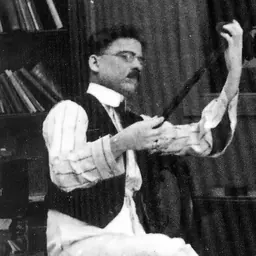
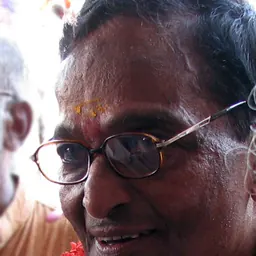

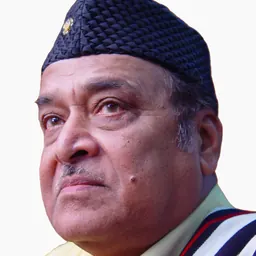




Related people
Same field, nearest in time

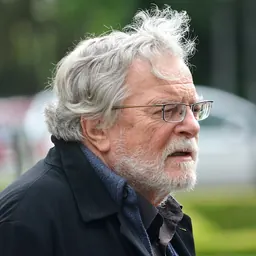


Contemporaries
People whose lives overlapped Adoor Gopalakrishnan's

Frequently asked questions
Who is Adoor Gopalakrishnan?
Indian film director (born 1941)
When was Adoor Gopalakrishnan born?
Adoor Gopalakrishnan was born on 3 July 1941 in Adoor.
What is Adoor Gopalakrishnan's occupation?
Adoor Gopalakrishnan is a film director, screenwriter, film producer and camera operator.
What nationality is Adoor Gopalakrishnan?
Adoor Gopalakrishnan is Indian.
Sources & further reading
· Wikipedia: Adoor Gopalakrishnan
· DBpedia: Adoor Gopalakrishnan
Cite this page
APA: Biography.guide. (2026). Adoor Gopalakrishnan. https://biography.guide/adoor-gopalakrishnan/
MLA: "Adoor Gopalakrishnan." Biography.guide, https://biography.guide/adoor-gopalakrishnan/.
Chicago: "Adoor Gopalakrishnan." Biography.guide. https://biography.guide/adoor-gopalakrishnan/.
Data last updated: 2026-09-22 · Spot an error? Report a correction.
Page generated 2026-09-27 05:30 UTC