
About Adolph Sutro
Lived 1830 – 1898 (aged 68). Adolph Sutro was an American politician, businessperson and mining engineer.
Adolph Heinrich Joseph Sutro (April 29, 1830 – August 8, 1898) was a German-American engineer, politician and philanthropist who served as the 24th mayor of San Francisco from 1895 until 1897.
Early life
Born to a Jewish family Soon after, Adolph left for California and arrived in San Francisco on November 21, 1851. Adolph held a number of positions in San Francisco and eventually owned several tobacco shops.
Sutro Tunnel
In 1860, Sutro left San Francisco for Virginia City, Nevada after silver was found in the Comstock Lode with plans to continue selling cigars.
In 1865 Sutro incorporated the Sutro Tunnel Company and was granted an exclusive charter to build the tunnel by the U.S. Congress in 1866. and was rented by mine owners at an average of $10,000 a day.
Sutro opened his own estate to the public and was heralded as a populist for various astute acts of public generosity, such as opening an aquarium and a glass-enclosed entertainment complex called Sutro Baths in the Sutro District. Though the Baths were not opened until 1896, Sutro had been developing and marketing the project for years, attempting four separate times to insulate the site from waves using sea walls, the first three of which collapsed into the Pacific Ocean.
In 1896, Adolph Sutro built a new Cliff House, a seven-story Victorian Chateau, called by some, "the Gingerbread Palace", below his estate on the bluffs of Sutro Heights. This was the same year work began on the famous Sutro Baths, which included six of the largest indoor swimming pools north of the restaurant that included a museum, ice skating rink and other pleasure grounds. Great throngs of San Franciscans arrived on steam trains, bicycles, carts and horse wagons on Sunday excursions.
In 1894, Sutro, in preparation for the opening of the Cliff House, bought a large part of the collection of Woodward's Gardens, a combination zoo, amusement park, aquarium, and art gallery which had closed in 1891.
The Baths were saltwater and springwater pools, heated to varying degrees, and surrounded by a concert hall and museums stocked with treasures that Sutro had collected in his travels and from Woodward's Gardens. The baths became very popular despite their remote location, across the open dunes to the west of the populated areas of the city. This popularity was partly due to the low entry fee for visiting the Baths and riding the excursion railroad he built to reach them.
Sutro managed a great increase in the value of his outlying land investments as a direct result of the development burst that his vacationers' railroad spawned. He also increased the value of his lands by planting his property at Mount Sutro with saplings of fast-growing eucalyptus. This occurred at the same time as city Supervisors granted tax-free status to "forested" lands within city limits. Small fragments of the forest still exist. The largest is at Mount Sutro, where are the property of the University of California, San Francisco, and another 19 are property of the City of San Francisco.
At his death in 1898, his properties in San Francisco were valued at $3 million.
Destruction of baths A fire destroyed the baths complex in 1966 and all that remains now are ruins. The fire was later determined to be arson. Developers, planning to renovate the complex into apartments, collected the insurance money and abandoned the property.
Mayor (1894–1896)
Sutro's reputation as a provider of diversions and culture for the average person led the politically weak and radical Populist Party to draft him to run for mayor on their ticket. He won on an anti-big business platform, inveighing against the tight grip that the Southern Pacific Railroad had over local businesses. According to historian Alexander Saxton:
Sutro was quickly considered a failed mayor, ill-suited for political work, and did not provide any popularity boost to the Populist party.
Having been in declining health for several years, Sutro died of pneumonia on August 8, 1898 at the age of 68. He left a large fortune in properties, in addition to several unresolved business and legal matters. As a result, protracted court battles over his estate by his heirs would continue for several years.
Many of Sutro's gifts to the city of San Francisco still exist and bear his name, such as Mount Sutro, originally Mount Parnassus (a lower hill nearby is the location of the Sutro Tower), and Sutro Heights and Sutro Heights Park. Sutro Baths was renovated as a skating rink and then was destroyed by an arson fire in 1966. The ruins of the baths (mostly the concrete foundations) still exist just north of the Cliff House. They are part of the Golden Gate National Recreation Area. (1894–1896)
Family In 1854, Sutro married Leah Harris (1832–1893).
Cousins of Adolph Sutro, Charles and Gustav Sutro, founded Sutro & Company, a stockbroking company, in San Francisco in 1858. Sutro & Co. stayed independent until 1986 when it was bought by John Hancock Mutual Life Insurance Co. There it was merged with Tucker Anthony to form Tucker Anthony Sutro, which in turn was bought by Royal Bank of Canada in 2001.
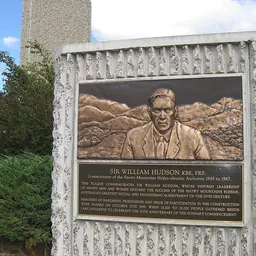
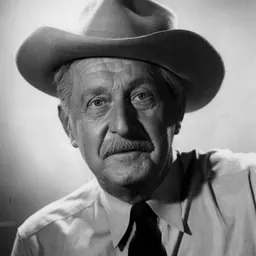
Portrayal on TV The actor Robert Argent played Sutro in the 1957 episode (season 5, episode 17), "The Man Who Was Never Licked" of the TV show Death Valley Days, hosted by Stanley Andrews. William Hudson was cast in the same episode as Lucky Baldwin, a powerful, 19th-century California businessman.
His nieces (Otto's daughters) were Rose and Ottilie Sutro, the first recognized piano-duo team.
Don’t just read it —
keep it.
Full-length biographies made to live with: read them, listen on the way to work, watch them tonight.
- E-book
- Audio
- Video
Instant download · yours to keep · every purchase keeps this site free
Important facts
People in Adolph Sutro's life
Named in this biography and alive at the same time



Related people
Same field, nearest in time




Contemporaries
People whose lives overlapped Adolph Sutro's




Frequently asked questions
Who was Adolph Sutro?
American mayor (1830-1898)
When was Adolph Sutro born?
Adolph Sutro was born on 29 April 1830 in Aachen.
When did Adolph Sutro die?
Adolph Sutro died on 8 August 1898 in San Francisco.
What was Adolph Sutro's occupation?
Adolph Sutro was a politician, businessperson and mining engineer.
What nationality was Adolph Sutro?
Adolph Sutro was American.
Sources & further reading
Cite this page
APA: Biography.guide. (2026). Adolph Sutro. https://biography.guide/adolph-sutro/
MLA: "Adolph Sutro." Biography.guide, https://biography.guide/adolph-sutro/.
Chicago: "Adolph Sutro." Biography.guide. https://biography.guide/adolph-sutro/.
Data last updated: 2026-09-20 · Spot an error? Report a correction.
Page generated 2026-09-27 05:17 UTC