
About Adolf Hurwitz
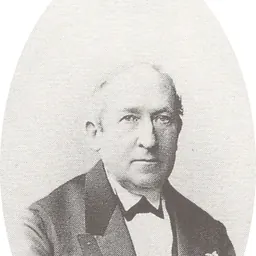
Lived 1859 – 1919 (aged 60). Adolf Hurwitz was a German mathematician and university teacher, known for Hurwitz quaternion and Riemann–Hurwitz formula.
Adolf Hurwitz (; 26 March 1859 – 18 November 1919) was a German mathematician who worked on algebra, analysis, geometry and number theory.
Early life He was born in Hildesheim, then part of the Kingdom of Hanover, to a Jewish family and died in Zurich, Switzerland. His father Salomon Hurwitz, a merchant, was not wealthy. Hurwitz's mother, Elise Wertheimer, died when he was three years old. Hurwitz entered the in Hildesheim in 1868. He was taught mathematics there by Hermann Schubert. Schubert persuaded Hurwitz's father to allow him to attend university, and arranged for Hurwitz to study with Felix Klein at the Ludwig-Maximilians-Universität München. after which he returned to the Ludwig-Maximilians-Universität München.
In October 1880, Felix Klein moved to Leipzig University. Hurwitz followed him there, and became a doctoral student under Klein's direction, finishing a dissertation on elliptic modular functions in 1881. Following two years at the University of Göttingen, in 1884 he was invited to become an Extraordinary Professor at the Albertus Universität Königsberg; there he encountered the young David Hilbert and Hermann Minkowski, on whom he had a major influence. Following the departure of Frobenius, Hurwitz took a chair at the Eidgenössische Polytechnikum Zürich (today ETH Zurich) in 1892 (having to turn down a position at Göttingen shortly after In Lie theory, Hurwitz proved the existence of the Haar measure on Lie groups (which Haar then extended to locally compact groups).
Family In 1884, while at Königsberg, Hurwitz met and married Ida Samuel, the daughter of a professor in the faculty of medicine. They had three children.
Selected publications Hurwitz, A., 1898. Ueber die Composition der quadratischen Formen von beliebig vielen Variablen. Nachrichten von der Gesellschaft der Wissenschaften zu Göttingen, Mathematisch-Physikalische Klasse, 1898, pp. 309–316. Vorlesungen über allgemeine Funktionentheorie und elliptische Funktionen (= Die Grundlehren der mathematischen Wissenschaften in Einzeldarstellungen mit besonderer Berücksichtigung der Anwendungsgebiete. vol. 3, ). Edited and supplemented by a section on geometric Funktionentheorie by Richard Courant. Springer, Berlin 1922 (4th, extended and edition with an appendix by Helmut Röhrl, ibid 1964, online text) Mathematische Werke. Published by the Department of Mathematics and Physics of the Eidgenössischen Technischen Hochschule in Zürich. 2 vols. Birkhäuser, Basel 1932–1933 (with a memoir on Hurwitz by Ernst Meissner) Übungen zur Zahlentheorie. 1891–1918 (= Schriftenreihe der ETH-Bibliothek. vol. 32, ). Translated by Barbara Aquilino. As a duplicated manuscript edited by Herbert Funk and Beat Glaus. ETH-Bibliothek, Zürich 1993. Lectures on Number Theory. Edited for publication by Nikolaos Kritikos. Translated with some additional material (from the German) by William C. Schulz. Springer, New York 1986. Karl Weierstraß: Einleitung in die Theorie der analytischen Funktionen. Vorlesung Berlin 1878 (= Dokumente zur Geschichte der Mathematik. vol. 4). In a transcript by Adolf Hurwitz. Edited by Peter Ullrich. Vieweg, Braunschweig 1988.
Don’t just read it —
keep it.
Full-length biographies made to live with: read them, listen on the way to work, watch them tonight.
- E-book
- Audio
- Video
Instant download · yours to keep · every purchase keeps this site free
Important facts
People in Adolf Hurwitz's life
Named in this biography and alive at the same time

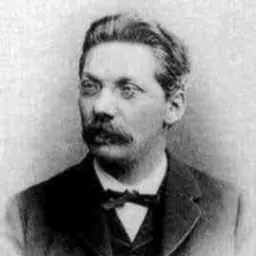

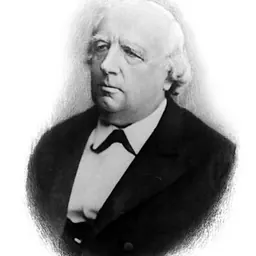
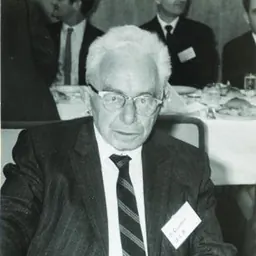
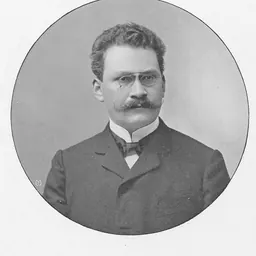
Related people
Same field, nearest in time
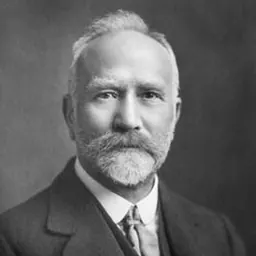
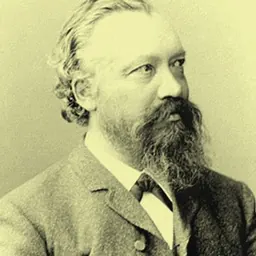
Contemporaries
People whose lives overlapped Adolf Hurwitz's

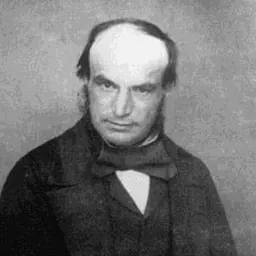
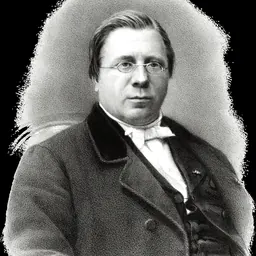


Frequently asked questions
Who was Adolf Hurwitz?
German mathematician (1859–1919)
When was Adolf Hurwitz born?
Adolf Hurwitz was born on 26 March 1859 in Hildesheim.
When did Adolf Hurwitz die?
Adolf Hurwitz died on 18 November 1919 in Zurich.
What was Adolf Hurwitz's occupation?
Adolf Hurwitz was a mathematician and university teacher.
What was Adolf Hurwitz known for?
Adolf Hurwitz was known for Hurwitz quaternion and Riemann–Hurwitz formula.
What nationality was Adolf Hurwitz?
Adolf Hurwitz was German.
Sources & further reading
Cite this page
APA: Biography.guide. (2026). Adolf Hurwitz. https://biography.guide/adolf-hurwitz/
MLA: "Adolf Hurwitz." Biography.guide, https://biography.guide/adolf-hurwitz/.
Chicago: "Adolf Hurwitz." Biography.guide. https://biography.guide/adolf-hurwitz/.
Data last updated: 2026-09-26 · Spot an error? Report a correction.
Page generated 2026-09-27 05:13 UTC