
About Adele Diamond
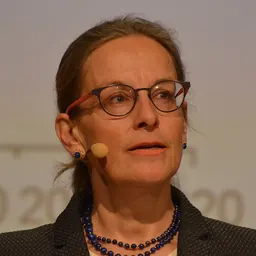
Born 1952. Adele Diamond is an American psychologist, neuroscientist and researcher.
Adele Dorothy Diamond is a professor of neuroscience at the University of British Columbia, where she holds a Tier 1 Canada Research Chair in Developmental Cognitive Neuroscience.
Her research focuses on the development of executive functions and the biological and environmental factors that influence them, particularly in children.
Diamond's work spans developmental psychology, neuroscience, and education, with research examining the role of the prefrontal cortex in cognitive control, attention, and working memory.
Her contribution to developmental cognitive research is cited in major psychology handbooks as foundational to models explaining the emergence of executive functions in early childhood.
Her research has also been widely cited in studies of neurodevelopmental conditions, including phenylketonuria and attention-deficit hyperactivity disorder, as well as in research on early childhood education and interventions aimed at supporting executive function development.
She was appointed an Officer of the Order of Canada for contributions to developmental cognitive neuroscience and research on executive functions.
Diamond’s work illustrates educational power of creative and cognitive fields of thinking which are linked to human spirit. Early life and education Diamond grew up in Brooklyn and Queens and attended public schools (PS 165, Parsons Junior High, and John Bowne High School).
She attended Swarthmore College on a four-year Swarthmore National Scholarship and graduated in 1975, majoring in Sociology-Anthropology and Psychology. She graduated Phi Beta Kappa with the highest honor in the course program of study. , with a four-year NSF Graduate Fellowship and a three-year Danforth Graduate Fellowship. At that time, Harvard had an NIMH-funded Pre-doctoral Training Program in Cross-Cultural Psychological Research and the program awarded Diamond three years of funding for her dissertation: one year to prepare to go into the field, one year to go anywhere in the world to do the research (she chose the South Pacific), and one year to write up the results.
Diamond's team discovered a long-lasting visual deficit if children with phenylketonuria are not started on a low-phenylalanine diet within days of birth (the norm had been to start them within two weeks of birth).
Her 2005 paper on the fundamental neurobiological and clinical differences between the inattentive-type ADHD and those ADHD types in which hyperactivity is present was titled "ADD (ADHD without hyperactivity), a neurobiologically and behaviorally distinct disorder from ADHD (with hyperactivity)". then with their ability to grasp abstract concepts, and next with children's ability to succeed on a Stroop-like task requiring memory and inhibition. Her work focuses on how executive functions can allow individuals to control impulses, resist temptations, maintain focus, adapt to changing demands, and problem solve. Diamond's work has been fundamental in creating one of the first effective MRI scans for prefrontal activity in children participating tasks to help understand human development.
In December of 2025, Thai researchers created a new self-evaluation measure based on Diamond's own Behavioral Inventory Measure of Executive Functions. These evaluations relied on a series of tests that assessed factors like inhibitory control, working memory, cognitive flexibility, and several other various subcomponents.
Diamond has also overseen over 24 million dollars in research funding.
Selected awards and honors In December 2025, she was appointed an Officer of the Order of Canada, one of the country's highest civilian honors. That citation read: "Adele Diamond is a groundbreaking researcher and co-founder of the field of developmental cognitive neuroscience. Through collaborations integrating diverse disciplines and her talent for knowledge translation, she has transformed our understanding of early cognitive development and the brain's prefrontal cortex. She has also shaped social policies, and improved medical and educational practices worldwide."
Also in 2025, Diamond received a Doctor of Humane Letters degree from the Erikson Institute's Graduate School in Child Development in Chicago. Honorary Doctor of Science degree from Swarthmore College in the United States in 2020. Honorary Doctor of Philosophy degree (*honoris causa*) from Ben-Gurion University of the Negev in Israel in 2015.
Her other honors include: Election as a Fellow of the Royal Society of Canada in 2009. In the same year, receipt of a YWCA Woman of Distinction Award, recognized nationally as an important award for women. Recipient of the Inaugural Distinguished Achievement Award for Service to the University and Community from the Faculty of Medicine, University of British Columbia. Recipient of the Urie Bronfenbrenner Award for Lifetime Contributions to Developmental Psychology in the Service of Science and Society from the American Psychological Association in 2014. In the same year, recognition as one of the 15 most influential neuroscientists alive today, and the only woman ranked within the top 23. Recipient of the Translation Award, the highest honor of the International Mind, Brain and Education Society, in 2016. Recipient of the Huttenlocher Award, the highest honor of Flux (the International Society for Developmental Cognitive Neuroscience), in 2022. Holder of a Tier 1 Canada Research Chair for more than ten years.
In 2019, Diamond's impact ranked in top 0.01% of scientists.
In 2024, Cambridge University awarded her with honorary Doctor of Science, a degree granted to scholars whose work has made exceptional impact on both a national and international level.
The Adele Diamond Foundation was established in her honor to support efforts in providing quality education to Maasai children in East Africa.
Teacher and speaker Diamond's courses have received numerous positive reviews throughout her career. She has almost 600 invited addresses, including hundreds of keynote addresses and over 30 named lectures. She has spoken in North America and abroad (including in Argentina, Australia, Austria, Belgium, Brazil, Bulgaria, Chile, Czechoslovakia, Denmark, Ecuador, France, Germany, India, Indonesia [Bali & Java], Ireland, Israel, Italy, Mexico, the Netherlands, New Zealand, Peru, Poland, Portugal, Russia, South Africa, Spain, Sweden, Switzerland, Thailand, and the UK [England, Scotland, and Wales]).
Don’t just read it —
keep it.
Full-length biographies made to live with: read them, listen on the way to work, watch them tonight.
- E-book
- Audio
- Video
Instant download · yours to keep · every purchase keeps this site free
Important facts
People in Adele Diamond's life
Named in this biography and alive at the same time



Related people
Same field, nearest in time





Contemporaries
People whose lives overlapped Adele Diamond's



Frequently asked questions
Who is Adele Diamond?
neuroscientist
When was Adele Diamond born?
Adele Diamond was born on 14 June 1952 in New York City.
What is Adele Diamond's occupation?
Adele Diamond is a psychologist, neuroscientist and researcher.
What nationality is Adele Diamond?
Adele Diamond is American.
Sources & further reading
Cite this page
APA: Biography.guide. (2026). Adele Diamond. https://biography.guide/adele-diamond/
MLA: "Adele Diamond." Biography.guide, https://biography.guide/adele-diamond/.
Chicago: "Adele Diamond." Biography.guide. https://biography.guide/adele-diamond/.
Data last updated: 2026-09-25 · Spot an error? Report a correction.
Page generated 2026-09-27 05:13 UTC