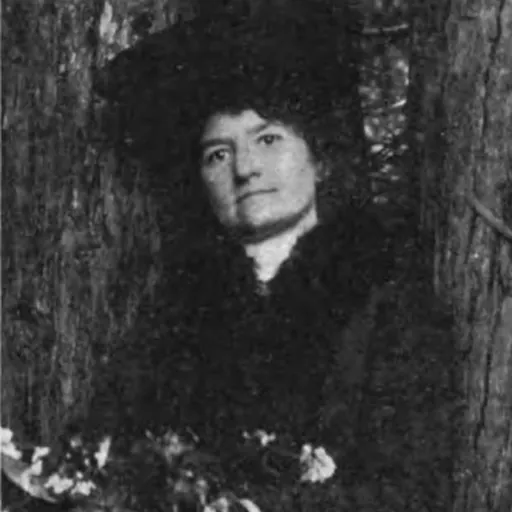
About Adelaide Hanscom Leeson
Lived 1875 – 1931 (aged 55). Adelaide Hanscom Leeson was an American photographer and painter.
Adelaide Hanscom Leeson (25 November 1875 – 19 November 1931) was an early 20th-century artist and photographer who published some of the first books using photography to illustrate literary works.
Life
Early years The Eternal Saki, by Adelaide Hanscom. Published in The Rubaiyat of Omar Khayyam, 1905.
Adelaide Marquand Hanscom was born in Empire City (now Coos Bay, Oregon) in 1875, the fourth of six surviving children born to Meldon Laroy (1843–1919) and Louisa Hyde Hanscom (1845–1923). She was one of a set of twins, but the other child was still-born. Hanscom was named after Adelaide Marquand, an early proponent of universal suffrage. Marquand's husband, Henry, was a business associate of Meldon Hanscom, and later published the Berkeley Advocate. Adelaide Marquand was co-editor of the Advocate with her husband, and she remained a family friend and influence on Hanscom for many years.
When Hanscom was six, her family returned to their previous home city of Berkeley, California, in order to obtain a better education for the children. The Hanscoms established their residence at 1525 Walnut Street, where in 1902 Adelaide advertised her Berkeley portrait studio in the Directory. Her father was a Harvard University-educated businessman who later became the city auditor of Berkeley.
Adelaide began her career in the “traditional arts” and in the 1890s studied painting with local artists and design at the University of California. Between 1892 and 1900 she contributed her still lifes in pastel, crayon, oil and watercolors to the exhibits at the California State Fair in Sacramento and at the Mechanics’ Institute Fair in San Francisco. In 1896, the San Francisco Call reproduced her sketch entitled Coos River-Oregon; two years later she exhibited her miniatures painted on ivory at the San Francisco Art Association and briefly established a studio on Pine Street in that city. Between 1900 and 1902 she studied at the California School of Design in San Francisco's Mark Hopkins Institute of Art (now the San Francisco Art Institute) under Arthur Mathews, Alice Chittenden, and Frederick Meyer, but did not graduate believing it to be unimportant. In tandem with her formal education she studied photography in private with her former classmates Emily Pitchford and Laura Adams Armer, who had recently established their own photographic studio.
In 1902, she set up a studio in San Francisco with fellow photographer Blanche Cummings, and soon they were accepting commissions for portraits and commercial work. Adelaide's first awards in photography were two second prizes, one for the portrait The Latest Novel and the other for the cloud effect A Winter Sunset, at the 1901 Channing Club Exhibition in Berkeley. She became a member of the California Camera Club and sold her landscape studies of the Kern River Canyon to Sunset magazine. At the Third Photographic Salon in San Francisco in 1903 Hanscom exhibited five prints, including the highly acclaimed portrait study of Louise Keeler and her baby entitled Mother and Child. One critic said her showing in this exhibition "secured her a place among the foremost pictorialists of the Pacific Coast." This show was also important to Hanscom because it was the first place she would have seen prints by Alfred Stieglitz, Edward Steichen and Gertrude Käsebier, who were the leaders of the pictorial photography movement in New York. As a result of her recent acclaim, her artistry was in high demand. She was so successful that when a newspaper critic asked her if her profession financially rewarded her, she replied "Handsomely". Over the next two decades, her photos were exhibited nationally and abroad, receiving great acclaim and several awards. She solicited some then well-known California literary figures, including Charles Keeler, Joaquin Miller, George Sterling and George Wharton James, as models for the project. She saw the project as both a classic literary publication and as a metaphor for her times. In a newspaper interview she said decided to illustrate The Rubaiyat because it presented "an expression of the struggle of the human soul after the truth, and against the narrowing influence of the dogmatic religions of our time."
In 1905, she published the first edition of The Rubaiyat, and it became a national sensation. Her hometown newspaper proclaimed "The Berkeley Girl whose 'Omar' photos startle the literary critics." At the Liverpool Exposition in England she received a silver medal and the “greatest attention” for her photo-illustrations in the 1905 Boston edition of The Rubaiyat. Due to the high demand several more editions followed, including a 1914 volume with full-page color plates. The early editions of the book credited only Leeson as the photographer, while later editions said "photographic illustrations by Adelaide Hanscom and Blanche Cummings". Today, the work is recognized for its lush beauty and because the first edition is thought to be one of the first publications in America depicting male nudity in photographs.
That same year, Alfred Stieglitz listed Hanscom as an Associate Member of his Photo-Secession. It is not known how he became aware of her work, and there is no record of the two meeting. Nonetheless, in December 1906 and into early 1907, Stieglitz included two of Hanscom's prints in the Photo-Secession members exhibit in his Little Galleries of the Photo-Secession in New York.
That same year, her husband Gerald enlisted in the Canadian Army in order to fight in World War I, and he left for Europe with very little notice to his family. Within a few weeks he was killed in action. The combination of this loss and that of her father three years later caused her to fall into a deep depression. She became irrational at times and was admitted more than once to mental institutions. She never resumed her photographic work, and, as one writer noted, "the remaining sixteen years of her life seem to have been a feckless series of wanderings with her children in tow." She moved briefly to England to be near her dead husband's relatives, but she eventually returned to California and lived with her daughter.
In November 1931, Leeson was killed by a hit-and-run driver while getting off of a trolley in Pasadena, California. For many years her artistry was forgotten, but as of 2008 her work is once again being recognized for its creativity, beauty and grace.
Don’t just read it —
keep it.
Full-length biographies made to live with: read them, listen on the way to work, watch them tonight.
- E-book
- Audio
- Video
Instant download · yours to keep · every purchase keeps this site free
Important facts
People in Adelaide Hanscom Leeson's life
Named in this biography and alive at the same time


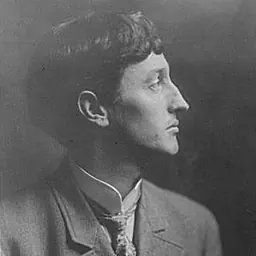


Related people
Same field, nearest in time


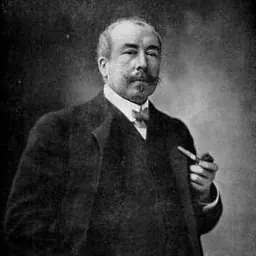
Contemporaries
People whose lives overlapped Adelaide Hanscom Leeson's
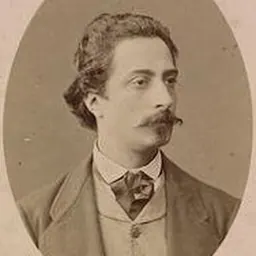

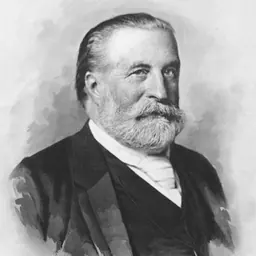
Frequently asked questions
Who was Adelaide Hanscom Leeson?
American artist and photographer (1875-1931)
When was Adelaide Hanscom Leeson born?
Adelaide Hanscom Leeson was born on 25 November 1875 in Coos Bay.
When did Adelaide Hanscom Leeson die?
Adelaide Hanscom Leeson died on 19 November 1931 in Pasadena, California.
What was Adelaide Hanscom Leeson's occupation?
Adelaide Hanscom Leeson was a photographer and painter.
What nationality was Adelaide Hanscom Leeson?
Adelaide Hanscom Leeson was American.
Sources & further reading
· Wikipedia: Adelaide Hanscom Leeson
· DBpedia: Adelaide Hanscom Leeson
Cite this page
APA: Biography.guide. (2026). Adelaide Hanscom Leeson. https://biography.guide/adelaide-hanscom-leeson/
MLA: "Adelaide Hanscom Leeson." Biography.guide, https://biography.guide/adelaide-hanscom-leeson/.
Chicago: "Adelaide Hanscom Leeson." Biography.guide. https://biography.guide/adelaide-hanscom-leeson/.
Data last updated: 2026-09-22 · Spot an error? Report a correction.
Portrait: Wikimedia Commons · author & licence
Page generated 2026-09-27 05:04 UTC