
About Mark Hopkins
Lived 1802 – 1887 (aged 85). Mark Hopkins was an American theologian, university teacher and writer.
Mark Hopkins (February 4, 1802 – June 17, 1887) was an American educator and Congregationalist theologian, president of Williams College from 1836 to 1872. An epigram — widely attributed to President James A. Garfield, a student of Hopkins — defined an ideal college as "Mark Hopkins on one end of a log and a student on the other."
Life and career
Great-nephew of the theologian Samuel Hopkins, Mark Hopkins was born in Stockbridge, Massachusetts. He graduated in 1824 from Williams College, where he was a tutor in 1825–1827, and where in 1830, after having graduated in the previous year from the Berkshire Medical College at Pittsfield, he became professor of Moral Philosophy and Rhetoric. In 1833 he was licensed to preach in Congregational churches. He was president of Williams College from 1836 until 1872. He was one of the ablest and most successful of the old type of college president. He married Mary Hubbell in 1832 and together they parented ten children.
His volume of lectures on Evidences of Christianity (1846) In the later judgment of university historian Frederick Rudolph, "no one can properly address himself to the question of higher education in the United States without paying homage in some way to the aphorism of the log and to Mark Hopkins".
In his 1903 essay "The Talented Tenth," W. E. B. Du Bois opined, "There was a time when the American people believed pretty devoutly that a log of wood with a boy at one end and Mark Hopkins at the other, represented the highest ideal of human training. But in these eager days it would seem that we have changed all that and think it necessary to add a couple of saw-mills and a hammer to this outfit, and, at a pinch, to dispense with the services of Mark Hopkins. I would not deny, or for a moment seem to deny, the paramount necessity of teaching the Negro to work, and to work steadily and skillfully; or seem to depreciate in the slightest degree the important part industrial schools must play in the accomplishment of these ends, but I do say, and insist upon it, that it is industrialism drunk with its vision of success, to imagine that its own work can be accomplished without providing for the training of broadly cultured men and women to teach its own teachers, and to teach the teachers of the public schools."
In 1915 Hopkins was elected into the American Hall of Fame.
In 1964, Walter F. Hendricks founded Mark Hopkins College in Vermont in his honor. It closed in 1978.
Family His son, Henry Hopkins (1837–1908), was also a president of Williams College. Mark Hopkins's brother, Albert Hopkins (1807–1872), was long associated with him at Williams College, where he graduated in 1826 and was successively a tutor (1827–1829), professor of mathematics and natural philosophy (1829–1838), professor of natural philosophy and astronomy (1838–1868) and professor of astronomy (1868–1872). In 1835 he organized and conducted a natural history expedition to Joggins, Nova Scotia, said to have been the first expedition of the kind sent out from any American college, and in 1837, at his suggestion and under his direction, an astronomical observatory was built at Williams College, said to have been the first in the United States built at a college exclusively for the purposes of instruction.
Works
An address, delivered in South Hadley, Mass., July 30, 1840, at the third anniversary of the Mount Holyoke Female Seminary, Northampton: Printed by J. Metcalf, 1840. Lectures on the evidence of Christianity before the Lowell Institute, January 1844, Boston: Published by T.R. Marvin, 1846. Revised ed. published as Evidence of Christianity. Lectures before the Lowell Institute, revised as a textbook, with a supplementary chapter considering some attacks on the critical school, the corroborative evidence of recently discovered manuscripts, etc., and the testimony of Jesus on his trial, Boston: T.R. Marvin & Son, 1887. Miscellaneous essays and discourses, Boston: T.R. Marvin, 1847 A discourse commemorative of Amos Lawrence: delivered by request of the students, in the chapel of Williams College, February 21, 1853, Boston: Press of T.R. Marvin, 1853. Lectures on moral science, Boston: Gould and Lincoln; New York: Sheldon & Co., 1862. The law of love, and love as a law, or, Moral science, theoretical and practical, New York: C. Scribner, 1869. From 1870 published as The law of love and love as a law; or, Christian ethics. An outline study of man, or, The body and mind in one system with illustrative diagrams, and a method for blackboard teaching, New York: Charles Scribner, 1873 Strength and beauty : discussions for young men, New York: Dodd & Mead, 1874. The Scriptural idea of man; six lectures given before the theological students at Princeton on the L.P. Stone Foundation, New York: C. Scribner's Sons, 1883. Teachings and counsels, twenty baccalaureate sermons; with a discourse on President Garfield, New York: C. Scribr's sons, 1884.
Don’t just read it —
keep it.
Full-length biographies made to live with: read them, listen on the way to work, watch them tonight.
- E-book
- Audio
- Video
Instant download · yours to keep · every purchase keeps this site free
Important facts
People in Mark Hopkins's life
Named in this biography and alive at the same time


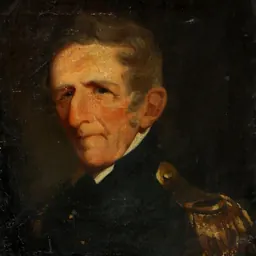
Related people
Same field, nearest in time
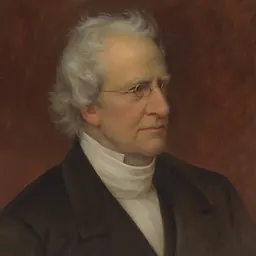

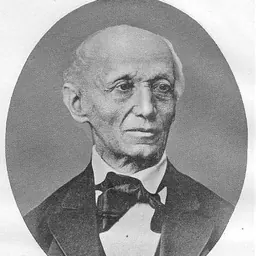
Contemporaries
People whose lives overlapped Mark Hopkins's





Frequently asked questions
Who was Mark Hopkins?
American educationalist and theologian (1802–1887)
When was Mark Hopkins born?
Mark Hopkins was born on 4 February 1802 in Stockbridge.
When did Mark Hopkins die?
Mark Hopkins died on 17 June 1887 in Williamstown.
What was Mark Hopkins's occupation?
Mark Hopkins was a theologian, university teacher and writer.
What nationality was Mark Hopkins?
Mark Hopkins was American.
Sources & further reading
· DBpedia: Mark Hopkins (educator)
Cite this page
APA: Biography.guide. (2026). Mark Hopkins. https://biography.guide/mark-hopkins-theologian/
MLA: "Mark Hopkins." Biography.guide, https://biography.guide/mark-hopkins-theologian/.
Chicago: "Mark Hopkins." Biography.guide. https://biography.guide/mark-hopkins-theologian/.
Data last updated: 2026-09-26 · Spot an error? Report a correction.
Page generated 2026-09-27 05:15 UTC