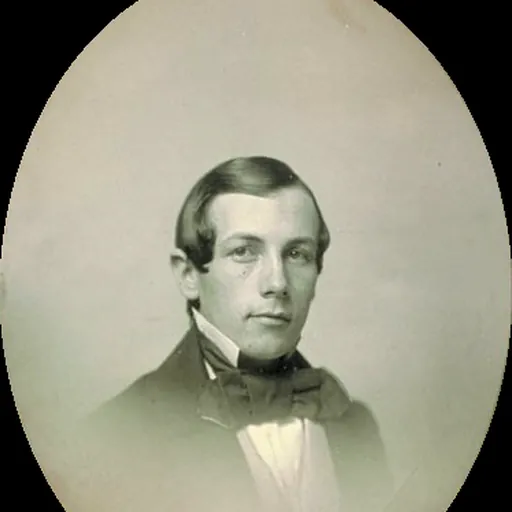
About Addison Brown
Lived 1830 – 1913 (aged 83). Addison Brown was an American botanist, lawyer, judge, politician, writer and astronomer.
Law practice
Armed with introductions from a Harvard professor, in December 1854 Brown arrived in New York City, New York (whose burgeoning business community Brown found more promising than opportunities in his native small-town northeast Massachusetts) and began work as a clerk for the firm of Brown (unrelated), Hall (then-New York's mayor), and Vanderpoel. There he met other lawyers, learned about the practice of law, and studied for the New York bar examination, which he passed in February 1855. In that year he began developing a small portfolio of clients of his own and supplemented his income with work as organist and choir director in the Episcopal Church in Newton, Long Island.
Brown struck out on his own and then joined Nelson Smith in 1856.
Investment ventures
Brown stated that when deciding on a path after college, he found a business career not to his taste, inasmuch as he had no interest in "mere wealth" or a "life of money-making." He did, however, participate in business ventures and accrue considerable wealth. In the late 1850s he began investing in and doing legal work for real estate transactions in which large areas of land at the edges of development in New York City were subdivided and sold at considerable profit.
His success was such that prosperous individuals in Brown's hometown of West Newbury and surrounding areas entrusted him to invest their funds, providing the investors a 7% return and Brown any amounts over that. This allowed him to engage in more real estate ventures. Brown stated, "The handling of considerable funds in that way for many years not only brought me considerable gains beyond my law business proper, but also gave me much credit as a responsible person, and attracted clients in the building business, and it thus much enlarged my own contributions to our strictly law practice."
Federal judicial service
Brown received a recess appointment from President James A. Garfield on June 2, 1881, to a seat on the U.S. District Court for the Southern District of New York. On October 12, 1881, President Chester A. Arthur nominated him to the same position. Brown's United States Senate confirmation took place on October 14, 1881; he received his commission the same day. Brown had become a member of his local Republican club in the late 1850s
Brown's 20-year judgeship was described as prolific and distinguished. He was credited as having written between 1,600 holding that before extradition may occur, an offense must be shown and regular procedures followed. The New York Times stated upon his retirement that Brown was "regarded as one of the most hard-working and painstaking Judges on the bench." Obituaries noted his versatility thumb Addisonia (PLATE 009) (8575333844) from the botany journal Addison Brown endowed.
In 1875, Brown joined the Torrey Botanical Club of Columbia College in New York and was an active member for many years, serving as president from 1893 to 1905. Brown cited his role in the Botanical Garden's founding as his most significant public service, aside from his work in the judiciary. He wrote that organization's charter in 1891
Brown traveled to collect botanical specimens, maintained an extensive botanical library, wrote many notes for Torrey Botanical Club publications and published the following works:
At his death, Brown's single largest charitable bequest—200 shares of United States Steel preferred stock worth $21,750 in 1913—was to the New York Botanical Garden to endow a botanical journal. The periodical was to be named for Brown and to contain color plates illustrating plants of the United States and its territories.
Brown was also a serious amateur astronomer. He was a founding member of the New York Academy of Science's astronomy section. Brown's Colorado mountaintop observations of the July 29, 1878 solar eclipse were included in a report of the United States Naval Observatory.
Personal life and death
Brown met his first wife, Mary Chadwick Barrett, in 1846 at Bradford Academy, near West Newbury, as he studied to prepare for college. Together they studied astronomy, in which she excelled. Informally engaged since his days at Amherst, they married on January 1, 1856, when financially able to maintain a household. She was disabled by illness before their marriage. Notwithstanding various cures meeting with mixed success, her physical and mental condition worsened until her death in 1887. which later became Hunter College. He was in his 60s; she was considerably younger. One newspaper report stated that the bride was said to be attractive and charming: "Not a little romance is connected with their courtship." Others described surprise that Brown, active in numerous elite New York social clubs, managed to keep the impending wedding secret. The couple pursued joint scientific interests, and had three sons and a daughter. thumb
Stricken with paralysis, Addison Brown died at his Manhattan home on April 9, 1913, at age 83. While the bulk of his bequests were in trust for his children, Brown left $40,000 to charities, principally the bequest to the New York Botanical Garden magazine, and scholarship prizes for Harvard University and Amherst College. Smaller gifts went to organizations ranging from the Tuskegee Institute to the West Newbury Library Association.
Don’t just read it —
keep it.
Full-length biographies made to live with: read them, listen on the way to work, watch them tonight.
- E-book
- Audio
- Video
Instant download · yours to keep · every purchase keeps this site free
Important facts
Related people
Same field, nearest in time



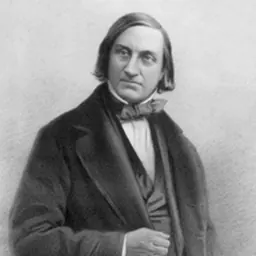


Contemporaries
People whose lives overlapped Addison Brown's



Frequently asked questions
Who was Addison Brown?
United States federal judge, astronomer and botanist (1830-1913)
When was Addison Brown born?
Addison Brown was born on 21 February 1830 in West Newbury.
When did Addison Brown die?
Addison Brown died on 9 April 1913 in New York City.
What was Addison Brown's occupation?
Addison Brown was a botanist, lawyer, judge, politician, writer and astronomer.
What nationality was Addison Brown?
Addison Brown was American.
Sources & further reading
Cite this page
APA: Biography.guide. (2026). Addison Brown. https://biography.guide/addison-brown/
MLA: "Addison Brown." Biography.guide, https://biography.guide/addison-brown/.
Chicago: "Addison Brown." Biography.guide. https://biography.guide/addison-brown/.
Data last updated: 2026-09-21 · Spot an error? Report a correction.
Portrait: Wikimedia Commons · author & licence
Page generated 2026-09-27 04:59 UTC