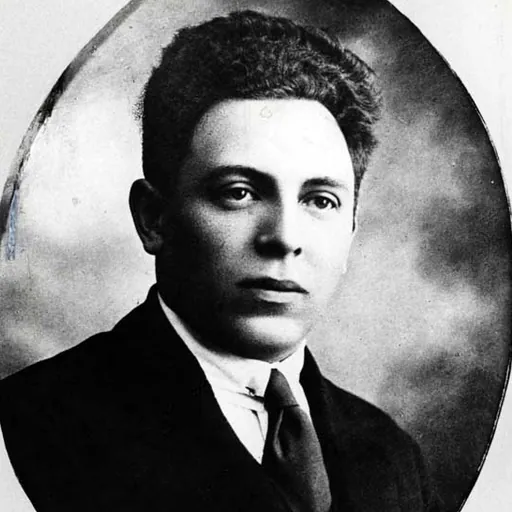
About Adam Próchnik
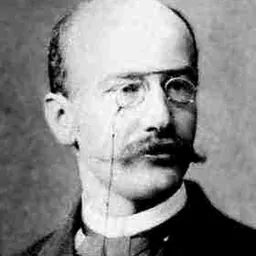
Lived 1892 – 1942 (aged 49). Adam Próchnik was a Polish military officer, politician and historian.
Adam Feliks Próchnik (; Lwów, 21 August 1892 – 22 May 1942, Warsaw) was a Polish socialist activist, politician and historian.
Life Próchnik was born in Lwów, Austrian partition (now, Lviv, Ukraine) on 21 August 1892 to a middle class Jewish family. His mother, née Felicja Nossig, was the sister of the sculptor and Zionist activist Alfred Nossig. According to some sources, he was the extramarital son of the Polish socialist Ignacy Daszyński.
While in high school he became involved in socialist activism. As a student, he joined the Polish Social Democratic Party of Galicia; he supported the Polish Socialist Party – Left faction over the Polish Socialist Party – Revolutionary Faction led by Józef Piłsudski.
Before World War I he joined the pro-independence paramilitary Polish organization, the Union of Armed Struggle. With the outbreak of World War I, he was conscripted into the Austro-Hungarian Army in 1914, and was badly wounded in 1917. During his convalescence in Vienna, he became a member of a secret Polish organization, the Polish Military Organisation. As a member of PMO he encouraged Polish soldiers to desert from the Austrian Army and join newly created Polish formations. This resulted in a threat of court martial from the Austro-Hungarian Army, but eventually he was freed. Next, he participated in the battle of Lwów during the Polish–Ukrainian War.
In interwar Poland, Próchnik became an activist of the Polish Socialist Party and supported initiatives designed to improve the situation of the country's working class. He supported the inclusion of Silesia into renascent Poland. In the 1928 legislative elections, he was elected a deputy to the Polish Sejm. He steadily drifted to more extreme left position, supporting cooperation with the communists. Often - under pen-name Henryk Swoboda and publishing mostly in Robotnik - published essays attacking the right-wing sanacja Polish government and the endecja faction, which he blamed for undermining the nascent Polish democracy. This resulted in some of his publications being censored by the state. Some of his works would appear in unabridged version only after his death, published in the People's Republic of Poland.
He worked as an archivist in Piotrków and Poznań. For a time he was employed by Poland's Ministry of Culture and Religion. His attempt to enter the academic life ended when his application for a position in the University of Warsaw was rejected, due to his left wing views being unpopular among the right wing faculty there (despite a support from his candidature from professor Wacław Tokarz. He nonetheless became a member of the Polish Historical Society, published in historical journals and attended professional conferences.
During World War II, in occupied Poland, Próchnik continued his political activities, supporting a PPS-affiliated underground printing press (Barykada Wolności). He joined the leftist PPS group, Polish Socialists (Polscy Socjaliści), but he tried to reconcile the divisions within PPS and took part in the negotiations with the more centrist PPS-WRN. He was involved in the collaborative underground effort to document Nazi crimes in Poland, worked in the underground Military History Bureau and contributed to the Kronika Okupacji project. He advocated cooperation with the Soviet Union. He became a member of the Political Consultative Committee. On 22 May 1942 he died of a heart attack. He is buried in Evangelical-Reformed Cemetery in Warsaw.
Tributes Several landmarks and organizations in Poland bear Próchnik's name.
Works In his historical works, Próchnik was a strong adherent to Marxist views, and supported the dialectic materialism perspective. He was interested in studying the revolutionary processes, including social movements. He published numerous articles, both in academic journals and popular press, as well as several books. His historical research focused on following areas: French Revolution and its Polish contemporary, the Kościuszko Uprising; the period of Polish history following the failure of the January Uprising of 1863–1864; the study of the labor movement in Poland, including a study of the women's role in the Polish labor movement (both areas in which he was a pioneer); and contemporary history of the Second Polish Republic. Overall, his works are regarded as well researched and well written.
"Obrona Lwowa od 1 do 22 listopada 1918", Zamość 1919; "Demokracja Kościuszkowska", Lwów 1920, Warszawa 1947; "Bunt łódzki w roku 1892", Warszawa (?) 1932; as Henryk Swoboda "Pierwsze piętnastolecie Polski niepodległej", (first serialized in 1933 in newspaper "Robotnik" (censored), first full version translated into German in 1933. Complete Polish editions in 1957 and 1983. "W trzynastą rocznicę "Krwawej środy", Warszawa 1936; "Ideologia spółdzielczości robotniczej" Warszawa 1937; "Co to jest spółdzielczość. Istota - cel - zadania", Warszawa 1937; "Idee i ludzie", Warszawa 1938; "Powstanie państwa polskiego", Warszawa 1939; "Stronnictwa polityczne Wielkiej Rewolucji Francuskiej", Warszawa 1958; "Studia z dziejów polskiego ruchu robotniczego" (editor K. Dunin-Wąsowicz), Warszawa 1958; "Studia i szkice" (editor K.Dunin-Wąsowicz), Warszawa 1962; "Francja i Polskaw latach 1789-1794" (editor K.Dunin-Wąsowicz), Warszawa 1964; "Wybór publicystyki" (editors M.M.Drozdowski, K.Dunin-Wąsowicz, Z.Marciniak, J.Żarnowski), Warszawa 1971;
Don’t just read it —
keep it.
Full-length biographies made to live with: read them, listen on the way to work, watch them tonight.
- E-book
- Audio
- Video
Instant download · yours to keep · every purchase keeps this site free
Important facts
People in Adam Próchnik's life
Named in this biography and alive at the same time


Related people
Same field, nearest in time

Contemporaries
People whose lives overlapped Adam Próchnik's




Frequently asked questions
Who was Adam Próchnik?
Polish politician (1892–1942)
When was Adam Próchnik born?
Adam Próchnik was born on 21 August 1892 in Lviv.
When did Adam Próchnik die?
Adam Próchnik died on 22 May 1942 in Warsaw.
What was Adam Próchnik's occupation?
Adam Próchnik was a military officer, politician and historian.
What nationality was Adam Próchnik?
Adam Próchnik was Polish.
Sources & further reading
Cite this page
APA: Biography.guide. (2026). Adam Próchnik. https://biography.guide/adam-prochnik/
MLA: "Adam Próchnik." Biography.guide, https://biography.guide/adam-prochnik/.
Chicago: "Adam Próchnik." Biography.guide. https://biography.guide/adam-prochnik/.
Data last updated: 2026-09-20 · Spot an error? Report a correction.
Portrait: Wikimedia Commons · author & licence
Page generated 2026-09-27 04:57 UTC