
About Adam Menelaws
Lived 1753 – 1831 (aged 77–78). Adam Menelaws was a British architect.
Adam Menelaws (also spelled Menelas; ; between 1748 and 1756 – 31 August 1831) was an architect and landscape designer of Scottish origin, active in the Russian Empire from 1784 to 1831. Menelaws achieved success in the first two decades of the 19th century as the designer of town and country residences and parks of Razumovsky and Stroganov families, and later worked for emperor Alexander I, specializing in Gothic Revival architecture. From 1825 to 1831, Menelaws, then in his seventies, became the first house architect of Nicholas I and the de facto leading architect in Russia. Except for this final, properly evidenced, stage, life story of Adam Menelaws remains scarcely documented and has been reconstructed by biographers based on sketchy archive data and circumstantial evidence; Menelaws still "belongs to the category of almost unknown".
Biography The Scottish origin of Menelaws was confirmed by the architect himself to A. B. Granville, an English traveler who published a report of his journey in London in 1828. and Dmitry Shvidkovsky suggest that Adam Menelaws belonged to the same family, but this opinion has not been reliably confirmed by archive research. In 1803 Menelaws asserted that he hails from a noble English family, but Russian authorities refused to honour his claim.
In early 1780s Charles Cameron, an architect employed by Catherine II since 1779, published a job offer in Edinburgh Evening News, signed Catherine of Russia, inviting skilled construction workers to join his Tsarskoye Selo project. 73 craftsmen, including Adam Menelaws, agreed to move to Russia (many took their families with them), causing a futile protest of the Foreign Office. All were sufficiently qualified to become professional architects or at least architect's trainees in Russia; Cameron ranked Menelaws as the one of two best stonemasons – the "vaulting master". Menelaws signed for a three-year contract to build the Cold Baths near Saint Petersburg, agreeing also to train a class of Russian craftsmen. Apparently the number of Scottish professionals was too big for Cameron, and one year later Menelaws left him and joined the service of Nikolay Lvov.
Lvov, an amateur composer, poet and Palladian architect was at that time aide to statesman Alexander Bezborodko. Historians divide over his role in Menelaws career: tradition held it that Lvov promoted Menelaws, introducing him to the Crown projects, by 1790 the coal research team increased to 10 professionals. It is quite likely, however, that Lvov used the state-sponsored quest for coal as a cover to extract a talented architect for his own use: in 1785–1794 Menelaws was regularly involved in Lvov's construction projects. Another Scot, Walter Irving, was employed by Lvov to construct his idealist Sun Temple, a country estate in Tver Oblast; its circular arcade, resembling the henges of Britain, was later recreated in Menelaws' own designs. The rotunda motive, common to Menelaws later works, was most likely inspired by Lvov.
Menelaws married Elizabeth Cave in 1792; the ceremony was attended by Lvov, Alexey Olenin (president of the Imperial Academy of Arts) and numerous members of the English and Scottish diaspora. According to Anthony Cross, "the late burgeoning of Menelaws talent" probably occurred only after Lvov' death, during his work for the Razumovsky family. was included in John Claudius Loudon's An Encyclopedia of Gardening for its landscaping and a private botanical garden. Historians split on the issue whether Gorenki was designed primarily by Menelaws or by Lvov. the palace was destroyed by the Fire of 1812 and later reconstructed by Afanasy Grigoriev. Another large park, Stroganov's Maryino Estate, was laid down near Saint Peterburg in 1813. All these landscaping projects perished by the end of 19th century. Menelaws park designs always employed a Gothic ruin as a visual anchor. Menelaws was instrumental in operations of the Maryino school established by the Golitsyns in 1819, teaching the peasants the craft of cob construction. Introduction of cob technology in Russia is usually credited to Lvov, but may also be linked directly to Menelaws's Scottish experience. Dmitry Shvidkovsky suggested that Menelaws, not Cameron, was the designer of the Razumovsky palace in Baturin, but other historians reject this opinion. Menelaws designed and built 12 structures, including the Egyptian Gates and three park pavilions: the large Arsenal (1819–1834) built on the site of Mon Bijou built by Francesco Bartolomeo Rastrelli in 1750s, the White Tower (1821–1827), a house for the young Grand Dukes and the Chapel (1825–1828), a folly providing living quarter to the palace chaplain. Use of an eclectic, pan-European romanticism was justified as a symbol of the New Europe shaped at the Congress of Vienna, but was also a sign of Alexander's turn to mysticism. Alexander's Park was occupied by Nicholas I, then heir presumptive, who also leaned to eclecticism and medieval legacy, as would be evidenced later by his reign.
Nicholas became Menelaws' "most appreciative patron who provided him with the opportunity at a very advanced stage of life". Indeed, his most important commission, the Alexandria Park, was started when the architect was at least around 70 years old.
Shortly before his death in 1824, Alexander I granted a lot of land on the coast of Gulf of Finland, east of Petergof, to Nicholas I. The new Alexandria Park, commissioned to Menelaws, became the last, and best preserved of the architect's projects. The work started with landscaping the territory and digging two large artificial pools; after Alexander's death, Nicholas commissioned Menelaws to build his summer residence, the asymmetrical Cottage. Externally, it was more English than Gothic; Gothic influence was more obvious in the interiors designed by Menelaws. The park, laid down in English style, featured winding walkways around ponds, and had a Gothic Chapel (private church of the House of Romanov, designed by Karl Friedrich Schinkel) as its focal point (it was completed by Ludwig Charlemagne three years after Menelaws' death). It was suggested that Nicholas actually planned to relocate the remains of Alexander Nevsky into the chapel. The park also had facilities of the lesser rank: an animal sanctuary for old horses retired from the palace service, a farm and a menagerie with llama and elephant pavilions. Elephants lived in Alexandria until 1911 and were allowed to roam free in the summer.
Menelaws died in Saint Petersburg during the cholera epidemic of 1831.
Don’t just read it —
keep it.
Full-length biographies made to live with: read them, listen on the way to work, watch them tonight.
- E-book
- Audio
- Video
Instant download · yours to keep · every purchase keeps this site free
Important facts
People in Adam Menelaws's life
Named in this biography and alive at the same time
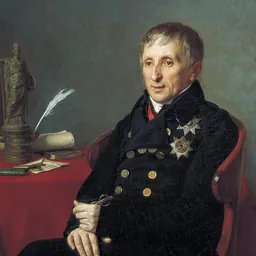
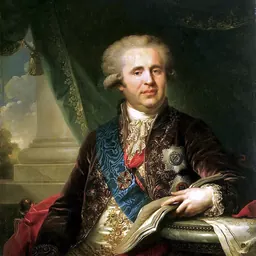
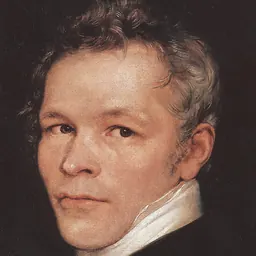
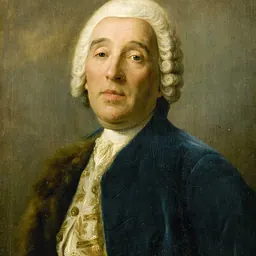


Related people
Same field, nearest in time
Contemporaries
People whose lives overlapped Adam Menelaws's





Frequently asked questions
Who was Adam Menelaws?
Scottish architect in Russia
When was Adam Menelaws born?
Adam Menelaws was born in 1753 in Edinburgh.
When did Adam Menelaws die?
Adam Menelaws died on 31 August 1831 in Saint Petersburg.
What was Adam Menelaws's occupation?
Adam Menelaws was an architect.
What nationality was Adam Menelaws?
Adam Menelaws was British.
Sources & further reading
Cite this page
APA: Biography.guide. (2026). Adam Menelaws. https://biography.guide/adam-menelaws/
MLA: "Adam Menelaws." Biography.guide, https://biography.guide/adam-menelaws/.
Chicago: "Adam Menelaws." Biography.guide. https://biography.guide/adam-menelaws/.
Data last updated: 2026-09-25 · Spot an error? Report a correction.
Page generated 2026-09-27 05:10 UTC