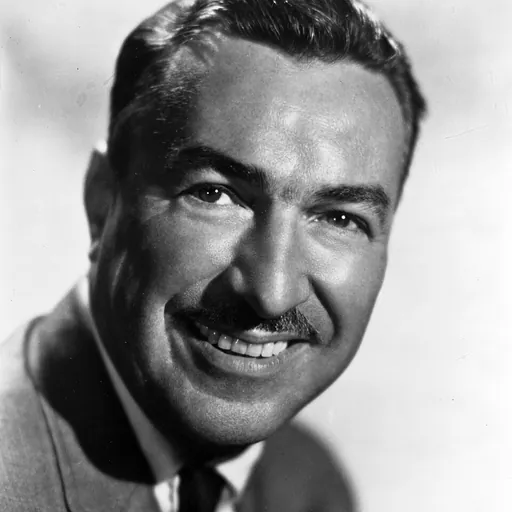
Adam Clayton Powell Jr.
American Baptist pastor and politician
About Adam Clayton Powell Jr.
Lived 1908 – 1972 (aged 63). Adam Clayton Powell Jr. was an American politician, pastor, journalist, founder, religious leader and civil rights advocate.
Adam Clayton Powell Jr. (November 29, 1908 – April 4, 1972) was an American Baptist pastor and politician who represented the Harlem neighborhood of New York City in the United States House of Representatives from 1945 until 1971. He was the first African American to be elected to Congress from New York, as well as the first from any state in the Northeast. Re-elected for nearly three decades, Powell became a powerful national politician of the Democratic Party, and served as a national spokesman on civil rights and social issues. He also urged United States presidents to support emerging nations in Africa and Asia as they gained independence after colonialism.
In 1961, after 16 years in the House, Powell became chairman of the Education and Labor Committee, the most powerful position held by an African American in Congress to that date. As chairman, he supported the passage of important social and civil rights legislation under presidents John F. Kennedy and Lyndon B. Johnson. Following allegations of corruption, in 1967 Powell was excluded from his seat by Democratic Representatives-elect of the 90th United States Congress, but he was re-elected and regained the seat in the 1969 ruling by the Supreme Court of the United States in Powell v. McCormack. He lost his seat in 1970 to Charles Rangel and retired from electoral politics.
Early life and education Powell was born in 1908 in New Haven, Connecticut, the second child and only son of Adam Clayton Powell Sr. and Mattie Buster Shaffer, born poor in Virginia and West Virginia, respectively. In his autobiography Adam by Adam, Powell says that his mother had partial German ancestry. They and their ancestors were classified as mulatto in 19th-century censuses. By 1908, Powell Sr. had become a prominent Baptist minister, serving as a pastor in Philadelphia, and as lead pastor at a Baptist church in New Haven. In the year of his son's birth in New Haven, Powell Sr. was called as the pastor of the Abyssinian Baptist Church in the Harlem neighborhood of New York City. He led the church for decades through major expansion, including fundraising for and the construction of an addition to accommodate the increased membership of the congregation during the years of the Great Migration, as many African Americans moved north from the South. That congregation grew to a community of 10,000 people.
Due to his father's achievements, Powell grew up in a wealthy household in New York City. Because of some of his European ancestry, Adam was born with hazel eyes, light skin and blond hair, such that he could pass for white. However, he did not play with that racial ambiguity until college. Encouraged by his father to become a minister, Powell became more serious about his studies at Colgate, where he earned his bachelor's degree in 1930. After returning to New York, Powell began his graduate work and in 1931 earned an M.A. in religious education from Columbia University. He became a member of Alpha Phi Alpha, the first African-American, intercollegiate Greek-lettered fraternity.
Later, apparently trying to bolster his black identity, Powell would say that his paternal grandparents were born into slavery. According to Charles V. Hamilton, a 1991 biographer of Powell, Anthony Bush "decided to take the name Powell as a new identity", and this is how they were recorded in the 1880 census.
Adam Jr.'s mother, Mattie Buster Shaffer, was African-American with possibly some German ancestry. Her parents had been slaves in Virginia and were freed after the Civil War. Powell's parents married in West Virginia, where they met. Numerous freedmen had migrated there in the late 19th century for work.
Early career
After ordination, Powell began assisting his father with charitable services at the church and as a preacher. He greatly increased the volume of meals and clothing provided to the needy, and began to learn more about the lives of the working class and poor in Harlem.
During the Great Depression in the 1930s, Powell, a handsome and charismatic figure, became a civil rights leader in Harlem. He recounted these experiences in a 1964 interview with Robert Penn Warren for the book Who Speaks for the Negro?. He developed a formidable public following in the community through his crusades for jobs and affordable housing. As chairman of the Coordinating Committee for Employment, Powell used numerous methods of community organizing to bring political pressure on major businesses to open their doors to black employees at professional levels. He organized mass meetings, rent strikes, and public campaigns to force companies, utilities, and Harlem Hospital, which operated in the community, to hire black workers at skill levels higher than the lowest positions, to which they had formerly been restricted by informal discrimination.
For instance, during the 1939 New York World's Fair, Powell organized a picket line at the Fair's offices in the Empire State Building. As a result, the Fair hired more black employees, increasing their numbers from about 200 to 732. In 1941, Powell led a bus boycott in Harlem, where blacks constituted the majority of passengers but held few of the jobs; the New York City Transit Authority hired 200 black workers and set the precedent for more. Powell also led a fight to have drugstores operating in Harlem hire black pharmacists. He encouraged local residents to shop only where blacks were also hired to work.
In 1937, Powell succeeded his father as pastor of the Abyssinian Baptist Church. Powell Jr. remained pastor of the church until 1972.
In 1942 he founded People's Voice, a newspaper designed for "a progressive African American audience, and it educated and enlightened readers on everything from local gatherings and events to U.S. civil rights issues to the political and economic struggles of the peoples of Africa. Reporters and writers for the papers included influential African Americans such as Powell himself, Powell's sister-in-law and actress Fredi Washington, and journalist Marvel Cooke." It also served as a mouthpiece for his views. After he was elected to Congress in 1944, other people led the paper, but it finally closed in 1948, after being accused of communist connections.
Political career
New York City Council Powell is sworn in as the first African American member of the New York City Council by mayor Fiorello La Guardia, January 5, 1942.(L-R): Joseph E. Ford, Mattie Shaffer Powell, Adam Clayton Powell Jr., Isabel Washington Powell, Adam Clayton Powell Sr., Fiorello La Guardia. In 1941, with the aid of New York City's use of the single transferable vote, Powell was elected to the New York City Council as the city's first black Council member. He received 65,736 votes, the third-best total among the six successful Council candidates, and American Labor Party ballot lines. During his tenure, he fought for the city to hire more black policemen and teachers, and to build more schools and playgrounds in black neighborhoods.
Congress
In 1944, Powell ran for the United States Congress on a platform of civil rights for African Americans: support for "fair employment practices, and a ban on poll taxes and lynching." Requiring poll taxes for voter registration and voting was a device used by southern states in new constitutions adopted from 1890 to 1908 to disenfranchise most blacks and many poor whites, to exclude them from politics. Poll taxes in the United States, together with the social and economic intimidation of Jim Crow laws, were maintained in the South into the 1960s to keep blacks excluded from politics and politically powerless. Although often associated with states of the former Confederate States of America, poll taxes were also in place in some northern and western states, including California, Connecticut, Maine, Massachusetts, Minnesota, New Hampshire, Ohio, Pennsylvania, Vermont and Wisconsin.
Powell was elected as a Democrat and defeated Republican candidate Sara Pelham Speaks to represent the Congressional District that included Harlem. He was the first black Congressman elected from New York State.
As the historian Charles V. Hamilton wrote in his 1992 political biography of Powell, Here was a person who [in the 1940s] would at least 'speak out.' ... That would be different ... Many Negroes were angry that no Northern liberals would get up on the floor of Congress and challenge the segregationists. ... Powell certainly promised to do that ...
Powell was banned from the White House after calling President Truman's wife Bess Truman the "Last Lady of the Land" because she attended a reception for the Daughters of the American Revolution after the organization had refused to allow the black pianist Hazel Scott, Powell's wife, to perform at the DAR Constitution Hall and Truman's attendance was seen as an endorsement of this racism.
From left to right: Vito Marcantonio, Powell, and Franklin D. Roosevelt Jr., three congressmen unsuccessful in their attempt to save the Fair Employment Practice Committee, February 23, 1950
As one of only two black Congressmen (the other being William Levi Dawson) until 1955, Powell challenged the informal ban on black representatives using Capitol facilities previously reserved for white members.
Global work Powell with President Lyndon B. Johnson in the Oval Office, 1965 Powell also paid attention to the issues of developing nations in Africa and Asia, making trips overseas. He urged presidential policymakers to pay attention to nations seeking independence from colonial powers and support aid to them. During the Cold War, many of them sought neutrality between the United States and the Soviet Union. He made speeches on the House Floor to celebrate the anniversaries of the independence of nations such as Ghana, Indonesia, and Sierra Leone.
Committee chairmanship and legislation
In 1961, after 15 years in Congress, Powell advanced to chairman of the powerful United States House Committee on Education and Labor. In this position, he presided over federal social programs for minimum wage and Medicaid (established later under Johnson); he expanded the minimum wage to include retail workers; and worked for equal pay for women; he supported education and training for the deaf, nursing education, and vocational training; he led legislation for standards for wages and work hours; as well as for aid for elementary and secondary education, and school libraries.
Powell was instrumental in passing bills that desegregated public schools. He challenged the Southern practice of charging Blacks a poll tax to vote. Poll taxes for federal elections were prohibited by the 24th Amendment, passed in 1964. Voter registration and electoral practices were not changed substantially in most of the South until after passage of the Voting Rights Act of 1965, which provided federal oversight of voter registration and elections, and enforcement of the constitutional right to vote. In some areas where discrimination was severe, such as Mississippi, it took years for African Americans to register and vote in numbers related to their proportion in the population, but they have since maintained a high rate of registration and voting.
Political controversy By the mid-1960s, Powell was increasingly being criticized for mismanaging his committee's budget, taking trips abroad at public expense, and missing meetings of his committee.
Select House Committee to investigate Representative Adam Clayton Powell In January 1967, the House Democratic Caucus stripped Powell of his committee chairmanship. A series of hearings on Powell's misconduct had been held by the 89th Congress in December 1966; they produced evidence that the House Democratic Caucus cited in taking this action. A Select House Committee was established upon the House's reconvening for the 90th Congress to further investigate Powell's misconduct to determine if he should be allowed to take his seat. This committee was appointed by the Speaker of the House. Its chairman was Emanuel Celler of New York and its members were James C. Corman, Claude Pepper, John Conyers, Andrew Jacobs Jr., Arch A. Moore Jr., Charles M. Teague, Clark MacGregor, and Vernon W. Thomson. This committee's inquiry centered on the following issues: "1. Mr. Powell's age, citizenship, and inhabitancy [sic]; 2. The status of legal proceedings to which Mr. Powell was a party in the State of New York and the Commonwealth of Puerto Rico with particular reference to the instances in which he has been held in contempt of court; and 3. Matters of Mr. Powell's alleged official misconduct since January 3, 1961."
Hearings of the Select House Committee to investigate Rep. Adam Clayton Powell were held over three days in February 1967. Powell was in attendance only on the first day of these hearings, February 8. Neither he nor his legal counsel requested that the select committee summon any witnesses. According to the official Congressional report on these committee hearings, Powell and his counsel's official position was that "the Committee had no authority to consider the misconduct charges."
Powell won the Special Election to fill the vacancy caused by his exclusion, receiving 86% of the vote. But he did not take his seat, as he was filing a separate suit. He sued in Powell v. McCormack to retain his seat. In November 1968, Powell was re-elected. On January 3, 1969, he was seated as a member of the 91st Congress, but he was fined $25,000 and denied seniority. In June 1969, in Powell v. McCormack, the Supreme Court of the United States ruled that the House had acted unconstitutionally when it excluded Powell, as he had been duly elected by his constituents.
Powell's increasing absenteeism was observed by constituents, which contributed, in June 1970, to his defeat in the Democratic primary for reelection to his seat by Charles B. Rangel.
After their divorce in 1945, Powell married jazz pianist and singer Hazel Scott. They had a son, Adam Clayton Powell III. In the early 21st century, Adam Clayton Powell III became Vice Provost for Globalization at the University of Southern California. In 1980, he changed his name to Adam Clayton Powell IV, dropping "Diago" when he moved from Puerto Rico to the mainland United States to attend Howard University. He also was elected as a New York state Assemblyman (D-East Harlem) for three terms and had a son named Adam Clayton Powell V. Yvette Diago admitted she had been on her former husband's Congressional payroll from 1961 until 1967, though she had moved back to Puerto Rico in 1961. As reported by Time magazine, Yvette Diago had continued living in Puerto Rico and "performed no work at all," yet was kept on the payroll. Her salary was increased to $20,578 and she was paid until January 1967, when she was exposed and fired.
Death In April 1972, Powell became gravely ill and was flown to a Miami hospital from his home in Bimini. He died there April 4, 1972, at age 63, from acute prostatitis, according to contemporary newspaper accounts. His funeral took place at the Abyssinian Baptist Church in Harlem. Powell's son Adam III poured his father's ashes from a plane over the waters of Bimini.
Legacy Adam Clayton Powell Jr. State Office Building at Adam Clayton Powell Jr. Boulevard and 125th Street in Harlem. Seventh Avenue north of Central Park through Harlem was renamed Adam Clayton Powell Jr. Boulevard. One of the landmarks along this street is the Adam Clayton Powell Jr. State Office Building, named for Powell in 1983.
In addition, two New York City schools were named after him: PS 153 at 1750 Amsterdam Ave., and middle school IS 172 Adam Clayton Powell Jr. School of Social Justice, at 509 W. 129th St. (closed in 2009). In 2011, the Adam Clayton Powell Jr. Paideia Academy opened in Chicago's South Shore neighborhood.
Investigations into Powell's misconduct have been cited as an impetus for a permanent ethics committee in the House of Representatives as well as a permanent code of conduct for House members and their staff.
Representation in other media Powell was the subject of the 2002 cable television film Keep the Faith, Baby, starring Harry Lennix as Powell and Vanessa Williams as his second wife, jazz pianist Hazel Scott. It garnered three NAACP Image Award nominations for Outstanding Television Movie, Outstanding Actor in a Television Movie (Lennix), and Outstanding Actress in a TV Movie (Williams). It won two National Association of Minorities in Cable (NAMIC) Vision Awards for Best Drama and Best Actor in a Television Film (Lennix), the International Press Association's Best Actress in a Television Film Award (Williams), and Reel.com's Best Actor in a Television Film (Lennix). The film's producers were Geoffrey L. Garfield, Powell IV's long-time campaign manager; Monty Ross, a confidant of Spike Lee; son Adam Clayton Powell III; and Hollywood veteran Harry J. Ufland. The film was written by Art Washington and directed by Doug McHenry.
Powell is featured by Paul Deo in his 2017 Harlem mural Planet Harlem.
Jeffrey Wright portrayed Powell in the 2023 Netflix film Rustin. As the story unfolds, the Powell character slowly comes around to a more positive view of the controversial Bayard Rustin character, who is portrayed as a Powell foe as the March on Washington is created.
Powell is referenced in the Vic Chesnutt song "Woodrow Wilson".
Works (1945) Marching Blacks, An Interpretive History of the Rise of the Black Common Man (1962) The New Image in Education: A Prospectus for the Future by the Chairman of the Committee on Education and Labor (1967) Keep the Faith, Baby! (1971) Adam by Adam: The Autobiography of Adam Clayton Powell Jr.
Don’t just read it —
keep it.
Full-length biographies made to live with: read them, listen on the way to work, watch them tonight.
- E-book
- Audio
- Video
Instant download · yours to keep · every purchase keeps this site free
Important facts
Family & relationships
People in Adam Clayton Powell Jr.'s life
Named in this biography and alive at the same time





Related people
Same field, nearest in time






Contemporaries
People whose lives overlapped Adam Clayton Powell Jr.'s


Frequently asked questions
Who was Adam Clayton Powell Jr.?
American Baptist pastor and politician (1908–1972)
When was Adam Clayton Powell Jr. born?
Adam Clayton Powell Jr. was born on 29 November 1908 in New Haven.
When did Adam Clayton Powell Jr. die?
Adam Clayton Powell Jr. died on 4 April 1972 in Miami.
What was Adam Clayton Powell Jr.'s occupation?
Adam Clayton Powell Jr. was a politician, pastor, journalist, founder, religious leader and civil rights advocate.
What nationality was Adam Clayton Powell Jr.?
Adam Clayton Powell Jr. was American.
Sources & further reading
· Wikipedia: Adam Clayton Powell Jr.
· DBpedia: Adam Clayton Powell Jr.
Cite this page
APA: Biography.guide. (2026). Adam Clayton Powell Jr.. https://biography.guide/adam-clayton-powell-jr/
MLA: "Adam Clayton Powell Jr.." Biography.guide, https://biography.guide/adam-clayton-powell-jr/.
Chicago: "Adam Clayton Powell Jr.." Biography.guide. https://biography.guide/adam-clayton-powell-jr/.
Data last updated: 2026-09-21 · Spot an error? Report a correction.
Portrait: Wikimedia Commons · author & licence
Page generated 2026-09-27 04:59 UTC