
About Adam Badeau
Lived 1831 – 1895 (aged 63). Adam Badeau was an American diplomat and writer.
Adam Badeau (December 29, 1831 – March 19, 1895) was an American author, Union Army officer, and diplomat. He is most famous for his service on the staff of Ulysses S. Grant during the American Civil War and his subsequent three-volume biography of Grant. Badeau enjoyed a successful career as a writer and assisted Grant with the research, fact checking, and editing when Grant authored Personal Memoirs of Ulysses S. Grant.
A native of New York City, Badeau was raised and educated in Tarrytown and Sleepy Hollow, and became clerk in the New York City Street Department while studying law. In addition to practicing after he was admitted to the bar, Badeau became a writer, and his early work as a theater critic was carried by Noah's Sunday Times.
Badeau joined the Union Army during the American Civil War, and his abilities as a writer led to his prominence as a staff officer, first for Thomas W. Sherman, and later for Ulysses S. Grant. He took part in several campaigns, and rose from captain to brevet brigadier general. After the war, Badeau became the longtime U.S. Consul in London (1870-1881), and turned down appointments as a U.S. Minister in order to remain in England. From 1882 to 1884, he was the U.S. Consul in Havana, Cuba. Badeau continued to work as a writer, and was a prolific contributor of essays and articles to newspapers and magazines, in addition to being the author of several books, both fiction and non-fiction. In the mid-1880s, he worked with Grant during the preparation of Grant's memoirs, but left the project before it was complete after a dispute about how much Badeau would be paid, and how he would be credited in the book for his research, fact-checking, editing, and proofreading. Before the book had even released, Badeau spread false rumors that the memoirs were ghostwritten by Mark Twain (who was, in actuality, helping Grant publish and advertise them) and later successfully sued Grant's heirs to obtain payment.
Badeau died in Ridgewood, New Jersey, and was buried in the churchyard of the Old Dutch Church of Sleepy Hollow.
Early life
Adam Badeau was born in New York City on December 29, 1831. He was first educated by private tutors before he moved to Tarrytown, where he attended boarding schools. Later he moved to North Tarrytown, now Sleepy Hollow, and became a clerk in New York City's Street Department. He also studied law, and attained admission to the bar in 1855.
In addition, Badeau was a writer, and his work as an essayist and theater critic was published in Noah's Sunday Times.
Family Badeau was married on April 29, 1875, to Marie Ely Niles. Her father, Nathaniel Niles (1791-1869) was a prominent physician who served as secretary of the U.S. legation and acting chargé d'affaires in Paris, special diplomatic agent to the Austrian Empire, and chargé d'affaires in Sardinia. Her grandfather, Nathaniel Niles (1741-1828) was a member of Congress from Vermont. Her cousin, also named Nathaniel Niles (1835-1917), served as Speaker of the New Jersey General Assembly in 1872.
Civil War
In 1862, Badeau joined the Union Army during the American Civil War and was commissioned as a captain. where he was severely wounded. After his recovery, in March 1864, on the personal recommendation of Grant's adjutant, General John A. Rawlins, Badeau joined the staff of Ulysses S. Grant as a brevet lieutenant colonel and military secretary. During this time Badeau and Grant became close friends. He remained on Grant's staff until 1869, and left the Army for disability caused by his Port Hudson wound; he held the permanent rank of captain and the brevet rank of brigadier general. While Badeau lived in England, he received Grant as a visitor on several occasions during the trip.
In 1875 Badeau was nominated as Minister to Belgium, and in 1881 he received appointment as Minister to Denmark, but he declined both. From 1882 to 1884 he was U.S. Consul in Havana, Cuba. Badeau resigned this appointment after alleging that officials in the State Department were corrupt in their dealings with Cuba and Spain, and stating that the department took no action after he made his charges.
Badeau then aided Grant in the preparation of Grant's memoirs, but Grant dismissed him before the book was finished after they argued over the details of the legal agreement specifying how much Badeau would be paid and how he would be credited for his editing, research and fact checking. A bitter quarrel lay behind the creation of this agreement – one that would continue even after Grant's death. Grant was surprised when Badeau expressed his complaints and made demands of Grant. Among other concerns, Badeau had two main points of contention with Grant. The first, having committed much of his time and effort in assisting Grant, Badeau maintained that he had been detained from many of his other involvements for several months. The second, realizing that Grant's memoirs was going to be a monumental success, he feared that his multi-volume work on Grant would be obscured in the wake of their publication and release. Grant had earlier thought that it would be unfair to publish anything that would detract from Badeau's work.
Grant signed on 7 February 1885. A month later Badeau added his signature, and recorded the receipt of Grant's first payment: "Received of Genl. U. S. Grant $250, my share of $1,000 received by him this day on account of his book. 3 East 66th St. New York. March 2, 1885." As Grant's Memoirs approached completion, having benefited from Badeau's extensive rewriting and additions to its earlier sections, he became convinced that sales would likely go far higher than the $30,000 envisioned in this agreement. With Grant failing badly, Badeau proposed a new arrangement in April 1885: he would complete the work at the price of $1,000 a month, plus 10% of the profits. Grant thought the offer too advantageous to Badeau and was additionally annoyed by press leaks that painted Badeau as the true author of the forthcoming work. Grant broke off relations with his long-time aide and refused to pay him the $10,000 called for in their agreement. When the sales of the Memoirs skyrocketed past $30,000—they eventually brought $450,000—Badeau sued to get his money. Eventually Mrs. Grant paid him the originally agreed upon $10,000 plus interest of $1,200 (see Brooks D. Simpson article on Badeau in American National Biography). (He subsequently settled with Grant's son Frederick for $10,000,
Author and editorialist Badeau was acquainted with many famous people and celebrities of his day, including Ulysses S. Grant and Edwin Booth. He was a prolific author of both fiction and non-fiction, and besides newspaper columns and magazine articles, his works included: The Vagabond (1859); a three volume Military History of Ulysses S. Grant (1881); Conspiracy: A Cuban Romance (1885); and Grant in Peace: From Appomattox to Mount McGregor (1887); It was subtitled A Personal Memoir, a work that covered Grant's political and social involvements with such notable people as General Philip Sheridan, Secretary of War Edwin M. Stanton, Secretary of State Hamilton Fish, and others. Badeau wrote for the New York Sunday Times under the nom de plume "The Vagabond".
Final years
In his final years Badeau continued writing, frequently contributing to various magazines and periodicals and chronicled the various war time events he participated in. His frequent involvement as a writer caused strain on his eyes and he soon developed cataracts during the winter of 1894-1895 where he subsequently underwent successive operations for their removal, which undermined his physical strength. and was buried at the Old Dutch Burying Ground in North Tarrytown (now Sleepy Hollow, New York).
Don’t just read it —
keep it.
Full-length biographies made to live with: read them, listen on the way to work, watch them tonight.
- E-book
- Audio
- Video
Instant download · yours to keep · every purchase keeps this site free
Important facts
People in Adam Badeau's life
Named in this biography and alive at the same time

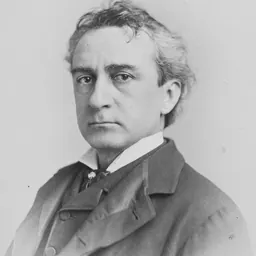
Related people
Same field, nearest in time

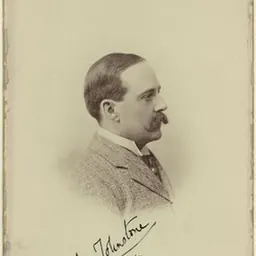


Contemporaries
People whose lives overlapped Adam Badeau's



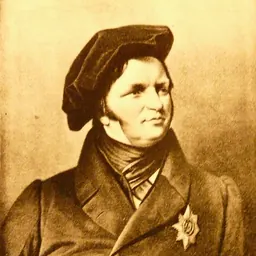

Frequently asked questions
Who was Adam Badeau?
American diplomat (1831-1895)
When was Adam Badeau born?
Adam Badeau was born on 29 December 1831 in New York City.
When did Adam Badeau die?
Adam Badeau died on 19 March 1895 in Ridgewood.
What was Adam Badeau's occupation?
Adam Badeau was a diplomat and writer.
What nationality was Adam Badeau?
Adam Badeau was American.
Sources & further reading
Cite this page
APA: Biography.guide. (2026). Adam Badeau. https://biography.guide/adam-badeau/
MLA: "Adam Badeau." Biography.guide, https://biography.guide/adam-badeau/.
Chicago: "Adam Badeau." Biography.guide. https://biography.guide/adam-badeau/.
Data last updated: 2026-09-25 · Spot an error? Report a correction.
Page generated 2026-09-27 05:12 UTC