
About Achyut Kanvinde
Lived 1916 – 2002 (aged 86). Achyut Kanvinde was an Indian architect.
Achyut Purushottam Kanvinde (9 February 1916 – 28 December 2002) was an Indian architect who worked in functionalist approaches with elements of Brutalist architecture. He received the Padma Shri in 1974.
Early life and education
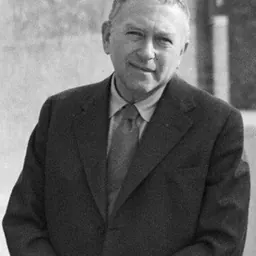
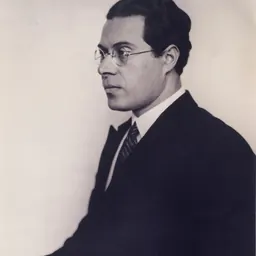
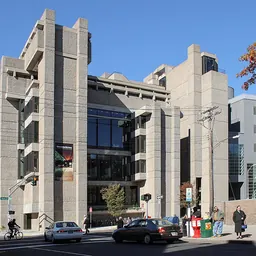
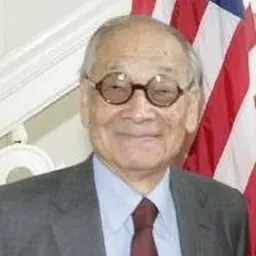
He was born on 9 February 1916 in Achra, in the Konkan region of Maharashtra, in a large family. His mother died when he was two and his father was an arts teacher in Mumbai. Kanvinde, influenced by his father, a portrait and landscape painter, took up art and graduated in architecture from Sir J.J. School of Arts, Mumbai in 1942. He was then sent by the Government of India to study at Harvard where he worked under Walter Gropius and was influenced by his thinking and teaching. The European masters of the Bauhaus – Albert Bayer, László Moholy-Nagy, Marcel Breuer, and the Swiss-American architectural historian Siegfried Giedion also had a great impact. Some of his famous batchmates were Paul Rudolph, I. M. Pei and John Perkins.
Career When he returned to India he joined the Council for Scientific and Industrial Research. In 1985, he was the winner of the IIA "Baburao Mhatre Gold Medal".
Along with his partner Shaukat Rai, he opened the firm Kanvinde, Rai and Chowdhury in New Delhi (which is currently run by Sanjay Kanvinde, B.K. Tanuja and Murad Chowdhury). The firm has been responsible for IIT Kanpur, National Science Centre, Delhi, The National Council of Applied Economic Research in New Delhi, NII Pune, numerous dairy buildings under NDDB (such as Dudhsagar Dairy plant in Mehsana ) and many other buildings.
Philosophy
Kanvinde played with space and forms. A famous example is the ISKCON Temple at New Delhi. He gave great importance to natural light. The form of the building is such that the problem of ventilation as well as excessive heat is beautifully solved. He championed the cause of vernacular architecture. He believed that values and historical influences contributed towards good architecture. "Over the years I have come to believe it is imperative that an architect develop a sensitivity to human nature and a respect for human values. This, after all, is at the very core of his work. In India the search for a new architectural expression must continue – and this must go beyond the satisfaction of matter of fact functional needs. I think the designer's sensibility here must become aware of the accumulated wisdom of generations, but this should go together with the idea of progress reflected in the evolution of technology. In my own case, I must acknowledge my tremendous debt to Gropius – it was he who really exposed me to the power of technology on the one hand and the psychological dimensions of spatial organisation on the other. Actually my present concerns and realisations are all reflections of my earlier preoccupations: as a student at the J. J. School in Bombay my thesis was on "Architectural Composition and its Application to Indian Architecture."
Design concepts He believed that a grid of columns forming a matrix giving structural and spatial aspect would turn a design more sophisticated and faceted.
Selected buildings ISKCON Temple, Delhi Malaviya National Institute of Technology, Jaipur Institute of Rural Management, Anand (IRMA) Dudhsagar Dairy plant in Mehsana Ahmedabad Textile Industry's Research Association (ATIRA) complex (1950–1954) Physical Research Laboratory (PRL) building (1952) University of Agricultural Sciences, Bangalore buildings Various Campus and Buildings under National Dairy Development Board (NDDB)
Don’t just read it —
keep it.
Full-length biographies made to live with: read them, listen on the way to work, watch them tonight.
- E-book
- Audio
- Video
Instant download · yours to keep · every purchase keeps this site free
Important facts
People in Achyut Kanvinde's life
Named in this biography and alive at the same time




Related people
Same field, nearest in time

Contemporaries
People whose lives overlapped Achyut Kanvinde's






Frequently asked questions
Who was Achyut Kanvinde?
Indian architect (1916–2002)
When was Achyut Kanvinde born?
Achyut Kanvinde was born on 9 February 1916 in Achra.
When did Achyut Kanvinde die?
Achyut Kanvinde died on 28 December 2002 in New Delhi.
What was Achyut Kanvinde's occupation?
Achyut Kanvinde was an architect.
What nationality was Achyut Kanvinde?
Achyut Kanvinde was Indian.
Sources & further reading
Cite this page
APA: Biography.guide. (2026). Achyut Kanvinde. https://biography.guide/achyut-kanvinde/
MLA: "Achyut Kanvinde." Biography.guide, https://biography.guide/achyut-kanvinde/.
Chicago: "Achyut Kanvinde." Biography.guide. https://biography.guide/achyut-kanvinde/.
Data last updated: 2026-09-20 · Spot an error? Report a correction.
Page generated 2026-09-27 05:19 UTC