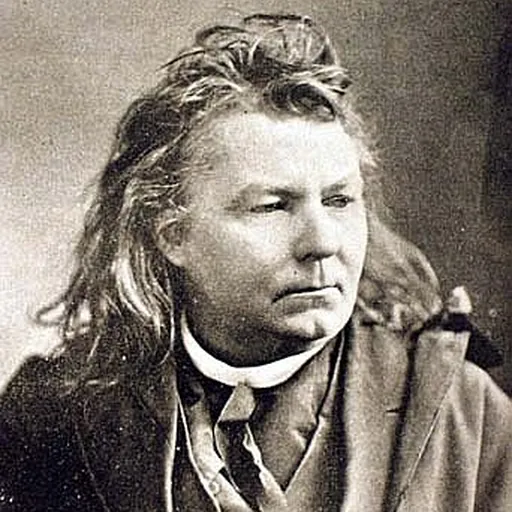
About Abram Joseph Ryan
Lived 1839 – 1886 (aged 47). Abram Joseph Ryan was an American catholic priest, poet and writer.
Abram J. Ryan, ca. 1875 Abram Joseph Ryan (born Matthew Abraham Ryan; February 5, 1838 – April 22, 1886) was an American Catholic poet, priest, journalist, orator, and former Vincentian. Historians disagree on whether Ryan served as a military chaplain for the Confederate States of America. He has been called the "Poet-Priest of the South" and the "Poet Laureate of the Confederacy".
Ryan was born in Maryland to Irish Catholic immigrants. He attended a Christian Brothers school in Missouri, and then, at the age of 13, he attended a seminary run by the Vincentians. He entered the order and was sent to seminary in New York to study theology and oversee the boys in the seminary's school.
Vocally opposed to abolitionism, he was sent back to Missouri. Having gained experience as a preacher in rural areas, Ryan was ordained in 1860. After the American Civil War broke out, he went back and forth a few times between New York and Missouri, and then to Illinois, leaving the Vincentians. While he never formally joined the army, he served as a freelance chaplain for the last two years of the war for both North and South soldiers, during which time his enlisted brother was killed.
Ryan had been writing poetry since his college days, and his "The Conquered Banner" was printed in June 1865. He moved from one parish in the South to another, writing poetry and sermons. He founded a journal which published mainly Southern writers, and published a volume of his own collected poetry which was popular in the US and in Ireland. He died in 1886 in Kentucky and was buried in Mobile, Alabama.
Early life He was born Matthew Abraham Ryan in Hagerstown, Maryland on February 5, 1838, the fourth child of Irish immigrants Matthew Ryan and Mary Coughlin, both of Clogheen, County Tipperary.
In 1840 the family relocated to Ralls County, Missouri, and then, in 1846, to St. Louis, where the father opened a general store. The young Abraham Ryan, as he was called, was educated at St. Joseph's Academy, run by the Christian Brothers. Showing a strong inclination to piety, he was encouraged by his mother and teachers to consider becoming a priest. Ryan decided to test a calling to the priesthood and on September 16, 1851, at the age of 13, entered the College of St. Mary's of the Barrens, near Perryville, Missouri. It was run by the Vincentian Fathers as a minor seminary for young candidates for the priesthood, providing them a classical education with free room and board.
In the summer of 1854, Ryan decided to pursue Holy Orders, at which time he explained his decision to his close childhood friend, Ethel, with whom he had grown up. Frustrated, and feeling ignored by his immediate superior, he wrote directly to the Superior General of the Congregation in Paris, asking to be released from his vows. He pleaded his poor health and his personal conflict with the Provincial Superior. After not receiving a reply, he sent a second request, to which he received a positive response the following August. He determined to sign the release forms on that following September 1 and immediately returned home, where he was soon joined by his brother David, who had left the seminary in New York with the intention of enlisting in the Confederate Army. a religious and political weekly in which he additionally republished much of his early poetry, along with poetry by fellow-southerners James Ryder Randall, Paul Hamilton Hayne, and Sidney Lanier, as well as an early story by Mark Twain. Though opposing women suffrage as "folly", Ryan's contributions to this newspaper included poetic, religious, and political writings. Ryan remained editor-in-chief until 1875. Ryan also addressed the divine commendation of white supremacy: "... if history be a manifestation of Divine Providence, it is the divine mission of the white race to march in the van of civilization to lead the entire world ... it was the pale white brow that gave to the world its philosophy, out of which the world deduces its own intellectual life. [Audience cheers]" Moreover, Ryan justified the contemporaneous recourse to violence by the White League and others: "Men by reasoning came to the conclusion of what was right and just and legitimate, and that under all laws there always existed and always will exist, the right of resistance against that which is wrong. So they not only petition but argue. But, sometimes, my friends, arguments will not reach their conclusions; sometimes arguments fall upon the ears of those who are opposed to those who argue. Sometimes, and perhaps most oftentimes, petitions may be written, but they avail nothing. What must a man do then? The bullet must reason, the rifle must reason, [the audience cheers] the cannon must reason [more cheers]. ... when tyranny can no longer be endured, rests the legitimate right to overthrow it. ... So the 14th of September was more than a day [a reference to the White League's recent violent insurrection of Liberty Place on September 14, 1874 in which the White League inflected about 100 casualties], and the deed of that day was more than a deed. ... They [United States federal government] prefer to pit ignorance against intellect, immorality against morality, and they wish to place over the white race those who neither the right nor power nor potentiality of leading any race to freedom to law, to righteousness, to glory. ... Now, according to American principles, this is no government at all, and when I make my argument, I come to the conclusion that the government is no government at all; and that in any State there exists the grand right of revolution. [Audience cheers]" The statue included a stanza from "The Conquered Banner" below an inscription that reads: "Poet, Patriot, and Priest."
Legacy and tributes
Ryan's poetic verses appealed to Southern post-Civil War and Lost Cause feelings and were used to "adorn the southern monuments and memorials that would dot the region's landscape". Besides "poet-priest of the South", he was also "widely recognized as the Poet of the Confederacy". and he is marked as "Poet of the Confederacy" on the historical marker near his former house in Biloxi. A city of Norfolk historic marker notes that his boyhood home stood nearby. A memorial plaque has been erected at his former parish, Immaculate Conception Church, in Knoxville, Tennessee. Father Ryan High School in Nashville, Tennessee, is named for him. A statue of Ryan was erected in Ryan Park in Mobile, Alabama, and unveiled on 1913-07-13. and Scott Street.
There is a stained glass window at the Confederate Museum in New Orleans, as well as a stone monument on Jefferson Davis Parkway which was erected by the Louisiana Division of the United Daughters of the Confederacy in 1949 There is a stained glass window depicting Father Ryan alongside Bryant, Whittier, and Longfellow in the O'Neill room of Bapst Library, Boston College. A stained glass window was donated by the United Daughters of the Confederacy in 1909 in honor of Father Ryan to Sacred Heart Catholic Church in Tampa, Florida. A stained glass window was donated by the Children of the Confederacy in 1929 in honor of Ryan at St. Mary's Catholic Church in Mobile, Alabama. There is a memorial plaque along Hwy. 90 in Biloxi, MS, remembering Abram Ryan - it is a "vacation" bungalow which he erected and lived in during his semi-retirement after the Civil War, circa 1860s. Ryan's memorial gravesite, located in the Catholic Cemetery in Mobile, Alabama, is set in its own area with a large Eucharistic Cross, various plaques, benches, and a flagstaff flying the papal flag. As recorded on one of the plaques at the gravesite, beginning in 2014, the papal flag is being maintained "in perpetuity" by The Fr. Abram J. Ryan Assembly #1087 of the Fourth Degree Knights of Columbus in Dallas, Texas, with "the approval of the Catholic Archdiocese of Mobile." Another plaque quotes Ryan's poem, "The Conquered Banner", and was donated by the Sons of the Confederate Veterans in 1966.
In literature Ryan is mentioned in Margaret Mitchell's novel, Gone with the Wind: "Father Ryan, the poet-priest of the Confederacy, never failed to call [at Melanie's home] when passing through Atlanta. He charmed gatherings there with his wit and seldom needed much urging to recite his 'Sword of Lee' or his deathless 'Conquered Banner,' which never failed to make the ladies cry."
Selected works Father Ryan's Poems. Mobile, J. L. Rapier & co., 1879. Poems: patriotic, religious, miscellaneous. Baltimore, J. B. Piet, 1880. A Crown for Our Queen. Baltimore, 1882. Reprinted 2010.
Don’t just read it —
keep it.
Full-length biographies made to live with: read them, listen on the way to work, watch them tonight.
- E-book
- Audio
- Video
Instant download · yours to keep · every purchase keeps this site free
Important facts
People in Abram Joseph Ryan's life
Named in this biography and alive at the same time



Related people
Same field, nearest in time
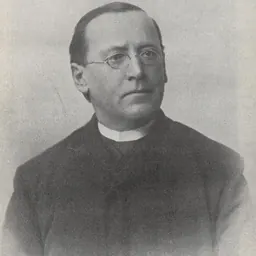
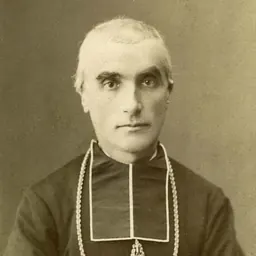
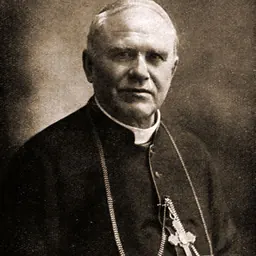
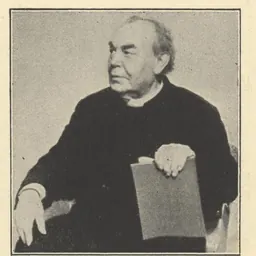

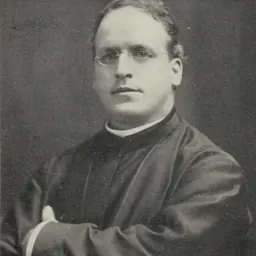
Contemporaries
People whose lives overlapped Abram Joseph Ryan's

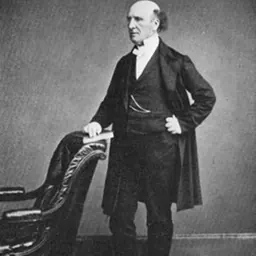
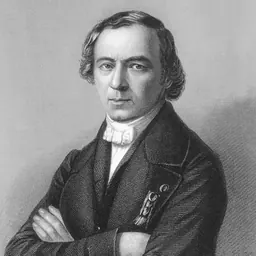

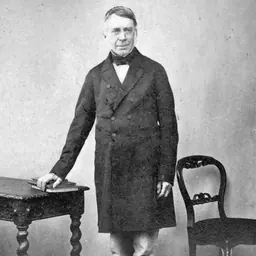
Frequently asked questions
Who was Abram Joseph Ryan?
American priest and writer (1839–1886)
When was Abram Joseph Ryan born?
Abram Joseph Ryan was born on 5 February 1839.
When did Abram Joseph Ryan die?
Abram Joseph Ryan died on 22 April 1886.
What was Abram Joseph Ryan's occupation?
Abram Joseph Ryan was a catholic priest, poet and writer.
What nationality was Abram Joseph Ryan?
Abram Joseph Ryan was American.
Sources & further reading
· Wikipedia: Abram Joseph Ryan
Cite this page
APA: Biography.guide. (2026). Abram Joseph Ryan. https://biography.guide/abram-joseph-ryan/
MLA: "Abram Joseph Ryan." Biography.guide, https://biography.guide/abram-joseph-ryan/.
Chicago: "Abram Joseph Ryan." Biography.guide. https://biography.guide/abram-joseph-ryan/.
Data last updated: 2026-09-23 · Spot an error? Report a correction.
Portrait: Wikimedia Commons · author & licence
Page generated 2026-09-27 05:05 UTC