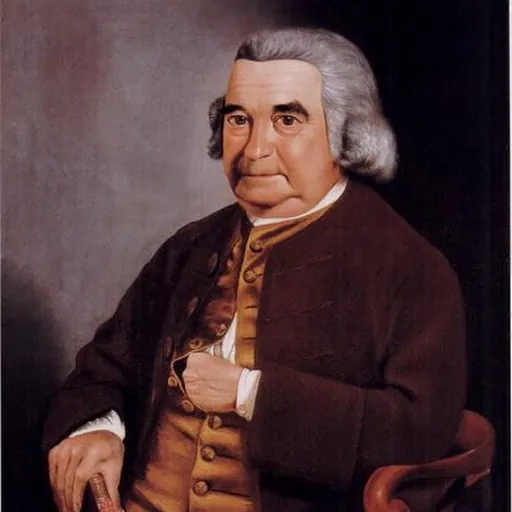
Abraham Redwood
Philanthropist, merchant and slave trader in America
About Abraham Redwood
Lived 1709 – 1788 (aged 79). Abraham Redwood was a merchant, plantation owner, slave trader, philanthropy and plantation, known for Redwood Library.
Abraham Redwood (February 15, 1709 – March 7, 1788) was a West Indies merchant, philanthropist, plantation owner, and slave trader from Newport, Rhode Island. He is the namesake of the Redwood Library and Athenaeum, one of the oldest libraries in the United States. Redwood was President of the Redwood Library and Athenaeum from its founding in 1747 to 1788.
Early life and education Abraham Redwood Jr. was born on Antigua on February 15, 1709, at his father's plantation, Cassada Garden. Abraham Redwood Sr. was born in Bristol, England in 1665. In 1687, Redwood Sr. went to the island of Antigua, where he married Mehitable Langford, only daughter of Jonas Langford. Through this marriage, Redwood Sr. took possession of the sugar plantation known as Cassada Garden which had "a great number of slaves." Abraham Redwood Jr. was the third son of fifteen children. Redwood Sr. remained in Antigua until 1712, when he moved with his family to Salem, Massachusetts. His first wife, Mehitable, died in 1715. Until his death in 1729, Redwood Sr. traveled between homes in Antigua, Salem and Newport, Rhode Island.
Abraham Redwood Jr. was likely educated by the Society of Friends in Philadelphia. Upon the death of his elder brother, Abraham came into the possession of the family sugar plantation in Antigua, Cassada Garden. In 1727, Redwood Jr. purchased land on Aquidneck Island, and on November 2, 1743, he purchased a country estate five miles north of Newport in Portsmouth. Prior to 1728, he married Martha Coggeshall, of Newport, a descendant of John Coggeshall, one of the founders of the Colony of Rhode Island and Providence Plantations. Together Martha and Abraham had six children.
Redwood's botanical garden on his Portsmouth estate was known for its various curious foreign and indigenous plants. He ordered orange and fig trees, and adolescent guava and pineapple plants from the West Indies to fill his garden. Solomon Drowne wrote in 1767 that the garden was rumored to cost over forty thousand pounds, and that the gardener, Charles Dunham, received over one hundred dollars annual salary. Dunham was probably Newport's first professional gardener.
Cassada Garden During a voyage from Bristol to Antigua in 1687, Abraham Redwood Sr. married Mehitable Langford, the daughter of a wealthy planter named Jonas Langford. Soon after his marriage, Redwood Sr. inherited the sugar cane plantation named Cassada Garden. Redwood Sr.'s oldest son, William, died in 1712 at the age of sixteen, and his second son, Jonas, was thrown from his horse in 1724, at the age of eighteen. Thus the third son, Abraham Redwood Jr., became the oldest living heir, and sometime after 1724, he inherited the estate of Cassada Garden.
Merchant and slave trader Both Abraham Redwood Sr. and Abraham Redwood Jr. were devout Quakers. Though their faith had questioned the Atlantic slave trade since 1716, and the Religious Society of Friends did not formally forbid the importing of slaves until 1761. In 1720, Abraham joined his father's business, working to not only maintain their sugar plantation in Antigua, but also the bilateral trade often referred to as the West Indies trade. As a part of this trade, Redwood sent timber and fish from Rhode Island to the Caribbean in exchange for molasses and hard currency.
In 1736, a sudden drop in the price of sugar in London threatened Redwood with bankruptcy. In response to his personal financial crisis, Redwood expanded his enterprise to include slave trading, becoming among the first of Newport's leading merchants to enter the slave trade. In 1737, he financed a voyage to West Africa on his snauw Martha and Jane. Though that voyage failed, In all, Redwood may have personally financed the trafficking of over three hundred people from the region of West Africa.
Redwood's 1740 slave voyage was his last one on record. However, his younger half-brother, William (1726–1815), and his son, Jonas (1730–1779), financed four more voyages with William Vernon between 1756 and 1759. Several other prominent slave owners appear on the original list of forty-six proprietors, including William Vernon and Simon Pease. Scipio and Oliver, two enslaved Africans Redwood kept on his plantation in Antigua, were burned at the stake for suspected involvement in a conspiracy to start a slave revolt in 1736.
Upon his death, Redwood transferred the ownership of slaves in Newport and Antigua to his children and grandchildren. On the 1774 Census of Newport, Redwood has three enslaved people living in his home. In total, Redwood owned well over two hundred enslaved people, making him, at the time of his death, the largest slave owner living in the city of Newport.
Death In 1788, Abraham Redwood died at the age of seventy-nine. Redwood is buried in the Coggeshall Burial Ground in Newport, Rhode Island.
Don’t just read it —
keep it.
Full-length biographies made to live with: read them, listen on the way to work, watch them tonight.
- E-book
- Audio
- Video
Instant download · yours to keep · every purchase keeps this site free
Important facts
People in Abraham Redwood's life
Named in this biography and alive at the same time

Related people
Same field, nearest in time

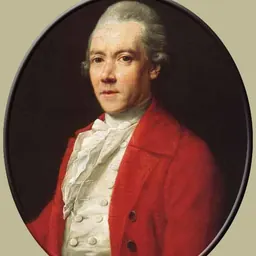



Contemporaries
People whose lives overlapped Abraham Redwood's

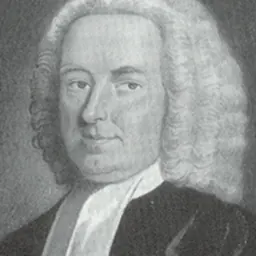


Frequently asked questions
Who was Abraham Redwood?
philanthropist, merchant and slave trader in America (1709–1788)
When was Abraham Redwood born?
Abraham Redwood was born on 17 January 1709 in Antigua, Antigua and Barbuda.
When did Abraham Redwood die?
Abraham Redwood died on 17 January 1788 in Newport, Rhode Island, United States.
What was Abraham Redwood's occupation?
Abraham Redwood was a merchant, plantation owner, slave trader, philanthropy and plantation.
What was Abraham Redwood known for?
Abraham Redwood was known for Redwood Library.
Sources & further reading
Cite this page
APA: Biography.guide. (2026). Abraham Redwood. https://biography.guide/abraham-redwood/
MLA: "Abraham Redwood." Biography.guide, https://biography.guide/abraham-redwood/.
Chicago: "Abraham Redwood." Biography.guide. https://biography.guide/abraham-redwood/.
Data last updated: 2026-09-22 · Spot an error? Report a correction.
Portrait: Wikimedia Commons · author & licence
Page generated 2026-09-27 05:01 UTC