
About Abraham Oakley Hall
Lived 1826 – 1898 (aged 72). Abraham Oakley Hall was an American lawyer, politician, jurist, mayor and prosecutor.
Mayor Hall. Want your place paved, you say? Certainly, Sir; how will you have it done, with good intentions or with broken promises? We will supply you with either at the City Hall. (Punchinello, April 1870.)
Abraham Oakey Hall (July 26, 1826 – October 7, 1898) was an American politician, lawyer, and writer who served as Mayor of New York City from 1869 to 1872. He twice served as the New York County District Attorney from 1855 to 1858 and from 1862 to 1871.
Hall was born in Albany and raised by his mother in New York City after his father died when he was three. He worked as a journalist to pay for New York University and briefly attended Harvard University before moving to New Orleans. He read the law and was admitted to the Louisiana bar before returning to New York City. Originally a member of the Whig Party, he was sworn in as the 15th New York County District Attorney in 1855 and served until 1858. He returned to office as the 18th New York County District Attorney in 1862 as a member of the Republican Party and was reelected in 1864 as a member of the Tammany Hall-backed Democratic Party. In 1868, he was elected as the Mayor of New York City and he was reelected in 1870.
In 1871, a Tammany Hall corruption scandal involving William M. Tweed led to Hall's indictment for "willfully neglecting his official duties." He maintained his innocence and was acquitted at his third trial in 1872, but his political career was effectively ended. He worked as a journalist in New York City and London, before dying in 1898.
Early life Hall was born in Albany, New York, on July 26, 1826, to Elsie Lansing Oakey and Morgan James Hall. His father, a merchant, died of yellow fever when Hall was 3 years old. Hall returned to New York in 1845, and worked in the law office of Charles W. Sandford. He was admitted to the Louisiana Bar later that year. However, Democrat Lorenzo B. Shepard was appointed by Governor Horatio Seymour to fill the vacancy. In 1863, he prosecuted perpetrators of the New York City draft riots. He was re-elected as a Democratic Tammany Hall candidate in 1864 and 1867. During his time in the district attorney's office Hall became a frequent patron of Pfaff's. serving two terms from January 1, 1869, to December 31, 1872.
He complained of an undercount in the 1870 United States census in New York City to President Ulysses S. Grant and successfully lobbied for a recount of the city's population. As mayor, Hall was unpopular for a myriad of reasons, partly due to the ongoing political clashes between Anglo "Nativists" and the Irish population. While Democrat "Boss" Tweed, Tammany Hall leaders and Hall were Anglo, their power base rested largely upon Irish immigrants. This conflict boiled over in 1871 when Hall attempted to stop the Irish Orange Order (Irish of Anglo-Saxon and Scots-Irish descent) from holding a parade, perhaps provocatively celebrating the historic Orangemen (Anglo Protestant Irish) victory over ethnic Irish Catholics. Fearing that either banning the march or allowing it to continue would both lead to violence and mayhem, Governor John Hoffman overruled Mayor Hall and allowed it to continue with increased policing. Nevertheless, riots did occur, cementing Hall's negative image on both sides and severely compromising Hoffman's political career.
Additionally, Hall backed away from supporting Republican candidates because of widespread dislike of the Nativists within the Party. He was seen as attempting to have it both ways rather than finding a middle ground. In particular, Thomas Nast, who had old-line Republican leanings, took aim at "Elegant Oakey" whom he considered to be the worst of the Tweed politicians because of his high standing, education and open presidential ambitions. Nast also felt that Hall got off lightly in the affair because of his continued personal connections with reformer and prosecutor Samuel Tilden, though later historians have shown that Hall and Tilden were never very close in the 1860s and 1870s and that Hall did not receive any special assistance. In fact, Tilden was the chief opponent of Tweed, Hall, et al. He was acquitted of all charges at his third trial in 1872 where he represented himself.
Post-mayoral career, later life, and death Some time after the last trial, Hall wrote and acted in his own play entitled The Crucible, where he played the lead part, a man falsely accused of stealing. The play, which ran for two or three weeks at Abbey's Park Theatre in November 1876 was a flop. The lessee and manager, William Stuart was unable to continue in business and swiftly sold the theatre to Henry E. Abbey. Stuart, whose real name was Edmund O'Flaherty, was an adventurer and swindler and former Irish M.P. with strong links to extreme financial, judicial, and political fraud and corruption in Ireland.
Hall returned to his work as an attorney. He subsequently suffered a nervous breakdown and lived for a time in London without knowledge of having done so. Hall sued Viscount Bryce for defamation of character and libel, but the case was eventually dropped. His daughter Cara de la Montagnie Hall married Rear Admiral Thomas Holdup Stevens III, but maintained her name to honor her father. In 1892, he returned to New York City.
Hall died of heart disease on October 7, 1898, in New York City, and was buried at Trinity Church Cemetery and Mausoleum, located at 770 Riverside Drive in Manhattan.
Electoral history
Don’t just read it —
keep it.
Full-length biographies made to live with: read them, listen on the way to work, watch them tonight.
- E-book
- Audio
- Video
Instant download · yours to keep · every purchase keeps this site free
Important facts
People in Abraham Oakley Hall's life
Named in this biography and alive at the same time
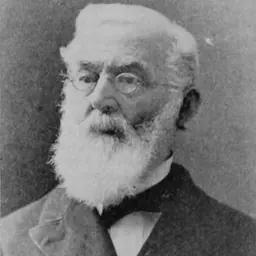



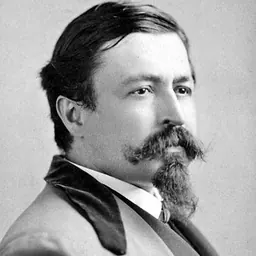
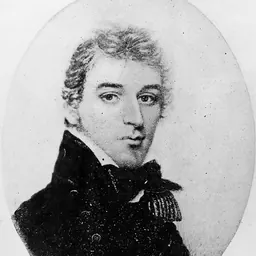

Related people
Same field, nearest in time


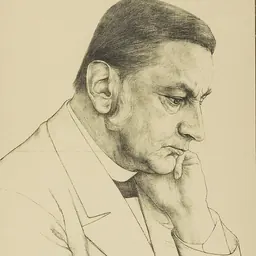
Contemporaries
People whose lives overlapped Abraham Oakley Hall's





Frequently asked questions
Who was Abraham Oakley Hall?
American mayor (1826–1898)
When was Abraham Oakley Hall born?
Abraham Oakley Hall was born on 26 July 1826 in Albany.
When did Abraham Oakley Hall die?
Abraham Oakley Hall died on 7 October 1898 in New York City.
What was Abraham Oakley Hall's occupation?
Abraham Oakley Hall was a lawyer, politician, jurist, mayor and prosecutor.
What nationality was Abraham Oakley Hall?
Abraham Oakley Hall was American.
Sources & further reading
· Wikipedia: Abraham Oakley Hall
Cite this page
APA: Biography.guide. (2026). Abraham Oakley Hall. https://biography.guide/abraham-oakley-hall/
MLA: "Abraham Oakley Hall." Biography.guide, https://biography.guide/abraham-oakley-hall/.
Chicago: "Abraham Oakley Hall." Biography.guide. https://biography.guide/abraham-oakley-hall/.
Data last updated: 2026-09-20 · Spot an error? Report a correction.
Page generated 2026-09-27 05:22 UTC