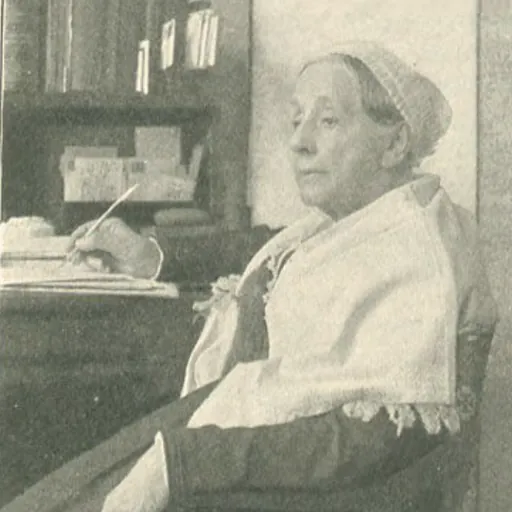
About Abigail Hopper Gibbons
Lived 1801 – 1893 (aged 91). Abigail Hopper Gibbons was an American nurse and teacher.
Abigail Hopper Gibbons (née Hopper; December 7, 1801 – January 16, 1893) was an American abolitionist, schoolteacher, and social welfare activist. She assisted in founding and led several nationally known societies for social reform during and following the American Civil War.
She grew up in Philadelphia, Pennsylvania, in a Quaker family. Her father, Isaac Hopper, opposed slavery (as did many among Quakers by then) and aided fugitive slaves. She grew to share her father's beliefs and spent much of her life working for social reform in several fields. In 1841, the New York Monthly Meeting disowned Gibbons' father and husband for their anti-slavery writing. Abigail Gibbons resigned the following year, also removing her minor children.
Gibbons was prominent during and after the American Civil War. Her work in Philadelphia, Washington, D.C., and New York City was for civil rights and education for Black Americans, prison reform for women, medical care for Union officers during the war, aid to veterans returning from the war, to help them find work; and welfare. Because Gibbons was a known abolitionist, her house was among those attacked and destroyed during the New York City draft riots of July 1863.
Early life and career Abigail Hopper was born in Philadelphia in 1801, the third of ten children. She was informally called Abby. Both her parents were proud abolitionists. Her father, Isaac Tatem Hopper, was of the Hicksite branch of Quakers. Her mother, Sarah Tatum Hopper, became a recommended minister for the Society of Friends and oversaw schools for black children, along with a committee.
Pennsylvania had abolished slavery and many free people of color lived in Philadelphia. Her father became an active and leading member of The Pennsylvania Abolition Society. He often directly confronted slave kidnappers, who frequented Philadelphia and sometimes kidnapped free blacks for sale into slavery, as well as capturing fugitive slaves to return to their masters for bounties. Called upon to protect the rights of African Americans, Isaac Hopper and his wife garnered a reputation as friends and advisers of the "oppressed race" in all emergencies. The Hoppers also sheltered many poor Quakers in their house, despite their own family's large size and the father's unstable financial status. From their early years, their children were called to aid others.
Both of Hopper's parents came from historically Quaker families and raised their children in that religion. Hopper and her siblings attended Friends' schools while growing up, and lived with these beliefs. In 1821, she also founded a school that practiced Quaker beliefs. On June 26 1827, Abigail, along with her siblings and parents transferred their membership to the Darby Friends Meeting. In 1830, Hopper moved to New York and became a teacher at a Quaker school.
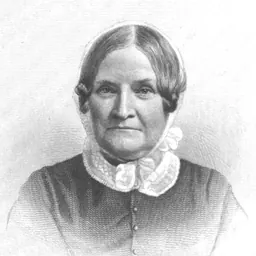
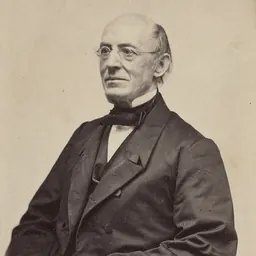
Abigail grew up to share her parents' abolitionist sentiments. She worked with well-known abolitionists of her time, including Lydia Maria Child, Sarah Moore Grimké, William Lloyd Garrison, and Theodore Dwight Weld.
Quaker rejection
Some Quaker yearly meetings divided due to influences from deism, as well as differences between urban and rural members. In 1841, the New York Monthly Meeting, which was dominated by Hicksites, disowned Abigail's father Isaac Hopper and her husband James Sloan Gibbons for their writing and other activities against slavery. The following year Abigail Hopper Gibbons resigned from the Meeting in protest, also removing her and James' four minor children. She and her family maintained Quaker practices and faith but did not rejoin the Meeting.
Civil War With the outbreak of the American Civil War, Gibbons knew that nurses would be needed to care for the wounded. The United States Sanitary Commission was established in 1861, shortly after the Civil War began, to recruit nurses and to provide adequate medical care to the Union wounded. It would undertake numerous fundraising efforts to raise money for these purposes. When the Commission set up a training base at Davids Island Hospital in New York, Gibbons was among the trainees.
In the South, she worked closely with contrabands, escaped slaves who often sought refuge behind Union lines. Hopper helped them with childbirth and other familial issues. She also collected donations from those in the North and gave them to the contraband slaves. Additionally, she used her wages to help pay for medical expenses encountered by patients who resided in a contraband camp.
In New York City, social tensions increased with the imposition of the draft. Many Irish immigrant working men did not support the war or abolition of slavery; they resented being drafted when wealthier men could pay for substitutes to take their places. With the Emancipation Proclamation of 1863, they feared more job competition by blacks and the loss of work or being driven to lower wages. During the New York Draft Riots, ethnic Irish led mob attacks against individual blacks, their residences, and businesses, as well as against the Colored Orphan Asylum, in the largest civil insurrection in United States history. (The orphans were saved but the building burned. ) The rioters also attacked residences of known white abolitionists and prominent Republicans. On Tuesday, July 14, 1863, the Gibbons' Manhattan home at 19 Lamartine Place (now 339 West 29th Street) was burned and destroyed by rioters.
Post-war Following the war, Gibbons founded the Labor and Aid Society in New York, which aided returning veterans find work. To further her mission with women prisoners, she co-founded The Isaac T. Hopper Home, named for her father. It assisted former women prisoners to integrate into society after their release.
Gibbons remained active in reform concerns into old age, and in her later years dressed dolls in Quaker dress to present to quarantined and hospitalized children.
Death Gibbons died of pneumonia in New York in 1893, aged 91. She was eulogized in her obituary as "one of the most remarkable women of the century" for her work in noted reform movements. She is interred at Green-Wood Cemetery in Brooklyn, New York.
Legacy Her daughter Sarah Emerson Gibbons edited and wrote a biography of Abigail Hopper Gibbons, published in 1896, which was based in part on her letters. The WPA has continued, providing programs through which women can acquire the life skills needed to gain and keep employment, manage finances, and to make good choices for themselves and their families. It is the nation's oldest advocacy organization working exclusively with women prisoners.
Don’t just read it —
keep it.
Full-length biographies made to live with: read them, listen on the way to work, watch them tonight.
- E-book
- Audio
- Video
Instant download · yours to keep · every purchase keeps this site free
Important facts
People in Abigail Hopper Gibbons's life
Named in this biography and alive at the same time



Related people
Same field, nearest in time





Contemporaries
People whose lives overlapped Abigail Hopper Gibbons's





Frequently asked questions
Who was Abigail Hopper Gibbons?
American abolitionist, reformer, activist and Civil War nurse (1801-1893)
When was Abigail Hopper Gibbons born?
Abigail Hopper Gibbons was born on 7 December 1801 in Philadelphia.
When did Abigail Hopper Gibbons die?
Abigail Hopper Gibbons died on 16 January 1893 in New York City.
What was Abigail Hopper Gibbons's occupation?
Abigail Hopper Gibbons was a nurse and teacher.
What nationality was Abigail Hopper Gibbons?
Abigail Hopper Gibbons was American.
Sources & further reading
· Wikipedia: Abigail Hopper Gibbons
· DBpedia: Abigail Hopper Gibbons
Cite this page
APA: Biography.guide. (2026). Abigail Hopper Gibbons. https://biography.guide/abigail-hopper-gibbons/
MLA: "Abigail Hopper Gibbons." Biography.guide, https://biography.guide/abigail-hopper-gibbons/.
Chicago: "Abigail Hopper Gibbons." Biography.guide. https://biography.guide/abigail-hopper-gibbons/.
Data last updated: 2026-09-23 · Spot an error? Report a correction.
Portrait: Wikimedia Commons · author & licence
Page generated 2026-09-27 05:07 UTC