
Abebe Bikila
Ethiopian double Olympic marathon champion
About Abebe Bikila
Lived 1932 – 1973 (aged 41). Abebe Bikila was an Ethiopian marathon runner, long-distance runner, athletics competitor, athlete and olympic champion.
medal_templates = show_medals = yes
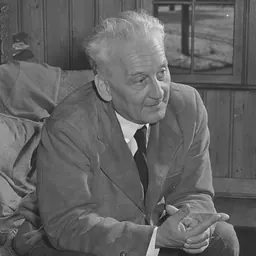
Shambel Abebe Bikila (; August 7, 1932 – October 25, 1973) was an Ethiopian marathon runner who was a back-to-back Olympic marathon champion. He was the first Ethiopian Olympic gold medalist, winning his first gold medal at the 1960 Summer Olympics in Rome while running barefoot. At the 1964 Tokyo Olympics, he won his second gold medal, making him the first athlete to successfully defend an Olympic marathon title. In both victories, he ran in world record time.
Born in Shewa, Abebe moved to Addis Ababa around 1952 and joined the 5th Infantry Regiment of the Ethiopian Imperial Guard, an elite infantry division that safeguarded the emperor of Ethiopia. Abebe served in the Kagnew Battalion during the Korean War.
Enlisting as a soldier before his athletic career, he rose to the rank of shambel (captain). Abebe participated in a total of sixteen marathons. He placed second on his first marathon in Addis Ababa, won twelve other races, and finished fifth in the 1963 Boston Marathon. In July 1967, he sustained the first of several sports-related leg injuries that prevented him from finishing his last two marathons. Abebe was a pioneer in long-distance running. Mamo Wolde, Juma Ikangaa, Tegla Loroupe, Paul Tergat, and Haile Gebrselassie—all recipients of the New York Road Runners' Abebe Bikila Award—are a few of the athletes who have followed in his footsteps to establish East Africa as a force in long-distance running. His birthday coincided with the 1932 Los Angeles Olympic marathon. Abebe was the son of Wudinesh Beneberu and her second husband, Demissie. During the Second Italo-Ethiopian War (1935–1937), his family was forced to move to the remote town of Gorro. By then, Wudinesh had divorced Abebe's father and married Temtime Kefelew. During the mid-1950s, Abebe ran from the hills of Sululta to Addis Ababa and back every day. In 1956, Abebe finished second to Wami Biratu in the Ethiopian Armed Forces championship. According to biographer Tim Judah, his entry in the Olympics was a "long planned operation" and not a last-minute decision, as was commonly thought.
Abebe was 27 when he married 15-year-old Yewebdar Wolde-Giorgis on March 16, 1960. #tag:ref|John Underwood, in his 1965 Sports Illustrated profile of Abebe, quotes him as stating that he was "married when [he] was 26," (i.e. 1958 or 1959). Niskanen entered Abebe Bikila and Abebe Wakgira in the marathon at the 1960 Rome Olympics, which would be run on September 10. In Rome, Abebe purchased new running shoes, but they did not fit well and gave him blisters.
Due to Rome's blistering heat, the race started in late-afternoon at the foot of the Capitoline Hill staircase and finished at night at the Arch of Constantine, just outside the Colosseum. The course twice passed Piazza di Porta Capena, where the Obelisk of Axum was then located.
Between and , the lead changed hands several times. By about , however, Abebe and Ben Abdesselam moved away from the rest of the pack. Trailing by about two minutes at the mark were New Zealand's Barry Magee, who was to finish third in 2:17:18.2
Abebe and Ben Abdesselam remained together until the last . Nearing the obelisk again, Abebe sprinted to the finish. In the early-evening darkness, his path along the Appian Way was lined with Italian soldiers holding torches. and later said that he could have run another .
1960–1964 alt=Haile Selassie awards the Star of Ethiopia to Abebe in the Green Salon of the emperor's palace. Emperor Haile Selassie confers the Star of Ethiopia on Abebe after his victory in the Olympic marathon, 1960. Abebe returned to his homeland as a hero. He was greeted by a large crowd, many dignitaries and the commander of the Imperial Guard, Brigadier-General Mengistu Neway. Abebe was paraded through the streets of Addis Ababa along a procession route lined with thousands of people and presented to Emperor Haile Selassie. The Emperor awarded him the Star of Ethiopia and promoted him to the rank of asiraleqa (corporal). He was given the use of a chauffeur-driven Volkswagen Beetle (since he did not yet know how to drive) and home, both owned by the guard.
On December 13, 1960, while Haile Selassie was on a state visit to Brazil, Imperial Guard forces led by Mengistu Neway began an unsuccessful coup and briefly proclaimed Selassie's eldest son Asfaw Wossen Taffari emperor. Although Abebe was not directly involved, he was briefly arrested and questioned. Mengistu was later hanged, and his forces (which included many members of the Imperial Guard) were killed in the fighting, arrested or fled.
In the 1961 Athens Classical Marathon, Abebe again won while running barefoot. This was the second and last event in which he competed barefooted. The same year he won the marathons in Osaka and Košice. While in Japan, he was approached by a Japanese shoe company, Onitsuka Tiger, with the possibility of wearing its shoes; they were informed by Niskanen that Abebe had "other commitments". Kihachiro Onitsuka suspected that Abebe had a secret sponsorship deal with Puma, in spite of the now-abandoned rules against such deals.
Abebe ran the 1963 Boston Marathon—which was between his Olympic wins in 1960 and 1964—and finished fifth in 2:24:43. This was the only time in his competitive career that he completed an international marathon without winning. He and countryman Mamo Wolde, who finished 12th, had run together on record pace for 18 miles, until cold winds and the hills in Newton caused both to fall back. The race was won by Belgium's Aurele Vandendriessche in a course record 2:18:58. Abebe returned to Ethiopia and did not compete in another marathon until 1964 in Addis Ababa. He won that race in a time of 2:23:14.8. He was brought to the hospital and diagnosed with acute appendicitis, Back on his feet in a few days, Abebe left the hospital within a week.
He entered the October 21 marathon wearing Puma shoes. This was in contrast to the previous Olympics in Rome, where he ran barefoot. At , he was in third place behind Ron Clarke of Australia—who had been upset by Billy Mills in the 10,000 meters—and Jim Hogan of Ireland. Hogan soon dropped out, exhausted, leaving only Tsuburaya three minutes behind Abebe by the mark.
Abebe entered the Olympic stadium alone, to the cheers of 75,000 spectators. Abebe finished with a time of 2:12:11.2, Tsuburaya was third, a few seconds behind Heatley. Abebe did not appear exhausted after the finish, and he again performed a routine of calisthenics, As of the 2024 Olympic marathon in Paris, Abebe, Waldemar Cierpinski, and Eliud Kipchoge are the only athletes to have won two gold medals in the event, and they all did it back-to-back. The Emperor promoted him to the commissioned-officer rank of metoaleqa (lieutenant).
1965–1968
On April 21, 1965, as part of the opening ceremonies for the second season of the 1964–1965 New York World's Fair, Abebe and fellow athlete and Imperial Guardsman Mamo Wolde, ran a ceremonial half-marathon from the Arsenal in Central Park (at 64th Street and Fifth Avenue in Manhattan) to the Singer Bowl at the fair. They carried a parchment scroll with greetings from Haile Selassie.
The following month, Abebe returned to Japan and won his second Mainichi Marathon, held in Shiga Prefecture. The following year, Abebe did not finish the Zarautz International Marathon in July 1967. He had injured his hamstring, an injury from which he would never recover. Abebe had begun to limp, the German government refused to accept payment for the medical services. Abebe returned in time to join the rest of the Ethiopian Olympic team training in Asmara, which has an altitude and climate similar to Mexico City (the host of the next Olympic Games).
Seeking a third consecutive gold medal, Abebe entered the October 20 Olympic marathon with Mamo Wolde and Gebru Merawi. Symbolically, he was issued bib number 1 for the race. A week before the race, Abebe developed pain in his left leg. Doctors discovered a fracture in his fibula, and he was advised to stay off his feet until the day of the race. Abebe had to drop out of the race after approximately and Mamo Wolde won in 2:20:26.4. This was Abebe's last marathon appearance.
Accident and death On the night of March 22, 1969, Abebe lost control of his Volkswagen Beetle and it overturned, trapping him inside. According to biographer Tim Judah, he may have been drinking. Judah quotes Abebe's account of the accident from the biography by his daughter, Tsige Abebe, that he tried "to avoid a fast, oncoming car". Judah wrote that it was difficult to know for certain what happened. On March 29 Abebe was transferred to Stoke Mandeville Hospital in England, where he spent eight months receiving treatment. He was visited by Queen Elizabeth II and received get-well cards from all over the world. Although Abebe could not move his head at first, his condition eventually improved to paraplegia, regaining the use of his arms.
In 1970, Abebe began training for wheelchair-athlete archery competitions. In July, he competed in archery and table tennis at the Stoke Mandeville Wheelchair Games in London. The following April, Abebe participated in games for disabled people in Norway. Although he had been invited as a guest, he competed in archery and table tennis and defeated a field of sixteen in cross-country sled dog racing with a time of 1:16:17.
Abebe was invited to the 1972 Summer Olympics in Munich as a special guest, and received a standing ovation during the opening ceremony. finishing third behind Frank Shorter of the United States and Karel Lismont of Belgium. After Shorter received his gold medal, he shook Abebe's hand. He was buried with full military honours; his state funeral was attended by an estimated 65,000 people including Emperor Haile Selassie, who proclaimed a day of mourning for the country's national hero. Abebe is interred in a tomb with a bronze statue at Saint Joseph Church in Addis Ababa.
Legacy
Abebe began, and largely inspired, East African preeminence in long-distance running. According to Kenny Moore, a contemporary athlete and writer for Sports Illustrated, he began "the great African distance running avalanche." Abebe brought to the forefront the now-accepted relationship between endurance and high-altitude training in all kinds of sports. Five years after his death, the New York Road Runners inaugurated the annual Abebe Bikila Award for contributions by an individual to long-distance running. East African recipients include Mamo Wolde, Juma Ikangaa, Tegla Loroupe, Paul Tergat, and Haile Gebrselassie.
He is a national hero in Ethiopia, In late 1972, the American Community School of Addis Ababa dedicated its gymnasium (which included facilities for disabled people) to Abebe. The winner, Ethiopian runner Siraj Gena, ran the last of the race barefoot and received a €5,000 bonus. A plaque commemorating the anniversary is mounted on a wall on the Via di San Gregorio, and a footbridge in Ladispoli was named in Abebe's honour.
According to Abebe's New York Times obituary, Abebe and Yewebdar had three sons, along with their daughter Tsige. The case was dismissed in October 2016 on the grounds that the plaintiffs were aware of Vibram's use of the name in 2011, but did not file suit until four years later. According to judge Ronald Leighton, "this unreasonable delay prejudiced Vibram."
In popular culture
Abebe has been featured in several documentaries about his life and the Olympics in general. His victory at the 1964 Olympics was featured in the 1965 documentary, Tokyo Olympiad directed by Kon Ichikawa. Footage from that film was recycled in the 1976 thriller, Marathon Man directed by John Schlesinger and starring Dustin Hoffman. Abebe was the subject of Bud Greenspan's 1972 documentary, The Ethiopians.
In 1992, Yamada Kazuhiro published the first full biography about Abebe, written in Japanese and published in Tokyo; it was entitled Do You Remember Abebe? . Since then, there have been at least three biographical works based on his life. Among these is Triumph and Tragedy, written in English by his daughter Tsige Abebe and published in Addis Ababa in 1996. and Tim Judah's 2009 Bikila: Ethiopia's Barefoot Olympian. According to the journalist Tim Lewis's comparative review of the two books, Judah's is a more journalistic, less-forgiving biography of Abebe. For example, Lewis cites the discrepancy in the circumstances surrounding Abebe's car accident:
Rambali pictures [Abebe] driving to training in his VW Beetle, only to be forced off the road by a group of students ('screaming, blood-covered young men') who are being chased by armed police. The facts uncovered by Judah point to a less poetic explanation: [Abebe] was last seen in a bar at 9 pm, the roads that night were wet and he was inexperienced behind the wheel.
Robin Williams referred to Abebe's barefoot running during his 2009 stand-up comedy tour, Weapons of Self-Destruction: "[Abebe] won the Rome Olympics running barefoot. He was then sponsored by Adidas. He ran the next Olympics; he carried the fucking shoes". Abebe did not carry his shoes but wore them; he was not sponsored by Adidas but was perhaps secretly sponsored by Puma.
Marathon performances
Representing Addis Ababa, Ethiopia 2:39:50 Olympic Trials Addis Ababa, Ethiopia 2:21:23 Olympic Games Rome, Italy 2:15:16.21961 Athens International Marathon Athens, Greece 2:23:44.6 Mainichi Marathon Osaka, Japan 2:29:27 Košice Marathon Košice, Czechoslovakia 2:20:12.0 1963 Boston Marathon Boston, US 2:24:43a1964 Armed Forces championship Addis Ababa, Ethiopia 2:23:14.8 Olympic Trials Addis Ababa, Ethiopia 2:16:18.8 Olympic Games Tokyo, Japan 2:12:11.2 1965 Mainichi Marathon Shiga Prefecture, Japan 2:22:55.81966 Zarautz International Marathon Zarautz, Spain 2:20:28.8 Incheon–Seoul Marathon Seoul, South Korea 2:17:04a 1967 Zarautz International Marathon Zarautz, Spain 1968 Olympic Games Mexico City, Mexico
Don’t just read it —
keep it.
Full-length biographies made to live with: read them, listen on the way to work, watch them tonight.
- E-book
- Audio
- Video
Instant download · yours to keep · every purchase keeps this site free
Important facts
People in Abebe Bikila's life
Named in this biography and alive at the same time




Related people
Same field, nearest in time



Contemporaries
People whose lives overlapped Abebe Bikila's


Frequently asked questions
Who was Abebe Bikila?
Ethiopian double Olympic marathon champion
When was Abebe Bikila born?
Abebe Bikila was born on 7 August 1932 in Shewa.
When did Abebe Bikila die?
Abebe Bikila died on 25 October 1973 in Addis Ababa.
What was Abebe Bikila's occupation?
Abebe Bikila was a marathon runner, long-distance runner, athletics competitor, athlete and olympic champion.
What nationality was Abebe Bikila?
Abebe Bikila was Ethiopian.
Sources & further reading
Cite this page
APA: Biography.guide. (2026). Abebe Bikila. https://biography.guide/abebe-bikila/
MLA: "Abebe Bikila." Biography.guide, https://biography.guide/abebe-bikila/.
Chicago: "Abebe Bikila." Biography.guide. https://biography.guide/abebe-bikila/.
Data last updated: 2026-09-20 · Spot an error? Report a correction.
Page generated 2026-09-27 05:19 UTC