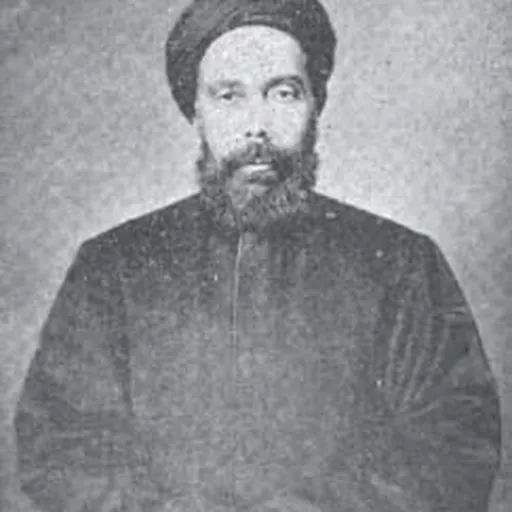
Abdullah Nadim
Writer, poet, journalist, and a pioneer of Egyptian nationalism
About Abdullah Nadim
Lived 1842 – 1896 (aged 53). Abdullah Nadim was an Egyptian poet, journalist, writer, activist, journal editor and literary scholar.
Abdullah an-Nadeem (1843-October 1896, Arabic: عبد الله النديم ) was a significant Egyptian writer and political activist. He was a major figure during the Urabi revolt with many considering him the voice of the revolution. An-Nadeem was brought up in Alexandria. Poverty played an important role in his life, as he did not receive a formal education and came from the poor districts of Egypt at a time of financial and economic crisis. Corruption in the state, foreign intervention, and exploitation in political power were main aspects of an-Nadeem's political writings and speeches. He sought to overthrow the government that depended on foreigners and advocated for protecting the nation. His nationalist ideologies and political activism were greatly influenced by Jamal al-Din al-Afghani and Muhammed Abduh. An-Nadeem considered himself a self-taught scholar as he mentioned in his book “Kan wa yakoon”; (Was and Will Be).
Early life Abdullah an-Nadeem (born Abdullah bin Mesbah) was born in Alexandria in 1843 to a poor Egyptian family. His father, Mesbah bin Ibrahim el-Hosni, was a baker. An-Nadeem grew up in El-Gomrok district, a poor neighbourhood near the main port of Alexandria.
His father sent him to the district's kottab, a simple form of schooling. He learned how to read and write and was able to learn the Qur’an by heart when he was only nine years old. In 1855, the poor conditions of his family prevented him from studying at Al-Azhar so his father sent him to El Noor mosque, near his home. He excelled at Islamic jurisprudence, logic, religious studies, and Arabic grammar. Once again he was on the road. He resided at Mansoura where he found residence at the “Omada” of a small village and took a job as a private tutor for the Omda's children teaching them writing, reading, and religious studies. At that time he managed to learn more about the peasants living in Mansoura and the poor conditions that they suffered from. He didn't last long at this job, which led to his departure from Mansoura. When he finally found a job again as a government employee he headed back to Cairo where he was reunited with al-Afghani who began to take a more nationalist approach in his teachings and lessons. And since then an-Nadeem's political life began.
Background During the period of Khedive Ismail Egypt was on the verge of modernisation and connections with Europe increased specifically after the opening of the Suez Canal. Many Europeans came to Egypt to take advantage of the problematic fiscal situation that emerged during that time hoping to make huge fortunes from loaning the government money. Europeans began to take part in the cultural and economic life in Egypt. At the same time, the prominent Islamic ideologist and political activist Jamal al-Din al-Afghani came to Egypt. His teachings included religious reform and opposing foreign intervention promoting nationalist ideologies. Concurrently, reform and nationalist ideologies were spreading in many parts in Egypt. Al-Afghani had a major impact on nationalists and helped spread national political thought along with religious reformation.
The spread of national ideologies and religious reform played an important role in the emergence of political newspapers. Many newspapers emerged during that period due to al-Afghani's advocacy. Yaqub Sanu founded the satirical magazine Abu Naddara Zarqqa. It is considered the first satirical political magazine that appeared in Egypt. Sanu's use of colloquial language and cartoons made it very popular in Egyptian culture. Using this magazine, Sanu criticized the Khedive's policies and his entourage. He also criticized the government and the people for not calling for their rights. His emerging popularity irritated the Khedive who recognized the danger of Sanu and confiscated the magazine and banished him. Sanu resided in Paris and managed to publish his magazine and send many copies to Egypt. In that period from 1876 – 1879, al-Afghani supported the emergence of more newspapers and journalists such as Mekhail Abdel Sayyid who founded the Watan (nation) newspaper, Adeeb Isaiah the founder of Misr (Egypt) newspaper, also Selim Al Naqqash who founded the newspaper Al Tejara (commerce), brothers Selim and Beshara Tuqla who founded Al-Ahram, and Selim Anhory Mira’at Al Shark (mirror of the East). More newspapers appeared such as Al Mahrousa and Al Asr Al Jadeed.
These newspapers arose from popular culture using language and anecdotes that Egyptians were able to relate to. They called for reform of government, and also opposed foreign intervention not just in politics but also in social life. Journalists wrote from the empowerment of al-Afghani.
The situation in Egypt was unstable due financial problems because of the Khedive's expenditures that were on efforts to modernize Egypt in a European way. Money was spent on projects, luxury goods, and tributes to the Ottoman Sultan. More money was spent on the Suez Canal project and opening. The end of the American Civil War attributed to the decrease in cotton prices, which was Egypt's major revenue. In September 1882 the British army headed by Sir Archibald Alison landed in Alexandria were met by Egyptian forces headed by Urabi at the Battle of Kafr El Dawwar. Another army, led by Sir Garnet Wolseley, landed in the Canal Zone and on 13 September 1882 they defeated Urabi's army at the Battle of Tell El Kebir. From there, the British cavalry advanced on Cairo which surrendered without a shot being fired and the British occupation would start in Egypt.
Later life According to Samir, an-Nadeem was with Urabi at the Battle of Tell El Kebir, and he returned with Urabi to Cairo after the defeat, where Samir met him at Urabi's house. An-Nadeem sneaked out during the night and left for Kafr Al-Dawar with his father. Urabi had considered going to Alexandria to surrender to Tewfik in hope of a pardon. In his biography of an-Nadeem, Samir wrote that this was the last time he would see an-Nadeem for the next ten years. An-Nadeem disappeared, grew his beard and started wearing large turbans to avoid being recognized. He was finally arrested in a small town called "Meet al-Gharqa".
An-Nadeem during the British occupation An-Nadeem was exiled to Jaffa for the first time in September 1891, although he did roam in many cities in this region including Nablus and Qalqilya. He remained in between these cities until the death of Khedive Tewfik Pasha in January 1892. He was succeeded by his son Abbas II Helmy Bey who allowed an-Nadeem to return to Egypt. Abbas II was supportive of Egyptian nationalists and an-Nadeem resumed his active role as a nationalist writer and founded the magazine Al Ustadh (الأستاذ) the Professor in May 1893. This piece which was published in Al Ustadh infuriated Lord Cormer himself who demanded from the Khedive to exile an-Nadeem again. And through the British pressure, an-Nadeem's paper was closed down and he was exiled for the second time to Jaffa. However, after returning to Alexandria for a short while he was summoned to the Sultan's court and remained there working at the information Bureau. He was able to gather people and criticize them while they were standing listening to him very attentively. His publications and writing styles were popular. He was still effective and inspiring after he disappeared for ten years and returned from exile when he founded his last newspaper. Many state that Ahmed Urabi himself was impacted by an-Nadeem's nationalist views and ideologies. He believed in economic and religious reforms. He was a strong opposer to foreign intervention and colonization believing that the Arabs should not be subject to foreign rule.
Death An-Nadeem died in October 1896 at the age of 54. He was given an official funeral by the Sultan and many figures attended most prominently al-Afghani and Sheikh Mohammed al-Zafer.
Don’t just read it —
keep it.
Full-length biographies made to live with: read them, listen on the way to work, watch them tonight.
- E-book
- Audio
- Video
Instant download · yours to keep · every purchase keeps this site free
Important facts
People in Abdullah Nadim's life
Named in this biography and alive at the same time

Related people
Same field, nearest in time

Contemporaries
People whose lives overlapped Abdullah Nadim's

Frequently asked questions
Who was Abdullah Nadim?
writer, poet, journalist, and a pioneer of Egyptian nationalism
When was Abdullah Nadim born?
Abdullah Nadim was born on 10 December 1842 in Alexandria.
When did Abdullah Nadim die?
Abdullah Nadim died on 10 October 1896 in Istanbul.
What was Abdullah Nadim's occupation?
Abdullah Nadim was a poet, journalist, writer, activist, journal editor and literary scholar.
What nationality was Abdullah Nadim?
Abdullah Nadim was Egyptian.
Sources & further reading
Cite this page
APA: Biography.guide. (2026). Abdullah Nadim. https://biography.guide/abdullah-nadim/
MLA: "Abdullah Nadim." Biography.guide, https://biography.guide/abdullah-nadim/.
Chicago: "Abdullah Nadim." Biography.guide. https://biography.guide/abdullah-nadim/.
Data last updated: 2026-09-22 · Spot an error? Report a correction.
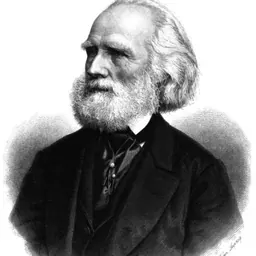
Portrait: Wikimedia Commons · author & licence
Page generated 2026-09-27 05:04 UTC