
Abdullah Abdurahman
South African politician and physician
About Abdullah Abdurahman
Lived 1872 – 1940 (aged 67). Abdullah Abdurahman was a South African politician, physician and city councillor.
Abdullah Abdurahman (18 December 1872 – 2 February 1940) was a South African politician and physician, born in Wellington, Cape Colony. He was the first Coloured city councillor of Cape Town, and the first ever Coloured South African to win election to a public body. He led the anti-segregationist movement African Political Organization established in 1902.
Early life Abdurahman was the son of Muslims whose parents were greengrocers. His grandparents were slaves, who had bought their freedom from their slave masters. After receiving a good education in Wellington and Cape Town where he attended the South African College Schools, he went to the University of Glasgow to study medicine in 1888, qualifying as a doctor in 1893. It was in Glasgow that he met his first wife, Nellie Potter James. Upon returning to South Africa he set up a thriving private practice in Cape Town.
Local government career In 1904 he was elected Cape Town's first Coloured city councillor, a position he held almost uninterrupted until his death. As city councillor he worked to improve the conditions of the Cape Coloured community, especially within the field of education; he helped set up the first secondary schools for Coloured people in Cape Town.
African Political Organisation The greatest political achievements, however, of Abdurahman's political life, were connected to his involvement with the African Political Organisation. Elected president in 1905, his contribution to the party's success was so great that the party was often jokingly referred to as Abdurahman's Political Organisation. In 1909, before the creation of the Union of South Africa in 1910, Dr Abdurahman participated in a second delegation to London to try to have the Cape Qualified Franchise extended to all black South Africans. This delegation was led by William Schreiner and included members of the black community who would form the African National Congress in 1912. It too was unsuccessful. Upon his return to South Africa the doctor reached out to African and Indian political movements in an attempt to resist the rising tide of racism.
In 1925 Dr Abdurahman was asked to lead a delegation to the Viceroy of India by the South African Indian Congress. He met Lord Reading who was deeply impressed. The viceroy wrote to London: ‘Dr Rahaman [sic] put forward powerful and well-argued statements of disabilities of humiliating description in social, political and economic life which have been imposed on Indians by legislation in Union (of South Africa) and of apprehension not without ground that contemplated Asiatic legislation will render positions of Indians wholly impossible....Much stress was laid by Dr Rahaman on favourable treatment of white element in population composed in many cases of races not born in or loyal to British Empire at expense of Indians born in and loyal to British connection...I found the position very difficult. I am deeply impressed by the humiliations to which Indians in South Africa are subjected, and by the gravity of the implications of the projected legislation which will be hurried through the second reading stage in the new year.’ During the visit Dr Abdurahman also addressed the Indian National Congress in Kanpur in December 1925, making a considerable impression with his impassioned speech. The Doctor's campaigns - like the campaigns of the African National Congress the South African Communist Party and the Non-European Unity Movement in this period - bore little fruit. By the late 1930s, other political parties, such as the more radical National Liberation League, had taken the initiative.
Death and legacy On 2 February 1940, Abdurahman died of a cardiac arrest. His funeral was attended by over 30,000 people. After his death, the party he had built up went into rapid decline. His political legacy is a mixed one; modern, more radical commentators see him as overly accommodating to the white authorities, and as far as practical results are concerned, the achievements of his political career were limited. On the other hand, there is little doubt that he was the most powerful South African Coloured politician of his time, and his popularity in the non-European community was immense, as was the respect he enjoyed with the white elite. In 1999, Nelson Mandela posthumously awarded Dr. Abdurahman the Order for Meritorious Service: Class 1 (Gold) for his work against racial oppression.
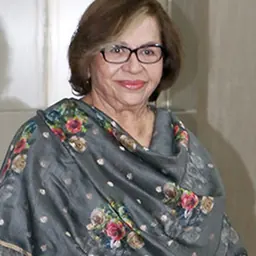
Abdurahman was married twice: once to the British Helen (Nellie) Potter James, whom he met in Glasgow. They had two daughters, Waradea "Rosie" and Zainunnisa (Cissie) Gool, and divorced in 1923. His younger daughter from this marriage, Cissie (1900–1963), became an important political figure in her own right, as a municipal councillor in Cape Town. His second marriage was in 1925 to Margaret May Stansfield. They had one daughter, Begum (who married the physician Ralph Hendrickse), and two sons, Abdul and Nizam.
Don’t just read it —
keep it.
Full-length biographies made to live with: read them, listen on the way to work, watch them tonight.
- E-book
- Audio
- Video
Instant download · yours to keep · every purchase keeps this site free
Important facts
Family & relationships
People in Abdullah Abdurahman's life
Named in this biography and alive at the same time


Related people
Same field, nearest in time



Contemporaries
People whose lives overlapped Abdullah Abdurahman's


Frequently asked questions
Who was Abdullah Abdurahman?
South African politician and physician (1872–1940)
When was Abdullah Abdurahman born?
Abdullah Abdurahman was born on 18 December 1872 in Wellington.
When did Abdullah Abdurahman die?
Abdullah Abdurahman died on 2 February 1940 in Cape Town.
What was Abdullah Abdurahman's occupation?
Abdullah Abdurahman was a politician, physician and city councillor.
What nationality was Abdullah Abdurahman?
Abdullah Abdurahman was South African.
Sources & further reading
· Wikipedia: Abdullah Abdurahman
· DBpedia: Abdullah Abdurahman
Cite this page
APA: Biography.guide. (2026). Abdullah Abdurahman. https://biography.guide/abdullah-abdurahman/
MLA: "Abdullah Abdurahman." Biography.guide, https://biography.guide/abdullah-abdurahman/.
Chicago: "Abdullah Abdurahman." Biography.guide. https://biography.guide/abdullah-abdurahman/.
Data last updated: 2026-09-27 · Spot an error? Report a correction.
Page generated 2026-09-27 05:16 UTC