
Abdul Wahhab Pirji
Bangladeshi Sufi saint
About Abdul Wahhab Pirji
Lived 1895 – 1976 (aged 80–81).
Abdul Wahhab Pirji (; 1890 – 29 September 1976), popularly referred to as Pirji Huzur , was a Bangladeshi Islamic scholar, author and educationist. He was a disciple of Ashraf Ali Thanwi and the founding principal of Jamia Hussainia Ashraful Uloom in Bara Katara, Dhaka.
Early life and education Abdul Wahhab was born in 1890 to a Bengali Muslim family of Munshis in the village of Ramkrishnapur in Homna, then located under the Tipperah District (now Comilla District) of the Bengal Presidency. His father, Munshi Ahsanullah, was a devout Muslim and maintained close relations with the ulama. His elder brother was the husband of Ghulam Azam's paternal aunt.
He completed his initial studies at his local madrasa, and then enrolled at the Dhaka Mohsinia Madrasa where he studied for several years. Abdul Wahhab then travelled to Saharanpur where he became a student at the seminaries of Mazahir Uloom and Darul Uloom Deoband respectively. In Saharanpur, he completed Hadith studies under Anwar Shah Kashmiri and the sciences of tajweed with Abdul Wahid Allahabadi, as well as studying logic, philosophy, Islamic jurisprudence and tafsir. He graduated with a sanad from the Dawra-e-Hadith in Darul Uloom Deoband and then began his journey within Sufism by becoming a murid of and pledging bay'ah to his murshid Ashraf Ali Thanwi for six months. After Thanwi's death in 1943, Pirji would become a disciple of Zafar Ahmad Usmani.
Career After returning to Bengal as a qualified muhaddith in 1930, Pirji dedicated his life to teaching the Islamic sciences. Between 1930 and 1935, he taught as a professor of Hadith at the Jamia Islamia Yunusia in Shahidbaria and the Gazaria Madrasa in Khulna. In 1936, he co-founded the Jamia Hussainia Ashraful Uloom in Dhaka alongside Shamsul Haque Faridpuri and Muhammadullah Hafezzi with the assistance of local businessman Hafez Hussain Ahmad of Jinzira. He also founded numerous other madrasas in the country such as the Jamia Arabia Islamia Emdadul Uloom, which he established in 1948 in Rahmatpur, Homna. As a disciple of Ashraf Ali Thanwi, Pirji was also associated with the Pakistan Movement.
He also served as an imam of several mosques throughout his life, and led the janaza of Hakim Habibur Rahman as requested in the latter's will. Abdul Wahhab would refer to Abu Hammad Mahbubul Baset as a Qutb. He subsequently served as the madrasa's first and lifelong principal.
Death and legacy Pirji died in 1976, and was buried at the Azimpur Graveyard in Dhaka, Bangladesh. His three sons, including Pirzada Rashid Ahmad, continue to run the Jamia Hussainia Ashraful Uloom madrasa. He had many students including Azizul Haque, Muhammad Shahidullah, Aminul Islam, Fazlul Haque Amini, Obaidul Haque Wazirpuri, Shamsul Haq Daulatpuri, Qutbuddin Kanaighati and Momtazuddin.
Don’t just read it —
keep it.
Full-length biographies made to live with: read them, listen on the way to work, watch them tonight.
- E-book
- Audio
- Video
Instant download · yours to keep · every purchase keeps this site free
Important facts
People in Abdul Wahhab Pirji's life
Named in this biography and alive at the same time



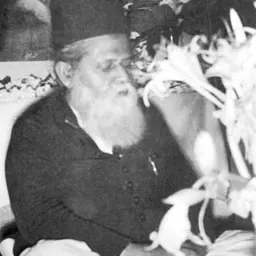


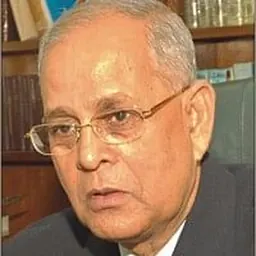
Contemporaries
People whose lives overlapped Abdul Wahhab Pirji's
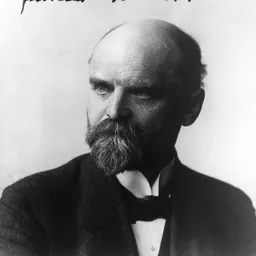

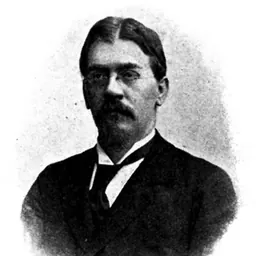

Frequently asked questions
Who was Abdul Wahhab Pirji?
Bangladeshi Sufi saint
When was Abdul Wahhab Pirji born?
Abdul Wahhab Pirji was born in 1895.
When did Abdul Wahhab Pirji die?
Abdul Wahhab Pirji died on 29 September 1976.
Sources & further reading
· Wikipedia: Abdul Wahhab Pirji
Cite this page
APA: Biography.guide. (2026). Abdul Wahhab Pirji. https://biography.guide/abdul-wahhab-pirji/
MLA: "Abdul Wahhab Pirji." Biography.guide, https://biography.guide/abdul-wahhab-pirji/.
Chicago: "Abdul Wahhab Pirji." Biography.guide. https://biography.guide/abdul-wahhab-pirji/.
Data last updated: 2026-09-20 · Spot an error? Report a correction.
Page generated 2026-09-27 05:25 UTC