
Abdul Rahman Ya'kub
Malaysian politician (1928–2015), Governor of Sarawak
About Abdul Rahman Ya'kub
Lived 1928 – 2015 (aged 87). Abdul Rahman Ya'kub was a Malaysian politician and lawyer.
Family Abdul Rahman's first wife, Toh Puan Normah died in 1984. Abdul Rahman's daughter, Khadijah, later married to Tun Abdul Razak's son, Datuk Mohd Nizam.
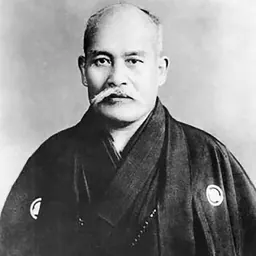
Early life and career Abdul Rahman bin Ya'kub was born in the village of Kampung Jepak, Bintulu, Sarawak on 3 January 1928 to a fisherman by the name of Tuan Wan Ya'kub bin Wan Yusuf and Siti Hajar binti Haji Mohd Tahir who was a housewife. Rahman's family left Bintulu and headed for Miri, hoping to gain access for better education. Rahman first attended a Malay school and then the Sekolah Anchi in Miri. His father, who wished that Abdul Rahman bin Ya'kub be given an Islamic education, attempted to send him to the Aljunied Arabic School in 1939, a decision that was opposed by his mother due to the outbreak of World War II. He then transferred to St. Joseph Miri, but his studies was cut short by the Japanese invasion. At a young age, he learnt the Japanese martial art Aikido and was able to also meet Morihei Ueshiba, the founder of Aikido.
Due to financial constraints, Rahman had to leave school in 1947 and worked as an oil-tester for the Sarawak Shell Company in Lutong, earning RM 2 daily. Not satisfied with his earnings, Abdul Rahman went to Sarawak General Hospital, thinking that he would supervise other workers. However, he ended up sweeping the floor and helping patients instead. He left the hospital after working just one day. Abdul Rahman subsequently secured a job as a Student Native Officer. He was sent to Madrasah Melayu Kuching as a form 3 grader. In 1948, he was sent to Miri as a Probationary Native Officer and Fourth Class Magistrate. He stayed in Miri until 1952, mostly doing court works. In 1952, Rahman was promoted to first class magistrate. Rahman passed with a Grade Two Certificate at Senior Cambridge examination in the following year. He worked as the Deputy Public Prosecutor in the Sarawak Legal Department from 1959 to 1963. He was the first Bumiputera from Sarawak that graduated as a lawyer in 1958 from Lincoln's Inn.
Rahman became an education minister in 1969. He made a bold move by changing the medium of instruction for all the schools and higher learning institutions from English to the Malay language. Rahman Ya'kub resigned his education minister post before he returned to Sarawak to become the chief minister in 1970.
Appointment to Chief Minister Abdul Rahman won the Kuala Rajang state constituency during the resumption of 1969 state election in 1970, representing Parti Bumiputera Sarawak, which was part of the Sarawak Alliance. After the election, there was not any party holding a clear majority. Abdul Rahman planned to cooperate with PESAKA in order to form a government but PESAKA did not accept Rahman as their chief minister. Therefore, PESAKA negotiated with Sarawak National Party (SNAP) and Sarawak United Peoples' Party (SUPP) in order to form a government. However, without the knowledge of SNAP and PESAKA, SUPP was quietly negotiating with Parti Bumiputera to form a separate coalition. Rahman was able to convince SUPP to form a coalition government with him as the chief minister. As part of the deal in joining the coalition, SUPP demanded that Sarawak Chinese Association (SCA) be ejected from Sarawak Alliance and be dissolved later. In order to ensure Dayak participation in the Sarawak cabinet, Rahman offered Penghulu Abok from PESAKA a cabinet post. Simon Dembab Raja from PESAKA joined the cabinet a day later as a deputy chief minister. Soon after that, Temenggung Jugah, the president of PESAKA, announced his support for the Rahman's coalition government, thus leaving SNAP as the only opposition party in Sarawak. He was the vice-president of UMNO Datu Keramat branch and was a central committee member of the party although he was also a PBB member. In 1970, Abdul Rahman was one of the candidates vying for UMNO's vice-presidency. Rahman drafted the PBB constitution by adapting from the UMNO's constitution. Similar to UMNO's party structure, PBB adopted four levels of bureaucracy namely General Assembly, Supreme Council, branches, and sub-branches. This is similar to UMNO's organisational structure of national, negeri liaison office, division, and branches. At every party levels, PBB has youth and women wings which is also similar to UMNO's set up. Abdul Rahman was able to influence party policies and party elections during his term as PBB president from 1977 to 1981. published during the 1987 Ming Court Affair, the federal government tried to obtain the Sarawak oil rights by holding several discussions with state leaders such as Abdul Rahman through Abdul Taib Mahmud in the early 1970s. Taib was the federal Primary Industry Minister who was responsible for all mining industry including petroleum and gas. Taib with his aide Adenan Satem tried to persuade Abdul Rahman to hand over Sarawak Continental shelf to the total control of federal government, thus depriving Sarawak of 10% oil royalty which it have been receiving from foreign oil companies. Abdul Rahman threatened to sue the federal government in court if the bill was not withdrawn. Abdul Rahman obtained three legal opinions from the former Attorney general of Australia, a public international law expert from Cambridge University and a former High Court judge to back Sarawak's claims that Sarawak territorial waters was not confined to three-nautical-miles limit for oil royalty. Abdul Razak then invited Abdul Rahman to Kuala Lumpur for a closed-door discussion. During the discussion, Rahman agreed to a smaller payout of oil royalty because the federal government was not wealthy at that time and the oil royalty will be revised in the future.
The federal government decided to appoint Tengku Razaleigh Hamzah to negotiate new terms with Abdul Rahman. In 2010, Abdul Rahman claimed that in a meeting of final decision of oil royalty payments chaired by Tun Tan Siew Sin (Federal Finance Minister) and attended by deputy chief minister of Sarawak Tan Sri Stephen Yong, an agreement of 5% oil royalty was reached without consulting Abdul Rahman. However, according to memoir written by Stephen Yong in 1998, chief minister Datu Mustapha Datu Harun from the neighbouring state of Sabah agreed to the 5% oil royalty offered by the Malaysian federal government. Thus, the Sarawak government reluctantly agreed to the oil royalty deal in the name of national interest. Besides, the Malaysian government also had to maintain a navy to guard the Sarawak continental shelf. In the supreme council meeting (cabinet meeting) held on 23 May 1974, Rahman Ya'kub found that the federal treasury did not provide the necessary funds for security operations in Sarawak. Rahman Ya'kub stated that if the funds did not arrive on 27 May, he would not sign the Petronas oil royalty deal. The security funds came in time later. Abdul Rahman finally agreed to the 5% oil royalty given by the federal government. Petroleum Development Act was passed in parliament in 1974. This would allow Malaysian oil and gas company, Petronas to gain control over the oil and gas reserves in Sarawak. The revenues from oil and gas will be divided among oil-producing states (5 percent), federal government (5 percent), producer company (41 percent), and Petronas (49 percent).
Development policy In order to safeguard national interests, Abdul Rahman declared that he denounced the slogan "Sarawak for Sarawakians" and replaced it with "Malaysia for Malaysians" a few weeks after he became the chief minister. Rahman argued that regional politics is not only divisive but could also harm the national solidarity. He also said that Sarawak should accept policies from the federal government because "Sarawak received a lot of money from the federal government. Without their assistance, we could never hope to progress so quickly." This motion prompted fierce criticism from Stephen Kalong Ningkan. He changed the medium of instruction of all schools in Sarawak from English to Malay language. Sekolah Datuk Abdul Rahman was the first school in Sarawak to accept this change in 1970. By 1976, a total of 258 primary schools involving 36,267 students adopted Bahasa Melayu as their medium of instruction.
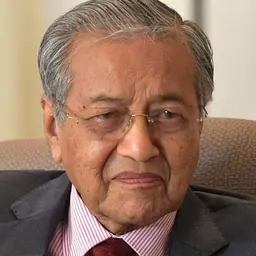
Rahman Ya'kub also set up Sarawak Timber Industry Development Corporation (STIDC) in June 1973 to develop the logging industry in Sarawak. The NGO was later renamed to Harakah Islamiah (HIKMAH) in 1994. In 1985, Rahman Ya'kub and Malay National Association of Sarawak invited UMNO establish its branches in Sabah and Sarawak in order help with integration of bumiputeras into national politics. However, Mahathir Mohamad, who was the prime minister and the UMNO president, clarified that UMNO had no intention to establish its branches in both the states and was happy to work with local parties.
Rahman Ya'kub later quit his post as the governor of Sarawak in 1986 for health reasons. In 1985, Abdul Rahman was involved in a bitter dispute with his nephew, Abdul Taib Mahmud over allocation rights. In 1987, Abdul Rahman formed a new party named Parti Persatuan Rakyat Malaysia Sarawak (PERMAS) to challenge Taib Mahmud at the polls. He also formed an alliance with Sarawak Dayak People's Party (PBDS) to unseat Taib Mahmud. In March 1987, 27 of the 48 state assemblymen suddenly directed their support to Abdul Rahman bin Ya'kub while calling Taib Mahmud to resign as a chief minister. Among the defectors were Taib's 4 cabinet ministers and 3 assistant ministers. A war of accusations on timber concessionaires then broke out between Abdul Rahman bin Ya'kub and Taib Mahmud. Taib revoked 30 timber licenses held by his defectors and Abdul Rahman's clients. Despite the unsuccessful attempt at the 1987 Sarawak state election, Abdul Rahman continued his struggle with his allies, Sarawak Dayak People's Party against Taib's led Sarawak Barisan Nasional until 1991 Sarawak state election when Taib's coalition won an overwhelming majority of 49 out of 56 seats in the state assembly.
Later life Abdul Rahman celebrated his 80th birthday in Hilton Hotel, Kuching in 2008. During the grand ceremony, he hugged his nephew, Pehin Sri Abdul Taib Mahmud, marking the end of the 20-year-old strained relationship between an uncle and a nephew after the Ming Court Affair. He said that he stitched up his relationship with Taib because "blood is thicker than water". He died peacefully at 9:40 pm on 9 January 2015, aged 87. He was accorded a state funeral by the Sarawak state government and laid to rest at Samariang Muslim Cemetery in Petra Jaya, Kuching.
Legacy Several places were named after him namely a hostel seminar room in Universiti Kebangsaan Malaysia (UKM) campus, a library in Universiti Malaysia Sarawak (UNIMAS). and a bridge.
On 22 June 1971, Kanowit Rural Development School in Kanowit changed its name to Sekolah Menengah Dato Haji Abdul Rahman Ya’kub. On 5 May 1972, the chief minister renamed the school to Sekolah Menengah Sedaya.
Normah Specialist Medical Centre, built in 1988, is named after Toh Puan Normah Abdullah, the wife of Abdul Rahman Ya'kub.
Honours Honours of Sarawak
Honours of Malaysia
Don’t just read it —
keep it.
Full-length biographies made to live with: read them, listen on the way to work, watch them tonight.
- E-book
- Audio
- Video
Instant download · yours to keep · every purchase keeps this site free
Important facts
People in Abdul Rahman Ya'kub's life
Named in this biography and alive at the same time



Related people
Same field, nearest in time



Contemporaries
People whose lives overlapped Abdul Rahman Ya'kub's


Frequently asked questions
Who was Abdul Rahman Ya'kub?
Malaysian politician (1928–2015), Governor of Sarawak
When was Abdul Rahman Ya'kub born?
Abdul Rahman Ya'kub was born on 3 January 1928 in Bintulu.
When did Abdul Rahman Ya'kub die?
Abdul Rahman Ya'kub died on 9 January 2015 in Kuching.
What was Abdul Rahman Ya'kub's occupation?
Abdul Rahman Ya'kub was a politician and lawyer.
What nationality was Abdul Rahman Ya'kub?
Abdul Rahman Ya'kub was Malaysian.
Sources & further reading
· Wikipedia: Abdul Rahman Ya'kub
· DBpedia: Abdul Rahman Ya'kub
Cite this page
APA: Biography.guide. (2026). Abdul Rahman Ya'kub. https://biography.guide/abdul-rahman-ya-kub/
MLA: "Abdul Rahman Ya'kub." Biography.guide, https://biography.guide/abdul-rahman-ya-kub/.
Chicago: "Abdul Rahman Ya'kub." Biography.guide. https://biography.guide/abdul-rahman-ya-kub/.
Data last updated: 2026-09-20 · Spot an error? Report a correction.
Page generated 2026-09-27 05:13 UTC