
Abdol Hossein Sardari
Persian statesman and diplomat who saved the lives of many Jews during the Holocaust
About Abdol Hossein Sardari
Lived 1895 – 1981 (aged 85–86). Abdol Hossein Sardari was an Iranian diplomat.
Abdol Hossein Sardari (; 1914–1981) was an Iranian diplomat. He is credited with saving thousands of Jews in Europe, issuing to Iranian Jews in France new passports that did not state their religion as well as issuing hundreds of Iranian passports for non-Iranian Jews. He has since been known as "The Iranian Schindler" or "The Schindler of Iran". (the specific school is not named in available sources).
Sardari was in charge of the Iranian consular office in Paris in 1942. There was a sizeable community of Iranian Jews in Paris when German forces invaded and occupied the city.
Leaning on the national socialist perception that Iranians were Aryan, Nazi Germany had also declared Iranians to be immune to all Nuremberg Laws since 1936, as they were "pure-blooded Aryans" according to their racial theory. The Iranian government under Reza Shah was able to protect Iranian Jews, whose families had been present in Iran since the times of the Persian Empire. (Cyrus the Great personally ordered the Jews of Babylon to be freed from Babylonian slavery.) He very strongly argued this point to the Germans and specifically ascertained that the Iranian Jews were protected under these statutes. The Nazis grudgingly agreed, and accordingly, many Iranian Jews were saved from harassment and eventually deportation by the Nazi regime.
In 1952, Sardari had to return to Tehran, Iran and was charged with misconduct for issuing Iranian passports during the war. Consequently, his career was damaged until he was able to restore his reputation in 1955. Shortly thereafter he retired from the Iranian Diplomatic Corps and moved to London. Following the Iranian Revolution of 1979, Sardari's nephew Amir Abbas Hoveyda was executed by the new Islamic regime, and all of his belongings in Iran were destroyed
Following the Iranian Revolution of 1979, Sardari lived in exile in London in poverty, after losing his ambassador's pension and Tehran properties.
Sardari spent his final years in exile in England, initially living in modest circumstances in a bedsit in Croydon, south London, before moving to Nottingham to be closer to family. His place of death is disputed among reliable sources: the United States Holocaust Memorial Museum reports he died in London in 1981, while other accounts, including family recollections reported in news sources and linked to the documentary Sardari's Enigma (2017), place it in Nottingham around the same time (with cremation recorded in 1983). All three are seen as unlikely rescuers of Jews during the Holocaust who at great personal risk saved people using their ingenuity, their position, and diplomatic and other loopholes. After the war, all three suffered professional and financial hardships, none publicised their war time rescues, received help from people they had saved, and received wider recognition mostly after their deaths.
Honors
In April 1978, three years before his death, Sardari responded to queries from Yad Vashem, Israel's national Holocaust memorial, about his wartime actions:
In the 1990s and 2000s, Sardari received posthumous recognition from Jewish organizations, including a 1994 ceremony at the Simon Wiesenthal Center for Tolerance in Los Angeles and a 2004 Plaque of Appreciation presented to his nephew Fereydoun Hoveyda during Yom HaShoah commemorations.
However, his name has not been added to Yad Vashem's list of Righteous Among the Nations.
In popular culture The 2007 Iranian TV series Zero Degree Turn was loosely based on Sardari's actions in Paris. The focus of the series is an Iranian student who falls in love with a Jewish woman while studying in France during World War II and later desperately looks for ways to save her and other Jews from the imminent threat of deportation.
Don’t just read it —
keep it.
Full-length biographies made to live with: read them, listen on the way to work, watch them tonight.
- E-book
- Audio
- Video
Instant download · yours to keep · every purchase keeps this site free
Important facts
People in Abdol Hossein Sardari's life
Named in this biography and alive at the same time
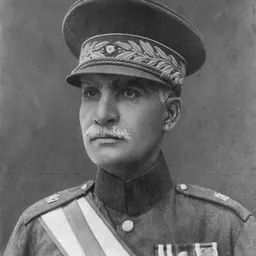

Related people
Same field, nearest in time

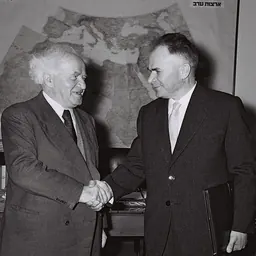
Contemporaries
People whose lives overlapped Abdol Hossein Sardari's
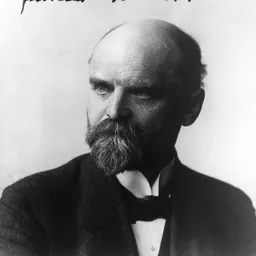
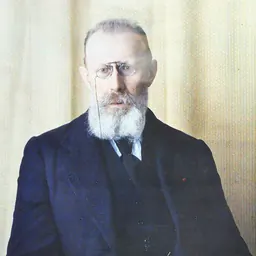
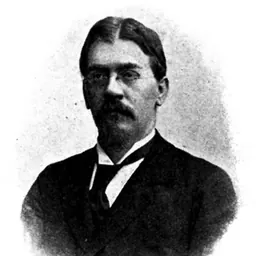

Frequently asked questions
Who was Abdol Hossein Sardari?
Persian statesman and diplomat who saved the lives of many Jews during the Holocaust
When was Abdol Hossein Sardari born?
Abdol Hossein Sardari was born in 1895 in Tehran.
When did Abdol Hossein Sardari die?
Abdol Hossein Sardari died in 1981 in Nottingham.
What was Abdol Hossein Sardari's occupation?
Abdol Hossein Sardari was a diplomat.
What nationality was Abdol Hossein Sardari?
Abdol Hossein Sardari was Iranian.
Sources & further reading
· Wikipedia: Abdol Hossein Sardari
· DBpedia: Abdol Hossein Sardari
Cite this page
APA: Biography.guide. (2026). Abdol Hossein Sardari. https://biography.guide/abdol-hossein-sardari/
MLA: "Abdol Hossein Sardari." Biography.guide, https://biography.guide/abdol-hossein-sardari/.
Chicago: "Abdol Hossein Sardari." Biography.guide. https://biography.guide/abdol-hossein-sardari/.
Data last updated: 2026-09-20 · Spot an error? Report a correction.
Page generated 2026-09-27 05:24 UTC