
About Abdoe'lxarim M. S.
Lived 1901 – 1960 (aged 58–59). Abdoe'lxarim M. S. was an Indonesian politician, civil servant, journalist, newspaper editor and propagandist.
Abdoe'lxarim M. S. ( 1901 – 25 November 1960), who was born Abdoel Karim bin Moehamad Soetan, was a journalist and a Communist Party of Indonesia leader. He was interned in Boven-Digoel concentration camp from 1927 to 1932. During World War II, he collaborated with the Japanese and became an important figure in recruiting support for them in Sumatra; after their defeat he then became a key figure in the anti-Dutch republican forces during the Indonesian National Revolution.
Biography Early life and political activity Abdoel Karim bin Moehamad Soetan was born in Idi Rayeuk, East Aceh Regency, Dutch East Indies (now Indonesia) on 18 June 1901 (or possibly 1900). He was childhood friends with Nathar Zainuddin, another future Communist Party leader. During this time, for some reason, he began spelling his name with an X and abbreviated the rest of his name: Abdoe'lxarim M.s. or occasionally variations such as Abdul Xarim or Xarim M.S.
He joined Cipto Mangunkusumo's (NIP), a multi-racial radical political party influenced by the Indonesian National Awakening, in around 1920. The objective of the reassignment to distant Kupang in the Eastern Indies may have been to isolate him from politics; he decided to resign his government post and returned to Sumatra and became the NIP commissioner there. He travelled around Sumatra giving speeches on behalf of the party in Aceh and elsewhere in Sumatra. He became a journalist as well, editing in Sibolga. In 1923–4 he was editor-in-chief of a tri-monthly magazine named (herald of the people), a revolutionary NIP publication which was published in Langsa. While in Langsa he stepped down from the NIP and joined the Communist Party of Indonesia (, PKI) and became leader of its first Aceh branch. He rose through its ranks to become a leader in the national executive in 1924, and was appointed as the party's commissioner for Sumatra. Because of his high profile and his attempts to hold propaganda meetings around Aceh in 1924, he was ordered to stay in Langsa or face arrest, and was regularly followed by police detectives. In 1925 he was arrested by local police in Aceh after receiving a package from party leaders in Weltevreden (Batavia) and leaving Langsa to conceal it; he was detained for several months. Like almost all of the Digoel internees, he was not charged with a crime and was exiled under the "extraordinary rights" allowed to the colonial Governor General. He was interrogated in Yogyakarta in July before being sent on to Digoel. During his time in Digoel he was very active in camp life; he participated in councils organized by internees, and even led a Jazz band. He also filmed a documentary film about life in Digoel with the support of a sympathetic European who sent him materials and equipment from Java. He filmed a lot of footage, recording up to 400 meters of film; out of fear of censorship, he focused on the daily life of internees rather filming a more explicitly political narrative. The local authorities in Boven Digoel Regency had not objected to him making it; after all, internees there were considered to have been exiled and were not legally prisoners. It is not clear what became of the film. In the late 1930s and early 1940s his role at his weekly newspaper seems to have diminished and he sometimes published in a magazined called during 1939–40. He led recruitment drives for the Heiho. He was briefly jailed by the Kenpeitai in May 1943 because of his Marxist beliefs. During this time he also edited and published in Japanese magazines, including and . During this period of instability he managed to stockpile weapons as well.
Due to his level of organization, his rhetorical skills, and his reputation as a leader from the 1920s who had been interned, he became an important figure among the pro-independence forces in Sumatra and the main republican notable in Medan. He was promoted to the rank of Resident in Medan alongside Mangaradja Soeangkoepon and Luat Siregar. During this time, he held roles in various republican parties, being appointed deputy leader in Sumatra for the Indonesian National Party (PNI), building up the organization of the PRI/PESINDO (Socialist Youth) under Sarwono S. Soerardjo, and then defecting from the PNI and founding a local branch of the Communist Party in November 1945. This group did not at first have any connection with the Communist Party in Java; Abdoe'lxarim became the chairman, Luat Siregar became vice-chair and Nathar Zainuddin became an assistant at large. In his new role, Abdoe'lxarim often acted as an intermediary between the republican government in Java and the local youth militias; he believed in a broad coalition of leftist forces and allied himself with Tan Malaka, who had created his own party in Sumatra, and used the Indonesian red-and-white flag rather than the communist flag.
After the end of the Indonesian National Revolution in 1949, he remained in Medan and was appointed as military advisor to Alexander Evert Kawilarang, security commander in North Sumatra; his son Nip Xarim became a military commander in the Indonesian National Armed Forces His role declined in the Communist Party, although he was detained for a time in the August 1951 mass arrests. According to some sources he quit the party in 1952; certainly in early 1953 he was officially expelled from the party because of his "incorrect attitude". He died on 25 November 1960.
Don’t just read it —
keep it.
Full-length biographies made to live with: read them, listen on the way to work, watch them tonight.
- E-book
- Audio
- Video
Instant download · yours to keep · every purchase keeps this site free
Important facts
more
Abdoel Xarim, Xarim M. S.People in Abdoe'lxarim M. S.'s life
Named in this biography and alive at the same time


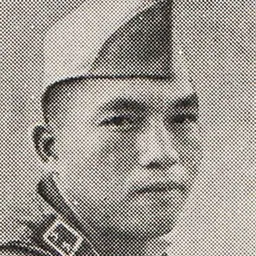
Related people
Same field, nearest in time





Contemporaries
People whose lives overlapped Abdoe'lxarim M. S.'s
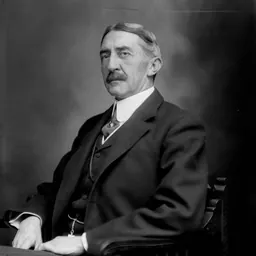

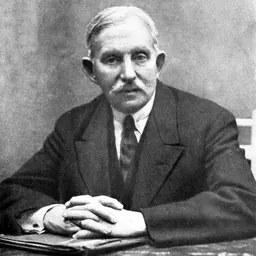

Frequently asked questions
Who was Abdoe'lxarim M. S.?
Dutch East Indies politician
When was Abdoe'lxarim M. S. born?
Abdoe'lxarim M. S. was born on 18 June 1901 in Aceh.
When did Abdoe'lxarim M. S. die?
Abdoe'lxarim M. S. died in 1960.
What was Abdoe'lxarim M. S.'s occupation?
Abdoe'lxarim M. S. was a politician, civil servant, journalist, newspaper editor and propagandist.
What nationality was Abdoe'lxarim M. S.?
Abdoe'lxarim M. S. was Indonesian.
Sources & further reading
· Wikipedia: Abdoe'lxarim M. S.
Cite this page
APA: Biography.guide. (2026). Abdoe'lxarim M. S.. https://biography.guide/abdoe-lxarim-m-s/
MLA: "Abdoe'lxarim M. S.." Biography.guide, https://biography.guide/abdoe-lxarim-m-s/.
Chicago: "Abdoe'lxarim M. S.." Biography.guide. https://biography.guide/abdoe-lxarim-m-s/.
Data last updated: 2026-09-20 · Spot an error? Report a correction.
Page generated 2026-09-27 05:23 UTC