
About Abd al-Ghani al-Nabulsi
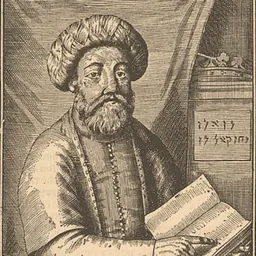
Lived 1641 – 1731 (aged 89). Abd al-Ghani al-Nabulsi was a Turkish mystic, writer, poet, qur'anic exegete, theologian and legal scholar, known for Sufi and Ulama.
Shaykh 'Abd al-Ghani ibn Isma′il al-Nabulsi (an-Nabalusi) (19 March 1641 – 5 March 1731), was an eminent Sunni Muslim scholar, poet, and author on works about Sufism, ethnography and agriculture.
Family origins Abd al-Ghani's family descended from the Banu Jama'a, which traditionally provided qadis (chief judges) for the Shafi'i fiqh (school of Islamic law) of Sunni Islam for the Mamluk rulers of Syria and Egypt. The Banu Jama'a hailed from Hama before settling in Jerusalem in the 13th century. One of its principal branches remained in Jerusalem, providing the preachers for the al-Aqsa Mosque, while another principal branch relocated to Cairo, the Mamluk capital, under Badr al-Din Muhammad Ibn Jama'a in 1291 after being appointed by Sultan al-Ashraf Khalil as qadi al-qudat (head judge of the sultanate) and shaykh al-shuyukh (head of the Sufi brotherhoods). Badr al-Din died in 1333 and his direct descendants died out in the 15th century. Abd al-Ghani's family descended from Badr al-Din's younger brother Abd al-Rahman, who had remained in Jerusalem. Shortly after the conquest of Mamluk Syria by the Ottoman Empire in 1516, part of Abd al-Rahman's family moved briefly to Nablus then permanently to Damascus, which attracted numerous people from Palestine in the 16th century. The family became known as "al-Nabulsi" (A Nisba, "Of Nablus" ) after their short stay in Nablus.
The great-grandfather of Abd al-Ghani, Ismai'il al-Nabulsi, was a Shafi'i jurist, the Shafi'i mufti of Damascus and a teacher of the fiqh at the Umayyad Mosque and four madrasas in the city. One of the madrasas, the Darwishiyya Madrasa, was built by the governor Darwish Pasha and endowed specifically for Isma'il and his descendants to teach the Shafi'i fiqh. Isma'il taught there Turkish, Persian and Arabic students, and was fluent in each of the languages. He grew wealthy, owning several villages and farms and gaining connections to the imperial government in Constantinople. He was the founder of the Nabulsi family's wealth and a mausoleum was built for him by Darwish Pasha in the Bab al-Saghir cemetery. Abd al-Ghani's grandfather and namesake inherited wealth from his mother Hanifa bint al-Shihabi Ahmad and owned shops and residences in the Salihiyya neighborhood. He was not known for his scholarship and is remembered by Abd al-Ghani as a generous man.
Life
Abd al-Ghani was born in Damascus in 1641. This school of thought was preferred by Ottoman rulers of Syria. Isma'il was a contributor to Arabic literature,
Even before the age of 20, Abd al-Ghani al-Nabulusi had started teaching and giving formal legal opinions (fatwa). and spent seven years in isolation in his house studying the mystics on their expression of divine experiences.
He died and was buried in Damascus in 1731 at 90 years of age. His was a large and public funeral, attended by the Ottoman governor and chief judge, and he was later entombed in the Salimiyya Mosque near the mausoleum of ibn Arabi. Among al-Nablusi's contemporaries, his studies of 13th-century Sufi writer Ibn Arabi were his most famous works.
Subjects he wrote about include Sufism, Rihla, agriculture, and poetry. al-Sulh bayn al-ikhwan fi hukm ibahat al-dukhan, an influential legal treatise advocating the lawfulness of smoking tobacco; ed. Ahmad Muhammad Dahman (Damascus, 1924). Ta‘tir al-anam fi tafsir al-ahlam, ed. Taha 'Abd al-Ra’uf Sa‘d, 2 vols. (Damascus, n.d.) al-Haqiqa wa al-majaz fi al-rihla ila bilad al-sham wa misr wa al-hijaz, edited by Ahmad 'Abd al-Majid al-Haridi (Cairo, 1986) is the longest rihla. This rihla also goes by the title al-Rihla al-kubra and covers over 500 folios in minuscule. The journey began on Muharram 1005/ September 1693 and ended with the Hajj 388 days later. al-Tuhfa al-Nabulusiyya ft 1-rihla al-Tarabulusiyya was his second rihla, describing a 40-day trip across Lebanon to Tripoli. Book of Dreams Kitab al Manam (described as "arguably the most important text in the rich history of Islamic dream interpretation," translated into English in 2022 by Yasmine Seale )
Don’t just read it —
keep it.
Full-length biographies made to live with: read them, listen on the way to work, watch them tonight.
- E-book
- Audio
- Video
Instant download · yours to keep · every purchase keeps this site free
Important facts
Related people
Same field, nearest in time





Contemporaries
People whose lives overlapped Abd al-Ghani al-Nabulsi's




Frequently asked questions
Who was Abd al-Ghani al-Nabulsi?
Muslim scholar
When was Abd al-Ghani al-Nabulsi born?
Abd al-Ghani al-Nabulsi was born on 19 March 1641 in Damascus.
When did Abd al-Ghani al-Nabulsi die?
Abd al-Ghani al-Nabulsi died on 5 March 1731 in Damascus.
What was Abd al-Ghani al-Nabulsi's occupation?
Abd al-Ghani al-Nabulsi was a mystic, writer, poet, qur'anic exegete, theologian and legal scholar.
What was Abd al-Ghani al-Nabulsi known for?
Abd al-Ghani al-Nabulsi was known for Sufi and Ulama.
What nationality was Abd al-Ghani al-Nabulsi?
Abd al-Ghani al-Nabulsi was Turkish.
Sources & further reading
· Wikipedia: Abd al-Ghani al-Nabulsi
· DBpedia: Abd al-Ghani al-Nabulsi
Cite this page
APA: Biography.guide. (2026). Abd al-Ghani al-Nabulsi. https://biography.guide/abd-al-ghani-al-nabulsi/
MLA: "Abd al-Ghani al-Nabulsi." Biography.guide, https://biography.guide/abd-al-ghani-al-nabulsi/.
Chicago: "Abd al-Ghani al-Nabulsi." Biography.guide. https://biography.guide/abd-al-ghani-al-nabulsi/.
Data last updated: 2026-09-20 · Spot an error? Report a correction.
Page generated 2026-09-27 05:03 UTC