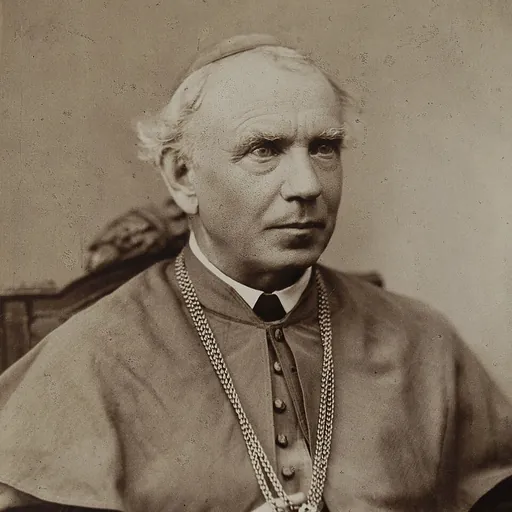
Zygmunt Szczęsny Feliński
Polish archbishop
About Zygmunt Szczęsny Feliński
Lived 1822 – 1895 (aged 72). Zygmunt Szczęsny Feliński was a Polish and Russian catholic priest, catholic deacon and catholic bishop.
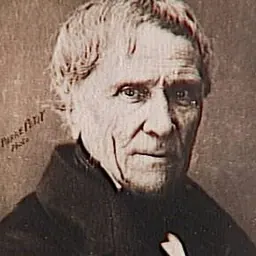
Zygmunt Szczęsny Feliński (1 November 1822 in Voiutyn, now Ukraine – 17 September 1895 in Kraków) was a professor of the Saint Petersburg Roman Catholic Theological Academy, Archbishop of Warsaw in 1862-1883 (exiled by Tsar Alexander II to Yaroslavl for 20 years), and founder of the Franciscan Sisters of the Family of Mary. He was canonised on 11 October 2009 by Pope Benedict XVI.
Early life His parents were Gerard Feliński and Eva Wenderoff. He was born in Voiutyn (pol. Wojutyn) in Volhynia (present-day Ukraine) when it was part of the Russian empire. He was the third of six children, of whom two died at an early age. His father died when he was eleven years old. Five years later in 1838 his mother was exiled to Siberia for a nationalist conspiracy (in which she tried to work to improve the social and economic conditions of the farmers), as a result he only got to see her again as a university student.
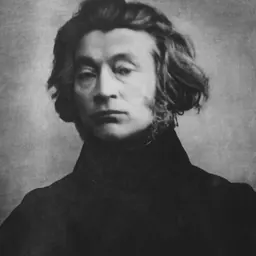
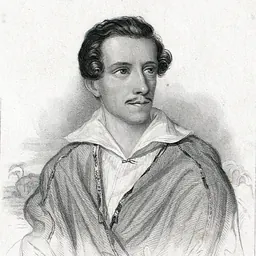
After completing high school, he studied mathematics at the Imperial Moscow University from 1840 to 1844. In 1847 he went to Paris where he studied French literature at the Sorbonne and the Collège de France. In Paris he spent time living with Polish exiles, and knew Adam Mickiewicz and was a friend of Juliusz Słowacki.
From 1848 to 1850 he tutored the sons of Eliza and Zenon Brzozowski in Munich and Paris. Peasants were regarded as a lower species.
He called on people to place their trust in the governance of Providence in world affairs: Whoever manages to always see the finger of Providence in the course of historical events, and trusting in the justice of God, does not doubt that every nation will ultimately receive that which it has earned by its behavior, will recoil with disgust at the thought of committing a crime, even if that would be the only means of fighting an even greater injustice.
Exile He spent the next 20 years in exile in Yaroslavl. He was not allowed any contact with Warsaw.
During his exile he organized works of mercy to help his fellow prisoners (especially the priests among them), and collected enough funds (despite police restrictions) to construct a Catholic church that would become a new parish. The local people were struck by his spiritual attitudes and referred to him as the "holy Polish bishop".
During his exile he wrote several works that he later published after his release. Included among them were: Spiritual Conferences, Faith and Atheism in the search for happiness, Conferences on Vocations, Under the guidance of Providence, Social Commitments in View of Christian Wisdom and Atheism, and Memories.
Kraków In 1883, following negotiations between the Holy See and Russia, he was released from exile and moved to Dzwiniaczka in southeastern Galicia (now Дзвинячка in Ukraine) among Ukrainian and Polish crop farmers. The Pope transferred him from Archbishop of Warsaw to Archbishop of the titular see of Tarsus. There he was chaplain of the manor house of Counts Keszycki and Koziebrodski, and he launched into intense pastoral activity. Out of his own money he built the first school and kindergarten in the village. He also built a church and convent for the Franciscan Sisters of the Family of Mary.
He died in Kraków on 17 September 1895 and was buried on 20 September. On 10 October his body was moved to Dzwiniaczka, and his remains were removed again in 1920 to Warsaw, where on 14 April 1921 they were moved to the crypt of the Cathedral of Saint John, where they still are today.
Views on Poland Feliński criticized Zygmunt Krasiński's claim that Poland was a Christ among nations. Feliński said:
Although my nation was the victim of a cruel injustice," Feliński wrote, "it did not proceed to martyrdom either willingly or without sin, as did our Savior and the martyrs following in His footsteps. Considering our national guilt and mistakes, it would be more appropriate to call Poland, as it pays for its sins, the Mary Magdalene of nations, not the Christ of nations.
In January 1863 he presented an interpretation of Poland's contemporary history as being a punishment from God for its sins:
The mission of Poland is to develop Catholic thinking in internal life... . Poland was great as long as these virtues lived within it, as long as there were no examples in its history of egoism or rapaciousness... When these national virtues fell, when decadence and egoism set in, then the flogging and the ruin arrived.
This followed from the views of other Catholic conservatives at the time who believed that God would never grant Poland independence until it repented of its sins. Feliński believed that God would redeem Poland of its sins, and thereby give it independence, but he criticized the independence movement for failing to believe in the role of Providence and (in his view) thinking as though the governance of the world was entirely up to human will. In the view of contemporary Catholic conservatives, in whom Feliński had an important voice, the independence movement, whether it be based on the communist or liberal ideologies that had been adopted by many Polish nationalists, was doomed to failure because of this.
He believed that every nation had a special role given to it by God:
just as every member of the family has an assigned task corresponding to his or her natural abilities, so does every nation receive a mission in accordance with the features Providence deigned to grant it.
From the fact that we lost independent existence, it does not at all follow that our mission has ended. The character of that mission is so spiritual, that not by the force of arms, but by the force of sacrifices will we accomplish that which love demands of us. If independence would become a condition necessary for fulfilling the task that has been laid upon us, then Providence itself would so manage the course of events that state existence would again be returned to us, so that we may sufficiently mature in spirit.
Don’t just read it —
keep it.
Full-length biographies made to live with: read them, listen on the way to work, watch them tonight.
- E-book
- Audio
- Video
Instant download · yours to keep · every purchase keeps this site free
Important facts
People in Zygmunt Szczęsny Feliński's life
Named in this biography and alive at the same time

Related people
Same field, nearest in time
Contemporaries
People whose lives overlapped Zygmunt Szczęsny Feliński's



Frequently asked questions
Who was Zygmunt Szczęsny Feliński?
Polish archbishop
When was Zygmunt Szczęsny Feliński born?
Zygmunt Szczęsny Feliński was born on 1 November 1822 in Voiutyn.
When did Zygmunt Szczęsny Feliński die?
Zygmunt Szczęsny Feliński died on 17 September 1895 in Kraków.
What was Zygmunt Szczęsny Feliński's occupation?
Zygmunt Szczęsny Feliński was a catholic priest, catholic deacon and catholic bishop.
What nationality was Zygmunt Szczęsny Feliński?
Zygmunt Szczęsny Feliński was Polish and Russian.
Sources & further reading
· Wikipedia: Zygmunt Szczęsny Feliński
· DBpedia: Zygmunt Szczęsny Feliński
Cite this page
APA: Biography.guide. (2026). Zygmunt Szczęsny Feliński. https://biography.guide/zygmunt-szczesny-felinski/
MLA: "Zygmunt Szczęsny Feliński." Biography.guide, https://biography.guide/zygmunt-szczesny-felinski/.
Chicago: "Zygmunt Szczęsny Feliński." Biography.guide. https://biography.guide/zygmunt-szczesny-felinski/.
Data last updated: 2026-09-26 · Spot an error? Report a correction.
Portrait: Wikimedia Commons · author & licence
Page generated 2026-10-04 10:29 UTC