
About Zouheir Chalak
Lived 1918 – 1994 (aged 75–76). Zouheir Chalak was a writer.
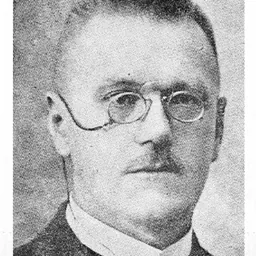
Zouheir Chalak (Arabic: زهير الشلق; also transliterated as Zuhair al-Shalaq, El Cholak, Shalak; 1921–1994) was a political theorist, historian, writer, and advocate for democracy and free press in the Middle East. He supported the democratic parliamentary Syrian Republic, and scrutinized the socialism that emerged throughout the region.
Biography Zouheir Chalak was born into a prominent family in Damascus, and eventually pursued a legal education and joined the primary coalition championing independence from the French Mandate (National Bloc). Indeed, during his first year as a law student circa 1941, Chalak acted as a secret courier at the direction of his father to transport letters between Prince Adel Arslan in Beirut and Shukri al-Quwatli in Damascus. Such clandestine communications facilitated negotiations in part with Axis operatives that aided efforts to pressure Vichy French authorities to reinstate a Syrian government.
In 1963, Chalak relocated to Lebanon following the collapse of Syria's parliamentary system and the rise of military-socialist regimes. In Lebanon, he continued as a legal and political columnist, contributing to regional newspapers including Al-Hayat. He articulated that the turn toward socialism in the Middle East curtailed civil liberties, destroyed burgeoning democracies, and led to dictatorships and security states.
Zouheir Chalak was detained and imprisoned for his views and articles, including several months in 1962–1963, and later for a decade from 1970 to 1980. He settled in France after his release and exile, where he continued writing as a columnist for Asharq Al-Awsat, until his death in 1994. He is buried next to his wife in the Neuilly-sur-Seine cemetery.
Political views Chalak supported the civilian-led parliamentary governance that was interrupted by coups and dictatorships. He argued that the constitutional system helped foster a sovereign Syrian republic, and documented how its suspension led to authoritarian rule. In his work In the Dock (Fi Qafas al-Ittiham), Chalak critiqued the various strands of socialist ideology that swept the region, and argued they were foreign imports that replaced the rule of law. They fostered the subsequent nationalization of private property, the abolition of political parties, eroded rights, and ran counter to certain Arab social norms. He opposed the union between Egypt and Syria (i.e., United Arab Republic), which dissolved in 1961.
Selected works Fi Qafas al-Ittiham: Al-Shuyu’iyyah, Al-Nasiriyyah, Al-Ba’th (In the Dock: Communism, Nasserism, Ba’ath). Beirut: Dar al-Jumhuriya, 1966. Min Awraq al-Intidab: Tarikh Ma Aghfalahu al-Tarikh (From the Papers of the Mandate: History That History Overlooked). Beirut: Dar al-Nafais, 1989.
Don’t just read it —
keep it.
Full-length biographies made to live with: read them, listen on the way to work, watch them tonight.
- E-book
- Audio
- Video
Instant download · yours to keep · every purchase keeps this site free
Important facts
People in Zouheir Chalak's life
Named in this biography and alive at the same time

Related people
Same field, nearest in time


Contemporaries
People whose lives overlapped Zouheir Chalak's



Frequently asked questions
Who was Zouheir Chalak?
political theorist and historian
When was Zouheir Chalak born?
Zouheir Chalak was born in 1918.
When did Zouheir Chalak die?
Zouheir Chalak died in 1994.
What was Zouheir Chalak's occupation?
Zouheir Chalak was a writer.
Sources & further reading
Cite this page
APA: Biography.guide. (2026). Zouheir Chalak. https://biography.guide/zouheir-chalak/
MLA: "Zouheir Chalak." Biography.guide, https://biography.guide/zouheir-chalak/.
Chicago: "Zouheir Chalak." Biography.guide. https://biography.guide/zouheir-chalak/.
Data last updated: 2026-09-20 · Spot an error? Report a correction.
Page generated 2026-09-27 05:04 UTC