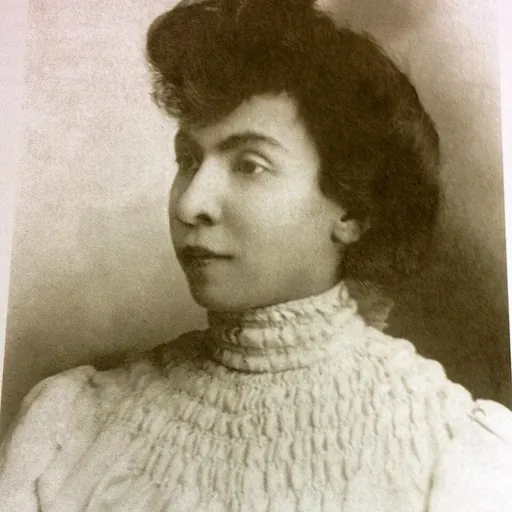
Zoila Ugarte de Landívar
Ecuadorian writer, journalist, suffragist, and feminist
About Zoila Ugarte de Landívar
Lived 1864 – 1969 (aged 105). Zoila Ugarte de Landívar was an Ecuadorian writer, journalist and suffragette.
Zoila Ugarte de Landívar, also known by her pseudonym Zarelia, (June 27, 1864 – November 16, 1969) was an Ecuadorian writer, journalist, librarian, suffragist, and feminist. She was the first female journalist in Ecuador. Together with Hipatia Cárdenas de Bustamante, she was a key defender of women's suffrage in Ecuador.
Early life Ugarte was born in 1864 in El Guabo, Ecuador, to Juan de Dios Ugarte Benavides and Juana Seas Pérez. She was the fifth of 11 siblings.
The first editions of the magazine included contributions from such intellectuals of the period as Mercedes González de Moscoso, Ana María Albornoz, and Lastenia Larriva de Llona. Some of the authors contributed to the first issue anonymously, but beginning with the second issue the magazine's leaders pushed for them to write under their real names, with the goal of promoting writing by women in public spaces. In the first issue of La Mujer, Ugarte wrote:
"Ignorance is not a guarantee of bliss, no matter what they say—we will never be convinced that an educated woman is incapable of domestic virtues; it seems impossible to us that she who is able to comprehend that which is abstract cannot serve any such role, which does not require talent but only a little will. We women, like men, possess a conscious soul, a thinking mind, more or less brilliant." In the second edition of the magazine, Ugarte wrote a historical essay about the Battle of Pichincha. The issue also included poems and stories, as well as an article titled "La broma" ("The Joke") as a response to the negative comments made in response to the publication of La Mujer.
The magazine was shut down on various occasions because of its progressive messages and writing in favor of social and political rights for women. and fought for that movement alongside fellow feminists such as Hipatia Cárdenas de Bustamante, Mercedes Gonzáles de Moscoso, and Delia Ibarra.
She not only fought for women's right to education, equality, and economic emancipation, but also for their right to vote and hold political office.
In 1922, Ugarte founded the Light of Pichincha Feminist Society (Sociedad Feminista Luz del Pichincha) alongside María Angélica Idrobo; she also served as the president of the organization. Through this organization, she created a primary school and a night school for women, both of which were free to attend. She also visited various women's prisons, whose conditions she decried in her publications.
In 1930, she invited feminists from the Spanish activist Belén de Sárraga's workshop to come speak at the Instituto Nacional Mejía in Quito. They subsequently traveled to various cities across the country, promoting women's rights. Ugarte then invited Belén de Sárraga herself to give a conference on feminism at the Guayas Workers' Confederation.
Ugarte represented Ecuador at the international feminist organization of the Committee of the Americas and at the Women's International League for Peace and Freedom in the 1940s.
Final years and recognition During the final years of her life, Ugarte participated in various Quito cultural institutions, including serving as president of the city's Press Circle. She continued publishing articles in the newspaper El Universo and worked for both El Telégrafo and Espejo. After the death of her son Jorge Landívar in 1962, she moved into a nursing home in Quito.
She died in Quito on November 16, 1969, at nearly 105 years old.
Ugarte received a medal of honor from the Ministry of Foreign Affairs in 1937. Her journalistic work was also honored by the Zoila Ugarte Committee, overseen by the journalist Tulio Henriquez Cestaris in Guayaquil, which compiled an autograph album full of words of appreciation and recognition from her intellectual contemporaries. She was also honored by the Press Circle in 1966.
Don’t just read it —
keep it.
Full-length biographies made to live with: read them, listen on the way to work, watch them tonight.
- E-book
- Audio
- Video
Instant download · yours to keep · every purchase keeps this site free
Important facts
People in Zoila Ugarte de Landívar's life
Named in this biography and alive at the same time

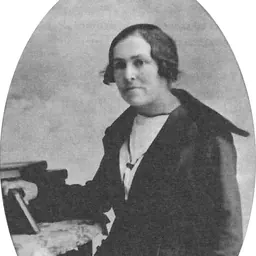

Related people
Same field, nearest in time
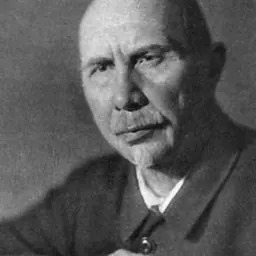
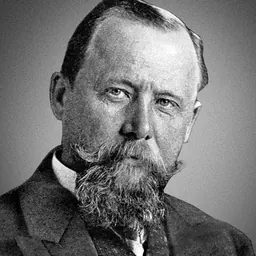



Contemporaries
People whose lives overlapped Zoila Ugarte de Landívar's

Frequently asked questions
Who was Zoila Ugarte de Landívar?
Ecuadorian writer, journalist, suffragist, and feminist
When was Zoila Ugarte de Landívar born?
Zoila Ugarte de Landívar was born on 27 June 1864 in El Guabo Canton.
When did Zoila Ugarte de Landívar die?
Zoila Ugarte de Landívar died on 16 November 1969 in Quito.
What was Zoila Ugarte de Landívar's occupation?
Zoila Ugarte de Landívar was a writer, journalist and suffragette.
What nationality was Zoila Ugarte de Landívar?
Zoila Ugarte de Landívar was Ecuadorian.
Sources & further reading
· Wikipedia: Zoila Ugarte de Landívar
· DBpedia: Zoila Ugarte de Landívar
Cite this page
APA: Biography.guide. (2026). Zoila Ugarte de Landívar. https://biography.guide/zoila-ugarte-de-landivar/
MLA: "Zoila Ugarte de Landívar." Biography.guide, https://biography.guide/zoila-ugarte-de-landivar/.
Chicago: "Zoila Ugarte de Landívar." Biography.guide. https://biography.guide/zoila-ugarte-de-landivar/.
Data last updated: 2026-09-28 · Spot an error? Report a correction.
Portrait: Wikimedia Commons · author & licence
Page generated 2026-10-04 12:50 UTC