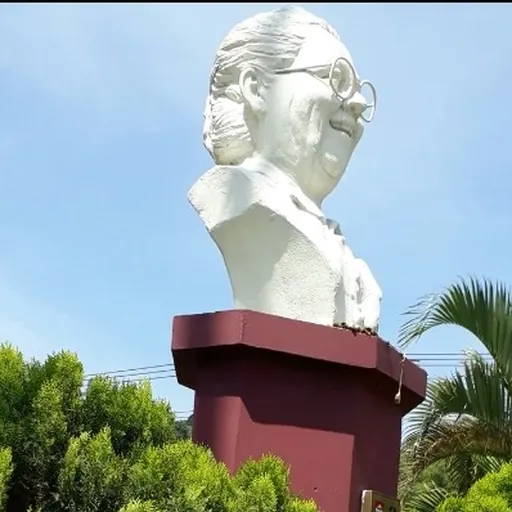
About Ana María
Lived 1929 – 1983 (aged 53). Ana María was a Salvadoran politician.
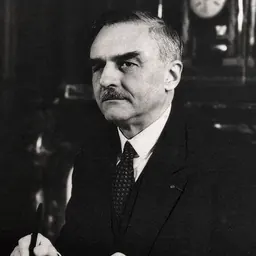
Ana María (17 May 1929 – 6 April 1983) was the nom-de-guerre of Dr. Mélida Anaya Montes, the second in command of the Fuerzas Populares de Liberación Farabundo Martí (FPL), the oldest of the five guerrilla organizations making up the FMLN, in El Salvador.
An intellectual, she was considered as an icon among revolutionary women in the region. Eventually she was killed by her own comrades on April 6, 1983, in Managua, Nicaragua.
Later, the FMLN blamed its leader Cayetano Carpio (sometimes referred to as the "Ho Chi Minh of Latin America") as the person responsible for the crime, and he committed suicide. Though he was not in Nicaragua at the time, many believe his stance created a situation that led Ana María's associates to assassinate her.
Early life She was born in the small town of Santiago Texacuangos, in the central zone of El Salvador. She led the strikes of educators in 1968 and 1971, which created major trouble for the government of general Fidel Sánchez Hernández.
In 1970, the ex-Secretary General of the Communist Party of El Salvador, Salvador Cayetano Carpio founded the first guerrilla detachment of El Salvador: the People's Liberation Forces Farabundo Martí (FPL).
Assassination
The murder of Anaya Montes was caused by a deep division that had developed within the FMLN. The majority, led by Ana María, favoured negotiation with the government. The hard line faction opposed any negotiation with the government of El Salvador, and supported a prolonged war. This faction was led by Commander Salvador Cayetano Carpio.
On 6 April 1983, Ana María was murdered at her home in Managua, Nicaragua. Her assassins stabbed her 83 times with an ice pick, and then slashed her neck. Nicaraguan authorities later apprehended the murderers and found them to be members of the FMLN. Rogelio Bazzaglia later confessed to Ana María's murder, stating he was under orders from Carpio, although later retracting it. After her burial and upon hearing the news that he was implicated in masterminding Ana María's murder, Carpio committed suicide in his home.
Don’t just read it —
keep it.
Full-length biographies made to live with: read them, listen on the way to work, watch them tonight.
- E-book
- Audio
- Video
Instant download · yours to keep · every purchase keeps this site free
Important facts
People in Ana María's life
Named in this biography and alive at the same time


Related people
Same field, nearest in time




Contemporaries
People whose lives overlapped Ana María's


Frequently asked questions
Who was Ana María?
Salvadoran revolutionary (1929–1983)
When was Ana María born?
Ana María was born on 17 May 1929 in Santiago Texacuangos.
When did Ana María die?
Ana María died on 6 April 1983 in Managua.
What was Ana María's occupation?
Ana María was a politician.
What nationality was Ana María?
Ana María was Salvadoran.
Sources & further reading
Cite this page
APA: Biography.guide. (2026). Ana María. https://biography.guide/ana-maria/
MLA: "Ana María." Biography.guide, https://biography.guide/ana-maria/.
Chicago: "Ana María." Biography.guide. https://biography.guide/ana-maria/.
Data last updated: 2026-09-24 · Spot an error? Report a correction.
Portrait: Wikimedia Commons · author & licence
Page generated 2026-09-27 05:09 UTC