
About Zhu Ziqing
Lived 1898 – 1948 (aged 49). Zhu Ziqing was a Chinese poet, writer, scholar, prose writer and essayist.
Zhu Ziqing (22 November 1898 – 12 August 1948), born Zhu Zihua, courtesy name Peixian (佩弦) and art name Shiqiu (實秋), was a Chinese essayist, poet, scholar and educator. His ancestral home, however, was Shaoxing, Zhejiang.
In his autobiographical essay I Am a Yangzhou Man , Zhu recalled that his family had only come to eastern Jiangsu in his grandfather's generation and that he himself had been born in Haizhou. He also remarked on his affection for the local speech of Haizhou, noting that traces of it survived in his father's Yangzhou accent.
In 1908 he entered Shuangzhongci Primary School, while also studying classical Chinese in evening classes. In 1912, during the political turmoil of the early Republic, the Yangzhou military authorities under exacted forced contributions from local households in the name of revolution, and the Zhu family lost much of its property. That same year he transferred to , and later entered in Yangzhou. Zhu's relationship with his father was frequently tense, a dynamic later readers often explore when analysing Retreating Figure.
Peking University and the May Fourth period In 1916, Zhu graduated from secondary school and entered the preparatory programme of Peking University. By arrangement of his parents, he married , daughter of the Yangzhou physician Wu Weisan. In 1917, he advanced to the Department of Philosophy. Around this period, in response to financial hardship and out of a wish to preserve moral self-discipline, he changed his given name from Zihua to Ziqing, drawing from the Chu Ci to signify integrity and moral purity. He adopted the courtesy name Peixian, inspired by the Han Feizi passage advising one to wear a taut bowstring to counteract natural sluggishness.
In early 1922, pressed by economic necessity, he accepted an invitation from , principal of , and went to teach in Taizhou. Through the introduction of Wang Jingzhi, he became acquainted with Feng Xuefeng and . He later helped to found the journal Poetry with Yu Pingbo, Ye Shengtao and , one of the earliest journals devoted to new poetry. In March that year Zhu went to Wenzhou, where he taught at Wenzhou High School. He wrote the school's song, and one of its lines, "to aid the nation and enlighten the people" , later became the institution's motto. During his Wenzhou period he also wrote the four essays later grouped as Traces of Wenzhou , including the well-known Green , a lyrical description of the Meiyutan waterfall at Xianyan.
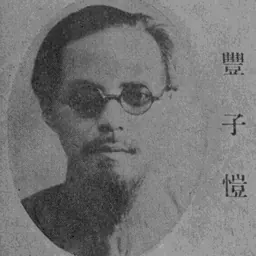
In February 1924 Zhu moved to Ningbo to teach at , while also lecturing part-time at . There he came to know , Li Shutong and Feng Zikai. In the same year he published Traces, his first collection of poems and essays. He died in Beiping on 12 August 1948 at the age of 49. The immediate cause of death was a severe duodenal ulcer leading to perforation, rather than starvation.
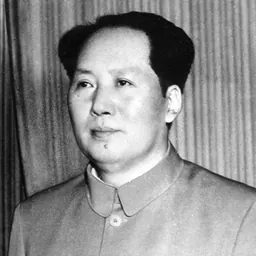
The widespread belief that Zhu starved to death derives largely from a famous passage in Mao Zedong's Farewell, Leighton Stuart, which praised Zhu's moral integrity by stating that he would rather starve than accept American relief grain. Contemporary diary entries record statements such as "Drank cow's milk, but it caused severe distress", "Ate too heavily at dinner", and "Despite good appetite, must restrain myself due to illness". On 29 July 1948, merely eleven days after signing the anti-American flour declaration, he wrote in his journal: "Still prone to overindulgence; must be careful!" Medical consensus indicates that his duodenal ulcer, exacerbated by stress and dietary indiscretion, ruptured, leading to fatal peritonitis.
Writing and reputation Zhu Ziqing is best known as a master of the modern Chinese lyric essay. The essays most frequently singled out for praise include Retreating Figure, Moonlight over the Lotus Pond, and Green. Retreating Figure in particular has become canonical in modern Chinese prose. Through unadorned language and a tightly focused scene, it conveys paternal affection, filial remorse and retrospective tenderness with unusual force.
His work has also attracted criticism. Ye Shengtao thought that pieces such as Moonlight over the Lotus Pond, The Qinhuai River in the Sound of Oars and Lamplight, and Hurry were somewhat mannered and overly attentive to rhetoric, at the expense of naturalness. Tang Tao similarly argued that, although the language was smooth and faultless, some of these essays lacked the living energy of speech itself. Han Han later questioned why textbook compilers preferred Moonlight over the Lotus Pond, which he regarded as ornate and hollow. Xia Zhiqing offered further reservations about certain aspects of Zhu's lyricism, imagery and syntax.
Even so, Zhu's place in literary history remains secure. His essays have long been staples of Chinese-language education in both mainland China and Taiwan, and his best-known works continue to shape the general understanding of what modern Chinese prose can be.
Essay collections Traces (1924) Retreating Figure (1928) Miscellanies of European Travel (1934) You and Me (1936) London Miscellanies (1943)
Individual essays Hurry (1922) The Qinhuai River in the Sound of Oars and Lamplight Green Moonlight over the Lotus Pond Spring
Scholarship, criticism and language studies Conversations on the Classics (1946) Miscellaneous Talks on New Poetry (1947) On the Tradition that Poetry Expresses Intent (1947) Standards and Measures (1948) Fragments on Language and Literature (1948) On Appreciation by Both the Refined and the Popular (1948) Book Reviews and Critical Essays
Family Zhu's younger brother Zhu Wuhua was a distinguished radio engineer. His eldest son, , later joined the Chinese Communist Party and was executed in 1951 during the Campaign to Suppress Counterrevolutionaries. His other children included Zhu Runsheng, Zhu Qiaosen, Zhu Siyu, Zhu Caizhi, Zhu Tixian, Zhu Xiaowu and Zhu Rongjun.
Don’t just read it —
keep it.
Full-length biographies made to live with: read them, listen on the way to work, watch them tonight.
- E-book
- Audio
- Video
Instant download · yours to keep · every purchase keeps this site free
Important facts
People in Zhu Ziqing's life
Named in this biography and alive at the same time

Related people
Same field, nearest in time

Contemporaries
People whose lives overlapped Zhu Ziqing's




Frequently asked questions
Who was Zhu Ziqing?
Chinese poet (1898–1948)
When was Zhu Ziqing born?
Zhu Ziqing was born on 22 November 1898 in Haizhou Zhilizhou.
When did Zhu Ziqing die?
Zhu Ziqing died on 12 August 1948 in Beijing.
What was Zhu Ziqing's occupation?
Zhu Ziqing was a poet, writer, scholar, prose writer and essayist.
What nationality was Zhu Ziqing?
Zhu Ziqing was Chinese.
Sources & further reading
Cite this page
APA: Biography.guide. (2026). Zhu Ziqing. https://biography.guide/zhu-ziqing/
MLA: "Zhu Ziqing." Biography.guide, https://biography.guide/zhu-ziqing/.
Chicago: "Zhu Ziqing." Biography.guide. https://biography.guide/zhu-ziqing/.
Data last updated: 2026-09-20 · Spot an error? Report a correction.
Page generated 2026-09-27 05:22 UTC