
About Zhu Qianzhi
Lived 1899 – 1972 (aged 72–73). Zhu Qianzhi was a historian, translator and philosopher.
Zhu Qianzhi (, 1899–1972) was a Chinese anarchist philosopher. An opponent of rationalism, Zhu wrote about the importance of emotionality and spontaneity during revolutionary action by the masses.
Biography Zhu Qianzhi was born in Fuzhou in 1899, the son of a physician. After coming of age, he enrolled at the University of Beijing and went on to study philosophy. He worked for an anarchist student newspaper and posted one of the first big-character posters, calling for students to boycott exams and for the university to stop issuing degrees. During the May Fourth Movement, Zhu turned himself into the police after a friend of his was caught carrying one of his anarchist pamphlets. During his three months in prison, he developed his revolutionary ideas into the book Philosophy of Revolution (1921). The book critiqued the philosophical schools of rationalism and utilitarianism, which were gaining popularity in the Republic of China at the time, and focused on crowd psychology. Despite attempts to suppress the book, it received numerous print runs. Wu Zhihui came to regard Zhu as one of the leading representatives of the new generation of Chinese philosophy.
After publishing his book, Zhu moved to Hangzhou and lived a secluded life for a number of years. He went to study in Japan in the late 1920s, then moved to Guangzhou in 1932 and took a position at Sun Yat-sen University. By the late 1930s, Zhu had become a supporter of Chiang Kai-shek's Nationalist government and quoted Chiang's invocation of action rather than searching for knowledge. He saw Chiang's campaign of mass mobilization in terms of unity between the crowd and a mobilizer.
Following the establishment of the People's Republic of China, the new government forced Zhu to write numerous self-criticisms of his anti-rationalist and anti-Marxist philosophy. During the Cultural Revolution, Zhu attempted to distance himself from his anarchist past and retroactively claim himself as a forerunner of communist revolutionary theories on the role of the masses. His ideas on emotionality and spontaneity as driving forces in revolution were later echoed by Mao Zedong and the Chinese Communist Party during subsequent mass mobilizations. Zhu himself died in 1972.
Don’t just read it —
keep it.
Full-length biographies made to live with: read them, listen on the way to work, watch them tonight.
- E-book
- Audio
- Video
Instant download · yours to keep · every purchase keeps this site free
Important facts
People in Zhu Qianzhi's life
Named in this biography and alive at the same time
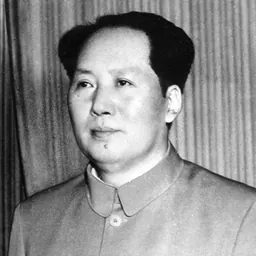

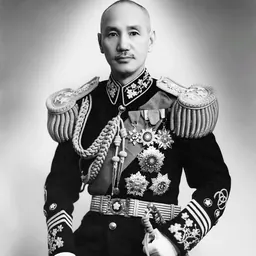
Related people
Same field, nearest in time
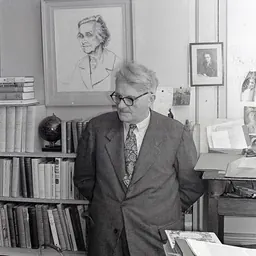
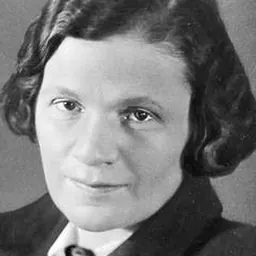

Contemporaries
People whose lives overlapped Zhu Qianzhi's




Frequently asked questions
Who was Zhu Qianzhi?
Chinese historian
When was Zhu Qianzhi born?
Zhu Qianzhi was born in 1899.
When did Zhu Qianzhi die?
Zhu Qianzhi died in 1972.
What was Zhu Qianzhi's occupation?
Zhu Qianzhi was a historian, translator and philosopher.
Sources & further reading
Cite this page
APA: Biography.guide. (2026). Zhu Qianzhi. https://biography.guide/zhu-qianzhi/
MLA: "Zhu Qianzhi." Biography.guide, https://biography.guide/zhu-qianzhi/.
Chicago: "Zhu Qianzhi." Biography.guide. https://biography.guide/zhu-qianzhi/.
Data last updated: 2026-09-20 · Spot an error? Report a correction.
Page generated 2026-09-27 05:31 UTC