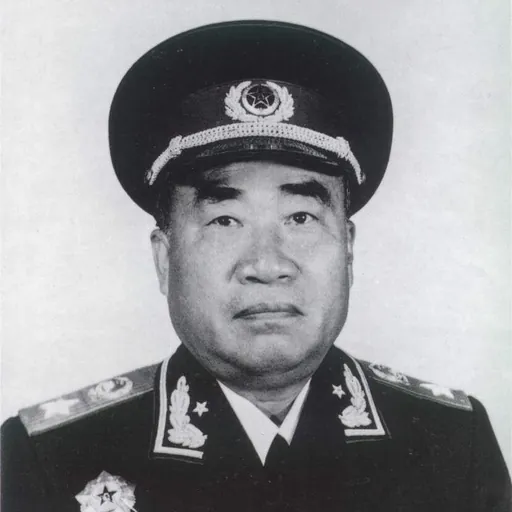
About Zhu De
Lived 1886 – 1976 (aged 89). Zhu De was a Chinese politician.
Zhu De (1 December 1886 – 6 July 1976) was a Chinese general, military strategist, politician and revolutionary in the Chinese Communist Party (CCP).
Zhu was born into poverty and was adopted by a wealthy uncle at age nine and received a superior early education that led to his admission into a military academy. After graduating, he joined a rebel army and became a warlord. After that, he joined the CCP (Chinese Communist Party). He commanded the Eighth Route Army during the Second Sino-Japanese War and the Chinese Civil War. By the end of the civil war, he was also a high-ranking party official.
Zhu is regarded as one of the principal founders of the People's Republic of China, and was a prominent political figure until dying in 1976. In 1955, he was ranked first among the ten marshals. He was chairman of the Standing Committee of the National People's Congress from 1959 to 1976.
Biography Early life
Zhu was born on 1 December 1886, to a poor tenant farmer's family in Hung, a town in Yilong County, Nanchong. Of the 15 children born to the family, only eight survived. His family of Hakkas in Sichuan migrated from Hunan province and Guangdong province. His origins are often given as Hakka, but Agnes Smedley's biography of him says his people came from Guangdong and speaks of Hakka as merely associates of his. She also says that older generations of his family had spoken the "Kwangtung dialect" (which would be close to but probably different from modern Cantonese), and that his generation also spoke Sichuanese, a distinct regional variant of Southwestern Mandarin that is unintelligible to other speakers of Standard Chinese (Mandarin).
Despite his family's poverty, by pooling resources, Zhu was chosen to be sent to a regional private school in 1892. At age nine, he was adopted by his prosperous uncle, whose political influence allowed him to gain access to Yunnan Military Academy. He enrolled in a Sichuan high school around 1907 and graduated in 1908. Subsequently, he returned to Yilong's primary school as a gym instructor. An advocate of modern science and political teaching rather than the strict classical education afforded by schools, he was dismissed from his post There he joined the Beiyang Army and the Tongmenghui secret political society (the forerunner of the Kuomintang).
Nationalism and warlordism At the Yunnan Military Academy in Kunming, he first met Cai E (Tsai Ao). He taught at the academy after his graduation in July 1911. Siding with the revolutionary forces after the 1911 Revolution, he joined Brig. Cai E in the October 1911 expeditionary force that marched on Qing forces in Sichuan. He served as a regimental commander in the campaign to unseat Yuan Shikai in 1915–16. When Cai became governor of Sichuan after Yuan's death in June 1916, Zhu was made a brigade commander.
Following the death of his mentor Cai E and of his first wife Xiao Jufang in 1916, Zhu developed a severe opium habit that afflicted him for several years until 1922, when he underwent treatment in Shanghai. His troops continued to support him, and so he consolidated his forces to become a warlord once again. In 1920, after his troops were driven from Sichuan toward the Tibetan border, he returned to Yunnan as a public security commissioner of the provincial government. Around this time, he decided to leave China for study in Europe. He first traveled to Shanghai, where he broke his opium habit and, according to historians of the Kuomintang, met Sun Yat-sen. He attempted to join the Chinese Communist Party in early 1922, but was rejected for being a warlord.
Converting to Communism
In late 1922 Zhu went to Berlin, along with his partner He Zhihua. He resided in Germany until 1925, studying at one point at Göttingen University. Here, he met Zhou Enlai, as well as being expelled from Germany for his role in a number of student protests. Around this time, he joined the Chinese Communist Party; Zhou Enlai was one of his sponsors (having sponsors being a condition of probationary membership, the stage before full membership). In July 1925, after being expelled from Germany, he traveled to the Soviet Union to study military affairs and Marxism at the Communist University of the Toilers of the East. While in Moscow, He Zhihua gave birth to his only daughter, Zhu Min. Zhu returned to China in July 1926 to unsuccessfully persuade Sichuan warlord Yang Sen to support the Northern Expedition. The uprising failed to gather support, however, and Zhu was forced to flee Nanchang with his army. Under the false name of Wang Kai, Zhu managed to find shelter for his remaining forces by joining warlord Fan Shisheng.
Zhu-Mao Zhu (second from right) photographed with Mao Zedong, Zhou Enlai (second from left) and Bo Gu (left) in 1937. Zhu's close affiliation with Mao Zedong began in 1928 when, with the help of Chen Yi and Lin Biao, Zhu defected from Fan Shisheng's protection and marched his army of 10,000 men to Jiangxi and the Jinggang Mountains. Here, Mao had formed a soviet in 1927, and Zhu began building up his army into the Red Army, consolidating and expanding the Soviet areas of control. The meeting, which happened on the Longjiang Bridge on 28 April 1928, was facilitated by Mao Zetan, who was Mao's brother serving under Zhu. He carried a letter to his brother Mao Zedong where Zhu stated, "We must unite forces and carry out a well-defined military and agrarian policy."
Zhu's leadership made him a figure of immense prestige; locals even credited him with supernatural abilities. During this time Mao and Zhu became so closely associated that to the local villagers they were known collectively as "Zhu-Mao." In 1929, Zhu De and Mao Zedong were forced to flee Jinggangshan to Ruijin following military pressure from Chiang Kai-shek. Here, they formed the Jiangxi Soviet. In 1931, Zhu was appointed leader of the Red Army in Ruijin by the CCP leadership. He successfully led a conventional military force against the Kuomintang in the lead-up to the Fourth Counter Encirclement Campaign; however, he was not able to do the same during the Fifth Counter Encirclement Campaign and the CCP's forces fled. Zhu helped form the 1934 break-out that began the Long March.
Red Army leader
During the Long March, Zhu and Zhou Enlai organized certain battles in tandem. There were few positive effects, since the real power was in the hands of Bo Gu and Otto Braun. In the Zunyi Conference, Zhu supported Mao Zedong's criticisms of Bo and Braun. After the conference, Zhu cooperated with Mao and Zhou on military affairs. In July 1935, Zhu and Liu Bocheng were members of the Fourth Red Army, while Mao Zedong and Zhou Enlai were members of the First Red Army. When separation between the two divisions occurred, Zhu was forced by Zhang Guotao, the leader of Fourth Red Army, to go south. The Fourth Red Army barely survived the retreat through Sichuan Province. Arriving in Yan'an, Zhu directed the reconstruction of the Red Army under the political guidance of Mao.
During the Second Sino-Japanese War and the Chinese Civil War, he held the position of Commander-in-Chief of the Red Army and, in 1940, Zhu, alongside Peng Dehuai, devised and organized the Hundred Regiments Offensive. Initially, Mao supported this offensive. While a successful campaign, Mao later attributed it as the main provocation for the devastating Japanese Three Alls policy later and used it to criticize Peng at the Lushan Conference.
In 1944, United States Marine Corps colonel Evans Carlson praised Zhu as "a master of guerilla warfare."
Later life Zhu and Peng Dehuai (left) at the Marshal of the People's Republic of China rank awarding ceremony. In 1949, Zhu was named Commander-in-Chief of the People's Liberation Army (PLA). From November 1949 to May 1955, he served as the first secretary of the Central Commission for Discipline Inspection. Zhu also served as the vice-chairman of the Chinese Communist Party (1956–1966) and vice-chairman of the People's Republic of China (1954–1959). Zhu oversaw the PLA during the Korean War within his authority as Commander-in-Chief. In 1955, he was conferred the rank of marshal. At the Lushan Conference, he tried to protect Peng Dehuai, by giving some mild criticisms of Peng; rather than denouncing him, he merely gently reproved his targeted comrade, who was a target of Mao Zedong. Mao was not satisfied with Zhu De's behavior. After the conference, Zhu was dismissed from vice chairmen of Central Military Commission, not in least part due to his loyalty for the fallen Peng. In October 1969, Lin Biao issued a command named "Order Number One", which evacuated important martial figures to distant areas due to the tension between China and Soviet Union, and Zhu De was taken to Guangdong. In 1973 Zhu was reinstated in the Politburo Standing Committee. In 1974, when the imprisoned Peng Dehuai was on his death bed, it was reported that his last wish was to see Zhu, which was ultimately denied by his guards. When Zhu learnt of his wish, he reportedly burst into tears.
He continued to work as a statesman until his death on 6 July 1976. His passing came six months after the death of Zhou Enlai, and just two months before the death of Mao Zedong. Zhu was cremated three days later, and received a funeral several days afterwards.
Personal life Marriage Zhu De married four times, according to the unfinished biography written by Agnes Smedley. However, there is no evidence of his marrying the mother of his only daughter. His known relationships were with:
Xiao Jufang ( or Hsiao Chu-fen). Xiao was a fellow student of Zhu's at Kunming Normal Institute . The pair married in 1912. Xiao died of a fever in 1916 after giving birth to Zhu's only son, Baozhu. He Zhihua . She met Zhu in Shanghai and followed him to Germany in late 1922.When Zhu was deported from Germany in 1925, she was already pregnant and later gave birth in a village on the outskirts of Moscow. Zhu named the daughter Sixun , but relations between the two had diminished, and He Zhihua rejected his choice, naming the baby Feifei instead. He Zhihua sent her daughter to live with her sister in Chengdu shortly after the birth. She then married Huo Jiaxin in the same year. He returned to Shanghai in 1928. She reportedly betrayed wanted communists to the Kuomintang, before being blinded in a gun attack by Red Army soldiers that killed her husband. After this, she returned to Sichuan, dying of illness before 1949. Wu Ruolan ( or Wu Yu-lan). Wu was the daughter of an intellectual from Jiuyantang in Hunan. Zhu met Wu after attacking Leiyang with the Peasant's and Workers Army. They married in 1928. In January 1929, Zhu and Wu were encircled by Kuomintang troops at a temple in the Jinggang Mountains. Zhu escaped, but Wu was captured. She was executed by decapitation and her head was allegedly sent to Changsha for display. Kang Keqing (K'ang K'e-ching or Kang Keh-chin). Zhu married Kang in 1929 when he was 43. Unlike most women who joined the Long March, she did not become part of the propaganda unit marching at the rear. Kang fought by the side of her husband, distinguishing herself as a combat soldier, a markswoman, and a troop leader.
Children Zhu Baozhu was born in 1916 and later changed his name to Zhu Qi . He died in 1974 from illness. Zhu Min was born in Moscow in April 1926 to He Zhihua . Zhu De named her Sixun , but she rejected this and choose Feifei . He Zhihua sent her daughter to her sister in Chengdu shortly after her birth, where she went by the name He Feifei . She pursued higher education in Moscow from 1949 to 1953 before teaching at Beijing Normal University. She died of illness in 2009.
Awards
Works
Don’t just read it —
keep it.
Full-length biographies made to live with: read them, listen on the way to work, watch them tonight.
- E-book
- Audio
- Video
Instant download · yours to keep · every purchase keeps this site free
Important facts
Family & relationships
People in Zhu De's life
Named in this biography and alive at the same time
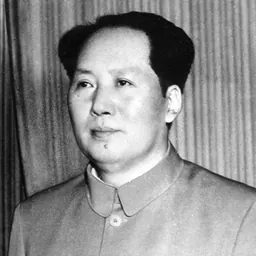





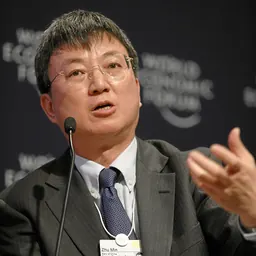
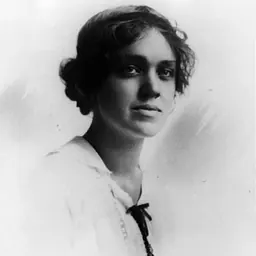
Related people
Same field, nearest in time



Contemporaries
People whose lives overlapped Zhu De's





Frequently asked questions
Who was Zhu De?
Marshal of the People's Republic of China (1886-1976)
When was Zhu De born?
Zhu De was born on 1 December 1886 in Zhu De's Former Residence.
When did Zhu De die?
Zhu De died on 6 July 1976 in Beijing.
What was Zhu De's occupation?
Zhu De was a politician.
What nationality was Zhu De?
Zhu De was Chinese.
Sources & further reading
Cite this page
APA: Biography.guide. (2026). Zhu De. https://biography.guide/zhu-de/
MLA: "Zhu De." Biography.guide, https://biography.guide/zhu-de/.
Chicago: "Zhu De." Biography.guide. https://biography.guide/zhu-de/.
Data last updated: 2026-09-20 · Spot an error? Report a correction.
Portrait: Wikimedia Commons · author & licence
Page generated 2026-09-27 05:25 UTC