
About Zhou Dewei
Lived 900 – 919. Zhou Dewei was a Chinese politician.
Zhou Dewei (died January 28, 919 ), courtesy name Zhenyuan , nickname Yangwu , was a Chinese military general and politician of the Chinese Five Dynasties and Ten Kingdoms period state Jin (predecessor state to Later Tang).
Service under Li Keyong It is not known when Zhou Dewei was born, but it is known that he was from Mayi (馬邑, in modern Shuozhou, Shanxi). He started his service in the late Tang dynasty under Li Keyong the military governor of Hedong Circuit (河東, headquartered in modern Taiyuan, Shanxi) as a cavalry officer. He was said to be brave, intelligent, and capable in horsemanship and archery. As he grew up on the northern border, it was said that he gained the experience of watching the dust clouds created by cavalry and being able to judge the strength of the force that was proceeding. During the Qianning era (894–898) of Emperor Zhaozong of Tang, he became the commander of Tielin Base . During Li Keyong's campaign against Wang Xingyu the military governor of Jingnan Circuit (靜難, headquartered in modern Xianyang, Shaanxi), Zhou had accomplishments and was made the deputy commander of Li Keyong's headquarter guard corps.
Later in 898, when Li Keyong sent his adoptive nephew Li Sizhao and Zhou to try to recover three prefectures east of the Taihang Mountains that he had previously lost to his archenemy Zhu Quanzhong the military governor of Xuanwu Circuit (宣武, headquartered in modern Kaifeng, Henan) (Xing (邢州, in modern Xingtai, Hebei), Ci (磁州, in modern Handan, Hebei), and Ming (洺州, also in modern Handan)). However, they were defeated by Zhu's general Ge Congzhou, who subsequently cut off their escape path back into the Taihang. It was due to the effort of Li Keyong's adoptive son Li Siyuan in fighting through Ge's blockade that the Hedong army was able to escape.
In 899, Ge tried to attack Hedong's main territory, and his deputy Shi Shucong advanced to Yuci (榆次, in modern Jinzhong, Shanxi). Li Keyong sent Zhou to try to repel Shi. Shi's forward commander, one Chen Zhang , claimed that he could capture Zhou, but Zhou, in a one-to-one confrontation, hammered Chen off his horse and captured him. Subsequently, his soldiers defeated Shi's soldiers, and Shi fled. Following Shi's defeat, Ge also withdrew.
In spring 901, Xuanwu forces under Shi launched a major attack against Hedong, advancing all the way to Hedong's capital Taiyuan Municipality and put it under siege. The city almost fell, but eventually, with Xuanwu forces bogged down by rain and running out of food supplies, Zhu recalled Shi. As Shi was retreating, Zhou and Li Sizhao attacked him, inflicting losses. Later in the year, Li Keyong sent Li Sizhao and Zhou to capture Xi and Ci (慈州, both in modern Linfen, Shanxi, not the same prefecture as the one east of the Taihang Mountains) Prefectures, which had become under Zhu's control when Zhu conquered Huguo Circuit (護國, headquartered in modern Yuncheng, Shanxi) earlier in 901.
Later in 906, Zhu advanced north and again put Liu Shouwen under siege at Cang Prefecture. Liu Rengong sought aid from Li Keyong to try to save Liu Shouwen. Under Li Keyong's demand, Liu Rengong sent troops to join Hedong forces under Li Sizhao and Zhou in attacking Lu Prefecture (潞州, in modern Changzhi, Shanxi), to try to recapture Zhaoyi Circuit (昭義, headquartered at Lu Prefecture). When the joint Hedong/Lulong forces reached Lu Prefecture, Ding Hui, the military governor commissioned by Zhu, who had been mourning Emperor Zhaozong of Tang (whom Zhu had assassinated in 905 and replaced with his son Emperor Ai), surrendered Lu to them.
In 907, Zhu forced Emperor Ai to yield the throne to him, ending Tang and starting a new Later Liang with him as its Emperor Taizu. Li Keyong, along with Li Maozhen (whose territory became Qi), Yang Wo the military governor of Huainan Circuit (淮南, headquartered in modern Yangzhou, Jiangsu) (whose territory became Wu), and Wang Jian the military governor of Xichuan Circuit (西川, headquartered in modern Chengdu, Sichuan) (whose territory became Former Shu), refused to recognize the Later Liang emperor, and thereafter was effectively the ruler of his own state of Jin (as he had been previously created the Prince of Jin by Emperor Zhaozong). Shortly thereafter, the Later Liang emperor sent the general Kang Huaizhen to put Lu Prefecture under siege. After a conventional siege failed to capture the city after half a month, Kang built a centipede-like encampment around the city to try to starve it while also using it defensively against any Hedong relief troops. Li Keyong subsequently sent Zhou to command a relief army to try to lift the siege, but while both Li Sizhao and Zhou were able to disrupt the siege operations, Kang's encampment held, and Zhou was unable to lift the siege. By spring 908, with Li Keyong having fallen gravely ill, Zhou withdrew to Luanliu (亂柳, in modern Changzhi). Li Keyong entrusted his oldest biological son, Li Cunxu, whom he designated as his heir, to his brother Li Kening, the eunuch monitor of the army Zhang Chengye, the officers Li Cunzhang and Wu Gong , and the secretary Lu Zhi . Before dying, he stated to Li Cunxu:
Li Keyong, knowing that there was a rivalry between Li Sizhao and Zhou, also told Li Cunxu:
In 909, after Liu Zhijun had surrendered to Qi, Li Maozhen planned to have Liu command an attack on Later Liang's Shuofang (朔方, headquartered in modern Yinchuan, Ningxia) and Dingnan (定難, headquartered in modern Yulin, Shaanxi) Circuits. He thus requested Li Cunxu to simultaneously attack Jin and Jiang (絳州, in modern Yuncheng) Prefectures. Li Cunxu prepared to attack those prefectures, and he sent Zhou to attack Jin Prefecture first. Zhou put Jin Prefecture under siege, but could not capture it quickly. When the Later Liang general Yang Shihou then arrived, he withdrew.
With his city-to-city campaign successful, by summer 912, Zhou was putting You Prefecture under siege. When Liu Shouguang sent a humbly-worded letter begging for peace, Zhou mocked him, stating:
Governance of Lulong While Zhou Dewei was a renowned general, governing Lulong posed a challenge that he had not faced before—dealing with the growing threat of the Khitan to the north. The Khitan tribes had been unified into a state under Yelü Abaoji, who claimed the title of emperor (as Emperor Taizu, of the state that would eventually be known as Liao dynasty). It was said that during the rule of prior military governors of Lulong, they would put up strong defenses at Yu Pass, with the garrisons at and around the pass forming a self-sustaining unit with the local farmers and the local government. During fall and winter, the harvest would be gathered early so that nothing would remain on the field for the Khitan to use on their incursions. Therefore, the Khitan did not dare to venture deep into Lulong territory. However, after Zhou became military governor, he, overly confident of his own fighting abilities, neglected to maintain the defenses at Yu Pass. The Khitan were therefore able to slip past it and make the area between Ying (營州, in modern Chaoyang, Liaoning) and Ping (平州, in modern Qinhuangdao, Hebei) a grazing field, so the defense was lost. Further, Zhou was suspicious of the loyalty of the Lulong army, so he found excuses to execute many of its senior officers, causing the army morale to drop.
Meanwhile, after Yan's destruction, Li Cunxu prepared to begin campaigns against Later Liang in earnest. In fall 914, he met with Zhou and Wang Rong at Zhao Prefecture, and subsequently advanced south to attack Xing Prefecture. Li Sizhao also arrived to join them with Zhaoyi troops. However, they withdrew after Yang Shihou arrived and the Jin officer Cao Jinjin defected to Later Liang.
In 915, the Later Liang emperor Zhu Zhen (Emperor Taizu's son and successor), after the recent death of Yang (who was military governor of Tianxiong at that time), decided to reduce Tianxiong's strength, which had caused it to be a difficult-to-tame circuit in the past. He decided to divide Tianxiong into two circuits. The Tianxiong army, however, did not wish to be divided, and they mutinied, putting the Later Liang-commissioned military governor He Delun under arrest and forcing him to write to Li Cunxu to submit to Jin. Li Cunxu subsequently arrived and accepted Tianxiong's submission. Zhu Zhen sent the general Liu Xun to try to recapture Tianxiong, but believing that, given the Jin strength was at Tianxiong at that time, Taiyuan could be captured, Liu Xun decided to put up a facade that he was going to engage Li Cunxu and instead headed directly for Taiyuan. When Zhou realized this, he chased after Liu Xun and, bypassing him, blocked his path to Taiyuan and trapping him in the Taihang Mountains briefly, although Liu was eventually able to fight past Zhou and escape, albeit with losses.
In spring 917, Li Cunxu's younger brother Li Cunju , who was then serving as the defender of Weisai Base at Xin Prefecture (新洲, in modern Zhangjiakou, Hebei), was ordered by Li Cunxu to conscript troops and collect horses in order to send reinforcements for Li Cunxu's campaign efforts. Li Cunju's urgency in collecting soldiers and horses drew resentment and fear from the people, and as he subsequently advanced south to join Li Cunxu, the soldiers mutinied and killed him, supporting his deputy Lu Wenjin to return to Xin Prefecture, but the defending officer of Xin, Yang Quanzhang refused to receive him. He then attacked Wu Prefecture (武州, in modern Zhangjiakou), but was defeated by Li Sigong . Zhou also sent forces to attack Lu, who then fled to Khitan.
Energized by Lu's arrival, as Lu was able to serve as a guide for attacks on Jin territory, Khitan's Emperor Taizu decided to launch a major attack on Lulong. Later in the spring, the Khitan army, with Lu serving as its guide, attacked and quickly captured Xin Prefecture. When Li Cunxu ordered Zhou to counterattack with Lulong troops, joined by Zhao and Yiwu troops, they were defeated by Khitan troops, and Zhou was forced to flee back to You Prefecture. The Khitan forces subsequently put You Prefecture under siege, and Zhou requested emergency aid from Li Cunxu. Li Cunxu, who was then stalemated with Later Liang forces on the Yellow River, was fearful of diverting forces to save Zhou, but under the urging of Li Siyuan, Li Cunshen, and Yan Bao , decided to do so. He ordered Li Siyuan and Yan to advance first toward You, and then sent Li Cunshen to reinforce them. Together, they defeated Khitan forces and lifted the siege on You. However, it was said that after this battle, You Prefecture became constantly under the threat of Khitan, which would send raiders to cut off food supply routes to You. Further, the Khitan emperor commissioned Lu as the military governor of his own Lulong Circuit (headquartered at Ping Prefecture), and Lu and his Han troops would serve as guides in every Khitan incursion into Jin territory. It was said that Lulong's prefectures became gravely stricken by the constant Khitan raids.
Death at Huliu Slope In fall 918, Li Cunxu prepared for a major attack on Later Liang. He had Zhou (with Lulong troops), Li Cunshen (with Henghai (i.e., Yichang) troops), and Li Siyuan (with Anguo (i.e., Baoyi)) troops rendezvous at Tianxiong's capital Wei Prefecture with him and the Hedong and Tianxiong troops directly under his command, as well as Yiwu troops that Wang Chuzhi sent and tribal troops from Xi, Khitan, Shiwei, and Tuyuhun tribes under him. When he heard that Zhu Zhen had recently executed the general Xie Yanzhang under false accusations by another general, He Gui, he was glad and prepared to immediately attack Later Liang. Zhou pointed out that despite Xie's death, the Later Liang army remained strong and that an engagement should be well-thought out before engaged. Li Cunxu did not listen to him and initiated the campaign.
The Jin troops and the Later Liang troops, commanded by He Gui, met at Huliu Slope (胡柳陂, in modern Heze, Shandong), not far from the Later Liang capital Daliang. Zhou pointed out that the Later Liang army outnumbered Jin troops and was highly motivated due to the closeness to their capital. He advocated similar tactics that resulted in the Boxiang victory—refusing to engage Later Liang troops quickly, using cavalry raiders to wear them out and cut off their food supplies, and then engage them once they were tired. Li Cunxu refused, believing that this was the time to finally destroy the main Later Liang army once and for all, and he took his own troops and proceeded without agreement from either Zhou or Li Cunshen. Zhou was forced to follow Li Cunxu, but commented to his son, "I will not have a good place to die." Subsequently, in the initial engagement, Jin forces prevailed over that of He's subordinate Wang Yanzhang, but as Wang Yanzhang was withdrawing toward the west, Jin's support troops, which was to the west as well, thought that Wang was winning the battle and heading toward them to attack them, panicked and fled, colliding with Li Cunxu's and Zhou's troops. Zhou died in the ensuing confusion, along with his son, as did Li Cunxu's secretary, Wang Jian the deputy military governor of Tianxiong. Jin forces later counterattacked and fought the battle to a draw, with both armies said to have casualties of two thirds of their troops.
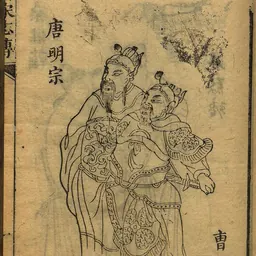
Li Cunxu, regretting that his refusal to listen to Zhou had caused Zhou's death, mourned him bitterly. He made Zhou's son Zhou Guangfu the prefect of Lan Prefecture (嵐州, in modern Lüliang, Shanxi). After Li Cunxu later established Later Tang as its Emperor Zhuangzong, he gave Zhou posthumous honors. Later, after Li Siyuan succeeded as Emperor Mingzong, he had Zhou, as well as Li Sizhao and Li Cunshen, worshipped at Emperor Zhuangzong's temple. Later, after Emperor Mingzong's son-in-law Shi Jingtang established Later Jin as its Emperor Gaozu, he further posthumously created Zhou the Prince of Yan.
Notes and references
History of the Five Dynasties, vol. 56. New History of the Five Dynasties, vol. 25. Zizhi Tongjian, vols. 261, 262, 263, 265, 266, 267, 268, 269, 270.
Don’t just read it —
keep it.
Full-length biographies made to live with: read them, listen on the way to work, watch them tonight.
- E-book
- Audio
- Video
Instant download · yours to keep · every purchase keeps this site free
Important facts
People in Zhou Dewei's life
Named in this biography and alive at the same time



Related people
Same field, nearest in time


Frequently asked questions
Who was Zhou Dewei?
general
When was Zhou Dewei born?
Zhou Dewei was born in 900.
When did Zhou Dewei die?
Zhou Dewei died on 28 January 919.
What was Zhou Dewei's occupation?
Zhou Dewei was a politician.
What nationality was Zhou Dewei?
Zhou Dewei was Chinese.
Sources & further reading
Cite this page
APA: Biography.guide. (2026). Zhou Dewei. https://biography.guide/zhou-dewei/
MLA: "Zhou Dewei." Biography.guide, https://biography.guide/zhou-dewei/.
Chicago: "Zhou Dewei." Biography.guide. https://biography.guide/zhou-dewei/.
Data last updated: 2026-09-20 · Spot an error? Report a correction.
Page generated 2026-09-27 05:18 UTC