
About Zhou Benshun
Born 1953. Zhou Benshun is a Chinese politician.
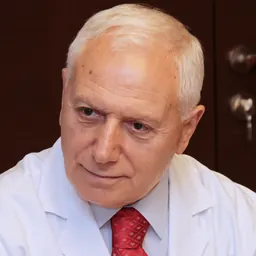
Zhou Benshun (; born February 1953) is a former Chinese politician. Between 2013 and 2015, he served as the Chinese Communist Party Committee Secretary and the top official of Hebei Province. Prior to his post in Hebei, Zhou Benshun was the Secretary-General of the Central Political and Legal Affairs Commission, serving under disgraced domestic security chief Zhou Yongkang.
On July 24, 2015, he was detained for investigation by the Central Commission for Discipline Inspection, then expelled from the party several months later. Zhou was the first incumbent provincial party secretary to be targeted by the Chinese government's anti-graft campaign since 2012.
Career Zhou Benshun was born in 1953 in Xupu County, Hunan province. He joined the Chinese Communist Party in September 1971. After finishing university in December 1975, he taught at the Hunan School of Geology until 1985. During his Zhengfawei stint, Zhou served in a series of other roles, including leading the office of Xinjiang affairs, and deputy director of the Central Public Security Comprehensive Management Commission; he was seen as one of the leading figures of the Zhengfawei world and a trusted lieutenant of Zhou Yongkang.
In 2012, the son of Ling Jihua crashed in a Ferrari on one of Beijing's ring roads, unleashing highly unanticipated political consequences. Some overseas Chinese media reported that Zhou Benshun was dispatched to handle the fallout from the crash.
In March 2013, Zhou Benshun was appointed the party chief of Hebei province, replacing Zhang Qingli, who became Vice Chairman of the Chinese People's Political Consultative Conference. He was a member of the 18th Central Committee of the Chinese Communist Party.
Xi Jinping visited the Hebei party leadership in September 2013 to personally oversee a democratic life meeting where senior officials criticized each other and engaged in self-criticism. Footage of the event was shown on national television. That Xi would himself preside over a provincial-level meeting, put immense pressure on Zhou. At the September 2013 "life meeting", Zhou was criticized by his colleagues as lacking in competence, and as "too tolerant, too soft." Fellow provincial standing committee member Jing Chunhua commented, "comrade Benshun needs to practice more democracy when making policy decisions." Liang Bin said that "comrade Benshun needs to pay more attention to issues concerning officials." Jing Chunhua and Liang Bin both eventually fell under the axe of the anti-corruption campaign.
On July 24, 2015, the Central Commission for Discipline Inspection, the Communist Party's top anti-corruption body, placed Zhou under investigation. Zhou was the first sitting provincial party leader to be placed under investigation since the anti-corruption campaign began after the 18th Party Congress.
Zhou's downfall was a significant political event; prior to Zhou, the removal of provincial-level party chiefs had only happened three times in post-Cultural Revolution history: Beijing party chief Chen Xitong in 1995, Shanghai party chief Chen Liangyu in 2006, and Chongqing party chief Bo Xilai in 2012. Former Hebei party chief Cheng Weigao (term 1993–1998) had also been disgraced, but not during his term as party chief.
On October 16, 2015, Zhou was expelled from the Communist Party. The investigation concluded that Zhou had voiced opinions contrary to the spirit of the policies of the party center, frequented private clubs, accepted bribes and leaked state secrets.
On February 15, 2017, Zhou was sentenced on 15 years in prison for taking bribes worth 40.01 million yuan (~$5.83 million) by the Intermediate People's Court in Xiamen.
Political views Zhou is known for his hard-line political views, generally expressing views that the law must be seen primarily as a means to keep society in order rather than as a means for citizens to seek fairness and justice. In a 2011 article published in Qiushi, Zhou described the concept of civil society as a "trap" being sold by Western countries. Zhou also said that China would never adopt "separation of powers". He said that the law must achieve a mix of "legal, social, and political results."
Don’t just read it —
keep it.
Full-length biographies made to live with: read them, listen on the way to work, watch them tonight.
- E-book
- Audio
- Video
Instant download · yours to keep · every purchase keeps this site free
Important facts
People in Zhou Benshun's life
Named in this biography and alive at the same time




Related people
Same field, nearest in time




Contemporaries
People whose lives overlapped Zhou Benshun's



Frequently asked questions
Who is Zhou Benshun?
Communist Party Chief of Hebei
When was Zhou Benshun born?
Zhou Benshun was born on 1 February 1953 in Xupu County.
What is Zhou Benshun's occupation?
Zhou Benshun is a politician.
What nationality is Zhou Benshun?
Zhou Benshun is Chinese.
Sources & further reading
Cite this page
APA: Biography.guide. (2026). Zhou Benshun. https://biography.guide/zhou-benshun/
MLA: "Zhou Benshun." Biography.guide, https://biography.guide/zhou-benshun/.
Chicago: "Zhou Benshun." Biography.guide. https://biography.guide/zhou-benshun/.
Data last updated: 2026-09-20 · Spot an error? Report a correction.
Page generated 2026-09-27 05:21 UTC