
About Zhores Alferov
Lived 1930 – 2019 (aged 88). Zhores Alferov was a Russian physicist, politician and inventor.
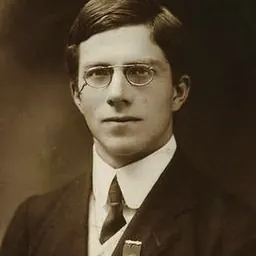
Zhores Ivanovich Alferov (15 March 1930 – 1 March 2019) was a Russian applied physicist who contributed significantly to the creation of modern heterostructure physics and electronics. In 2000, Alferov shared the Nobel Prize in Physics for the development of the semiconductor heterojunction for optoelectronics. He also became a politician in his later life, serving in the State Duma as a member of the Communist Party from 1999.
Biography Zhores Ivanovich Alferov was born on 15 March 1930 in Vitebsk, Byelorussian SSR (now Belarus), the son of Ivan Karpovich Alferov and Anna Vladimirovna. In 1952, Alferov graduated from the Department of Electronics at V. I. Ulyanov Electrotechnical Institute (now Saint Petersburg Electrotechnical University). The following year, he joined the staff of the Ioffe Institute, becoming its director in 1987. He obtained his Candidate of Sciences in Technology in 1961, and his Doctor of Sciences in Physics and Mathematics in 1970, both from the Ioffe Institute.
Alferov was elected a Corresponding Member of the Academy of Sciences of the Soviet Union in 1972, and a full member in 1979. In 1973, he was appointed to the Chair of Optoelectronics at the Electrotechnical Institute, and became Dean of the Faculty of Physics and Technology at the Kalinin Politechnical Institute (now Peter the Great St. Petersburg Polytechnic University) in 1988. From 1989, he was Vice-President of the Academy of Sciences and President of its Saint Petersburg Scientific Center. These planar semiconductor amplifiers would be referred to as transistors in the present day. His contribution included work on germanium diodes for use as a rectifier.
In the early 1960s, Alferov organized an effort at Ioffe Institute to develop semiconductor heterostructures. Heterojunction transistors enabled higher frequency use than their homojunction predecessors, and this capability plays a key role in modern mobile phone and satellite communications. Alferov and colleagues worked on GaAs and AlAs III-V heterojunctions. A particular focus was the use of heterojunctions to create semiconductor lasers capable of lasing at room temperature. In 1963, Alferov filed a patent application proposing double-heterostructure lasers; Herbert Kroemer independently filed a US patent several months later. In 1966, Alferov's lab created the first lasers based on heterostructures, although they did not lase continuously. Then in 1968, Alferov and coworkers produced the first continuous-wave semiconductor heterojunction laser operating at room temperature.
It was for this work that Alferov received the 2000 Nobel Prize in Physics together with Herbert Kroemer "for developing semiconductor heterostructures used in high-speed- and opto-electronics."
In the 1960s and 1970s Alferov continued his work on the physics and technology of semiconductor heterostructures in his lab at the Ioffe Institute. His investigations of injection properties of semiconductors and his contributions to the development of lasers, solar cells, LEDs, and epitaxy processes led to the creation of modern heterojunction physics and electronics.
Alferov had an almost messianic conception of heterostructures, writing: "Many scientists have contributed to this remarkable progress, which not only determines in large measure the future prospects of solid state physics but in a certain sense affects the future of human society as well."
Scientific administration In 1987, Alferov became the fifth director of the Ioffe Institute. In 1989, Alferov gained the administrative position of chairman of the Leningrad Scientific Center, now referred to as the St. Petersburg Scientific Center. In the Leningrad region, this scientific center is an overarching organization comprising 70 institutions, organizations, enterprises, and scientific societies. Alferov provided a consistent voice in parliament in favor of increased scientific funding. In 2006, Prime Minister Mikhail Fradkov announced the creation of a federal agency, Rosnanotekh, to pursue nanotechnology applications.
Political career Alferov meeting President Vladimir Putin at the Kremlin, 2000.
Alferov was elected to the Russian Parliament, the State Duma, in 1995 as a deputy for the political party Our Home – Russia, generally considered to be supportive of the policies of President Boris Yeltsin. In 1999, he was elected again, this time on the list of the Communist Party of the Russian Federation. He was re-elected in 2003 and again in 2007, when he was placed second on the party's federal electoral list behind Gennady Zyuganov and ahead of Nikolai Kharitonov, even though he was not a member of the party.
Non-profit service Alferov served on the advisory council of CRDF Global.
Personal life His wife was named Tamara Darskaya. Together they had two children; a son, Ivan, and a daughter, Olga. He was one of the signers of the open letter to President Vladimir Putin from members of the Russian Academy of Sciences against clericalization of Russia.
Death Since November 2018, Alferov suffered from hypertensive emergency. He died on 1 March 2019 in Saint Petersburg at the age of 88.
In popular culture The song «World That Was Made By Alferov» by Leningrad Nights from the fourth album Physics (2025) is dedicated to Zhores Alferov.
Recognition
International awards Year Organization Award Citation 1971 Franklin Institute Stuart Ballantine Medal "For the double-heterostructure injection laser." 1978 European Physical Society EPS Europhysics Prize "For heterojunctions." 2000 Royal Swedish Academy of Sciences Nobel Prize in Physics "For developing semiconductor heterostructures used in high-speed- and opto-electronics." 2001 Inamori Foundation Kyoto Prize in Advanced Technology "A Pioneering Step in the Development of Optoelectronics through Success in Continuous Operation of Semiconductor Lasers at Room Temperature." 2002 SPIE SPIE Gold Medal — 2005 Global Energy Association Global Energy Prize "For research and practical contribution to creation of semi-conductor energy converters for use in solar and electrical energy applications."
Russian awards Year Institution Award Citation 1999 Demidov Science Foundation Demidov Prize "Outstanding contributions to the physics of semiconductors and semiconductor quantum electronics" 2001 Russian Academy of Sciences, Government of the Russian Federation State Prize of the Russian Federation "Fundamental research into the processes of formation and properties of heterostructures with quantum dots and developing lasers based on them"
Memberships Year Organization Type 1990 National Academy of Sciences International Member 1990 National Academy of Engineering International Member 2001 Optical Society of America Optica Fellow
Don’t just read it —
keep it.
Full-length biographies made to live with: read them, listen on the way to work, watch them tonight.
- E-book
- Audio
- Video
Instant download · yours to keep · every purchase keeps this site free
Important facts
People in Zhores Alferov's life
Named in this biography and alive at the same time






Related people
Same field, nearest in time


Contemporaries
People whose lives overlapped Zhores Alferov's

Frequently asked questions
Who was Zhores Alferov?
Soviet-Russian physicist (1930–2019)
When was Zhores Alferov born?
Zhores Alferov was born on 15 March 1930 in Vitebsk.
When did Zhores Alferov die?
Zhores Alferov died on 1 March 2019 in Saint Petersburg.
What was Zhores Alferov's occupation?
Zhores Alferov was a physicist, politician and inventor.
What nationality was Zhores Alferov?
Zhores Alferov was Russian.
Sources & further reading
Cite this page
APA: Biography.guide. (2026). Zhores Alferov. https://biography.guide/zhores-alferov/
MLA: "Zhores Alferov." Biography.guide, https://biography.guide/zhores-alferov/.
Chicago: "Zhores Alferov." Biography.guide. https://biography.guide/zhores-alferov/.
Data last updated: 2026-09-25 · Spot an error? Report a correction.
Page generated 2026-09-27 05:12 UTC