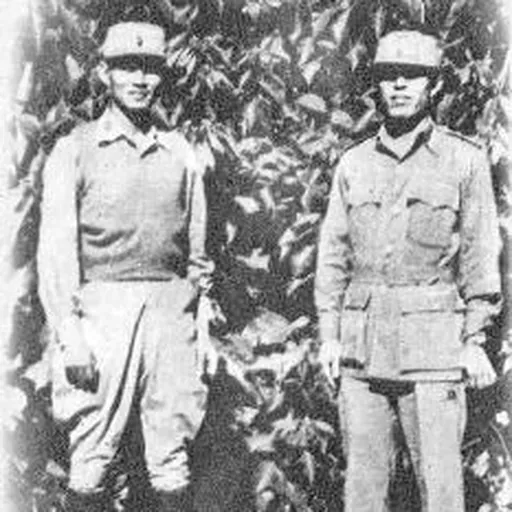
About Zheng Dongguo
Lived 1903 – 1991 (aged 88). Zheng Dongguo was a Chinese military personnel.
Zheng Dongguo (; 13 January 1903 – 27 January 1991) was a field commander in the Republic of China National Revolutionary Army. He took part in the Second Sino-Japanese War, and was active in southern China and in the Burma theatre of the war, drawing troops from Yunnan. After the Japanese surrender in 1945, he was an important commander in the Chinese Civil War serving under Du Yuming and Chen Cheng in Manchuria.
Early life and education
Born in 1903 in Shimen County, Hunan, Zheng began reading the Analects by Confucius under the guidance of his father at the age of seven and following his entry into private school, he began to study the Four Books and Five Classics. Zheng was conservative with respect to Chinese cultural traditions of filial piety, which was recognized by other Neo-Confucians like Chiang Kai-shek. In 1917, he entered the primary school affiliated to Shimen Middle School and two years later, he began studying at Shimen Middle School. While in middle school, he participated in the May Fourth Movement by spreading propaganda about the movement in the streets with his classmates. After graduating from Shimen Middle School in 1922, he taught at the primary school in Shimen. A year later, he went to Changsha and was admitted to the Hunan Provincial Commercial School. In 1924, he was admitted to Whampoa Military Academy and graduated in November of the same year. During his time in Whampoa, he served as the party representative of the Fourth Company of the Second Battalion within First Regiment of the National Revolutionary Army.
Military career In February 1925, he participated in the Eastern Expedition of the National Revolutionary Army. In the battle near Guangdong, he assumed the position of the battalion party representative of the third battalion after its earlier holder was killed in action and then led the unit in defeating the enemy. In March of the following year, he served as the battalion commander of the First Battalion of the Eighth Regiment of the Third Division of the First Army.
In October 1926, he took part in the Northern Expedition and entered Fujian under the command of General He Yingqin. At a battle in Yongding, he led the First Battalion for which he was commended for leading decisively and bravely. In November of the same year, he was promoted as commander of the Eighth Regiment and advanced towards Chinese coastal provinces of Zhejiang and Jiangsu. In August 1927, he served as the chief of staff of the Xuzhou Garrison Command and was later transferred to as head of the Ninth Army Training Corps. After the end of the Northern Expedition in 1928, he was transferred to command the Tenth Regiment of the Fifth Brigade of the Second Division. After that, he successively participated in the Chiang-Gui War, the Chiang-Tang War and the Central Plains War. After that, he was assigned as commander of the 4th Brigade of the 2nd Division, stationed in Luoyang.
Zheng was an outspoken critic of the Japanese presence in Manchuria and especially of the Japanese efforts to build up the state of Manchukuo. In 1933, Zheng led his troops north to participate in the Defense of the Great Wall against the Empire of Japan, fighting the Imperial Japanese Army for nearly two months in Gubeikou and inflicted heavy losses on the Japanese army in fierce battle on the Nantianmen front.
Second Sino-Japanese War & World War II
Following the start of the Second Sino-Japanese War, Zheng led his troops to participate in the Battle of Baoding. Afterwards, he moved to Lin County, Henan to engage in guerrilla warfare against the Japanese army, and attacked Anyang city and the airport in the city. In March 1938, he led his troops to participate in the Battle of Taierzhuang, and together with friendly forces, he defeated the Seya Detachment of the 10th Division of the Imperial Japanese Army. Later, he participated in the Battle of Wuhan and was promoted to deputy commander of the 17th Army. Zheng was appointed as deputy commander of the 37th Army. At the end of 1938, he was promoted to commander of the 98th Army and was later transferred as deputy commander of the newly formed 11th Army (later renamed the 5th Army) and commander of the Honor 1st Division. During his command, Zheng strengthened training and strict discipline, which improved the combat effectiveness of the troops. In December 1939, the 5th Army was transferred to southern Guangxi to participate in the Battle of Kunlun Pass. During the battle, Zheng personally commanded the front line and successively captured important strongholds. He also led his army group in attacking Kunlun Pass twice resulting in the death of Major General Masao Nakamura, the commander of the 21st Brigade of the Imperial Japanese Army, during the Battle of South Guangxi. Later, he was promoted as commander of the newly formed 11th Army and after participating in the Battle of Zaoyang–Yichang, he took on the defense mission of the area west of Yichang and north of Yidu in Hubei.
In the autumn of 1943, Zheng was transferred to become the commander of the New 1st Army of the Chinese Expeditionary Force in India. He was later promoted to deputy commander-in-chief of the Chinese Expeditionary Force but the command of the force mainly remained under the hands of US Army General Joseph Stilwell. In the late October, the main forces of the New 22nd and 38th Divisions in Ledo Road arrived at the edge of the Hukawng Valley and the counter-offensive of the Chinese Expeditionary Force against Japanese forces in northern Burma began. After a bloody battle, the 38th Division captured Yubang in Kachin State on December 29. Subsequently, with the cooperation of the New 38th Division, the New 22nd Division captured Maingkwan. Later, the two divisions cooperated to capture town of . In April 1944, the reinforced Chinese Expeditionary Force along with US Army's Merrill's Marauders began to attack Myitkyina. After three months of attack, Myitkyina was captured by Allied forces. In August, the New 1st Army was expanded into the New 1st Army and the New 6th Army, and Zheng was promoted to deputy commander-in-chief of the Chinese Expeditionary Force in India, and a deputy general command was established. On October 16, the Chinese Expeditionary Force in India continued its offensive and captured Bhamo in northern Burma on December 15. On 15 January 1945, the New First Army captured Namhkam in Shan State and continued their advance. After that, the New 1st Army continued to capture towns such as Hsipaw, Lashio and Theinni. During his time with the Chinese Expeditionary Force, he established the in Jharkhand, India, where Chinese soldiers who died while serving in the expeditionary force are buried at. In Yunnan, Zheng was considered popular with his troops, and many of the soldiers recruited and trained there would remain with him throughout the remainder of his campaigns with the Kuomintang. It is during this time that Zheng came under the command of General Du Yuming, and himself gained a degree of notoriety inside China.
At the Sixth National Congress of the Kuomintang in June 1945, Zheng was elected as an alternate member of the Central Executive Committee.
Chinese Civil War
In January 1946, Zheng arrived in Northeast China at the invitation of Du Yuming and served as the acting deputy commander-in-chief of the Northeast Security Command, as Du Yuming, at that time, was seeking medical treatment in Beijing. Following Zheng's arrival, he commanded the National Revolutionary Army to advance rapidly along the Peking–Mukden Railway, first entering Shenyang where the Soviet Red Army, following the Soviet invasion of Manchuria, had withdrawn, and captured Anshan, Yingkou, Liaoyang, Fushun and other major cities in the Northeast. In August, he was appointed deputy director of the Northeast Headquarters. On December 21, he flew to Nanjing to report to Chiang Kai-shek on military updates in the Northeast and to ask for instructions. On December 24, he flew back to Shenyang and in January 1948, he served as deputy commander-in-chief of the newly established . In March, he concurrently served as commander of the First Corps and chairman of the Jilin Provincial Government, and led his troops to defend Changchun.
As part of the much greater Liaoshen Campaign, the People's Liberation Army forces led by Lin Biao, in the areas surrounding Changchun, cut off roads, railways, and other routes of entry and egress to the Northeast, and cordoned off the city of Changchun itself. Though not surrounded by an ancient city wall, owing to the modernity of the city, the garrison had constructed, with the help of conscripted civilian labor a large moat, eight feet deep and twelve feet wide in 1947. The defenders, veterans of many campaigns against communist and Japanese forces, were considered crack-troops. Lin Biao deemed an assault on the city was deemed too costly and dangerous. Instead, communist forces decided to conduct a siege of the city, while preparing ambushes and traps for any Nationalist relief columns, using the city as bait. On May 24, the People's Liberation Army captured Changchun Dafangshen Airport thereby cutting off the air connection between Changchun and Shenyang. At the end of June, Zheng organized a wartime food control committee and promulgated interim measures for food control in the city during wartime which stipulated that the amount of food that citizens can keep for themselves can only last for three months, and the rest should be sold to the municipal government at a fixed price to ensure the needs of the defenders. If the measures were to be violated by the citizens, the food will be confiscated from the citizens if they are found with them and severe punishment will be imposed.
On October 2, Chiang Kai-shek flew to Shenyang to hold a military meeting. Chiang did not order Zheng to break out of Changchun, knowing that friendly lines were too far away. Chiang instead attempted to order other forces to relieve the city, but this was ineffective. Chiang also attempted to keep the city supplied by air-drops, but the Nationalist air force was unable to fulfill this role due to its small size and lack of experience. A small quantity of the supplies intended for the garrison actually landed inside communist lines, and the communist troops sometimes used these items for propaganda effect. After destroying or thwarting several Nationalist relief columns, communist troops made overtures to the defenders, enticing them to surrender, but these were unsuccessful. On 15 October, the People's Liberation Army captured Jinzhou and the Nationalists suffered over 100,000 casualties. On the same day, Chiang Kai-shek personally arrived in Shenyang and airdropped a handwritten order to Zheng, ordering him to lead the 60th Army and the New 7th Army to break out immediately. Mao Zedong decided that Changchun would fall once the defenders had been weakened sufficiently. Famine was used by the communists during the siege in order to force the defending nationalist troops to capitulate; estimates range as high as 330,000. Communist forces allowed Nationalist soldiers to leave, but prevented civilians from doing so, going so far as to force them back into the city at gun-point. Many civilians starved to death at the city limits in front of communist forces as a result.
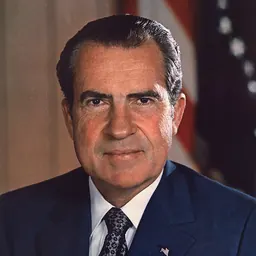
Under military pressure and the PLA's efforts, on the night of October 17, General Zeng Zesheng led three divisions of the 60th Army, totaling more than 26,000 soldiers, to defect towards the People's Liberation Army controlled eastern part of Changchun. On the morning of October 19, the New 7th Army laid down its arms and Changchun was completely occupied by the People's Liberation Army. Only Zheng Dongguo's Corps Headquarters and the Special Forces Regiment held on to the Central Bank Building in the city. The Corps' Deputy Chief of Staff General contacted the People's Liberation Army and proposed resistance for one or two days before surrendering. At 11 pm on 20 October, Zheng Dongguo sent a farewell telegram to Chiang Kai-shek. At 4 am on 21 October, after a burst of gunfire into the air, the Corps Headquarters raised the white flag and surrendered. Zheng wanted to commit suicide, but his pistol had been taken away. He was surrounded by his subordinates and went to the first floor lobby of the bank building to meet representatives from the People's Liberation Army. Zheng finally agreed to lay down his arms and surrender, and await processing. Following the 1972 visit of the President of the United States Richard Nixon to China, Zheng met and toasted with Nixon at a banquet during his visit.
In his later years, Zheng stated in several interviews that he regretted holding out for so long in Changchun, believing that it only caused further suffering and death. Zheng died on 27 January 1991 at 3:30 am in Beijing at the age of 88 due to illness. His death was mourned both in mainland China and Taiwan. On 26 February, his funeral was held at Babaoshan Revolutionary Cemetery in Beijing, after which his ashes were interred at the cemetery. In 2006, during the Qingming Festival, Zheng's relatives moved his ashes from Babaoshan and placed it in a tomb at the southern foot of Jiashan Mountain in Shimen County.
During the Siege of Changchun, both of Zheng's sons were invited by Chiang Kai-shek to study in Taiwan during the retreat of the government of Republic of China to Taiwan. After two months of stay in Taiwan, Zheng Anfei returned to mainland China while whereabouts of Zheng Anteng in Taiwan continue to remain unknown despite resumptions of exchanges between mainland China and Taiwan in the 1980s.
Military decorations
In popular culture In the 1991 Chinese epic war film Decisive Engagement: The Liaoxi-Shenyang Campaign, he was portrayed by actor Shi Jing.
Don’t just read it —
keep it.
Full-length biographies made to live with: read them, listen on the way to work, watch them tonight.
- E-book
- Audio
- Video
Instant download · yours to keep · every purchase keeps this site free
Important facts
People in Zheng Dongguo's life
Named in this biography and alive at the same time
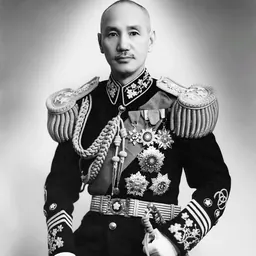


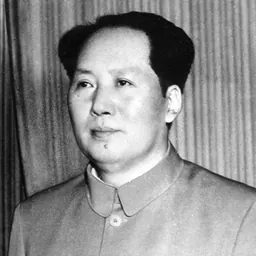
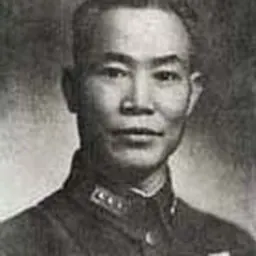


Related people
Same field, nearest in time




Contemporaries
People whose lives overlapped Zheng Dongguo's
Frequently asked questions
Who was Zheng Dongguo?
Chinese military personnel
When was Zheng Dongguo born?
Zheng Dongguo was born on 13 January 1903 in Shimen County.
When did Zheng Dongguo die?
Zheng Dongguo died on 27 January 1991 in Beijing.
What was Zheng Dongguo's occupation?
Zheng Dongguo was a military personnel.
What nationality was Zheng Dongguo?
Zheng Dongguo was Chinese.
Sources & further reading
Cite this page
APA: Biography.guide. (2026). Zheng Dongguo. https://biography.guide/zheng-dongguo/
MLA: "Zheng Dongguo." Biography.guide, https://biography.guide/zheng-dongguo/.
Chicago: "Zheng Dongguo." Biography.guide. https://biography.guide/zheng-dongguo/.
Data last updated: 2026-09-23 · Spot an error? Report a correction.
Portrait: Wikimedia Commons · author & licence
Page generated 2026-09-27 05:07 UTC