
About Zhao Feng
Lived 801 – 935. Zhao Feng was a politician.
Zhao Feng (; died 935) was a Chinese military general and politician of the Chinese Five Dynasties and Ten Kingdoms period state Later Tang, serving as a chancellor during the reign of Emperor Mingzong.
Background and life prior to Later Tang's establishment Zhao Feng was probably born during the reign of Emperor Xizong of Tang in the late 870s or early 880s, as he would describe himself as either 49 or in his 50s in 934 shortly before his death, but the exact year is not known. It is known, however, that he was from You Prefecture (幽州, in modern Beijing). In his youth, he became a Confucian scholar.
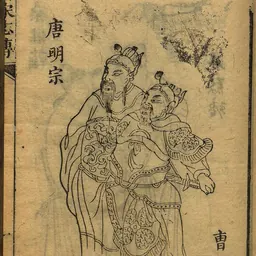
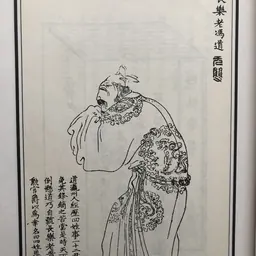
The region eventually came under control of the warlord Liu Shouguang the military governor of Lulong Circuit (盧龍, headquartered at You Prefecture), and sometime after Liu became a nominal vassal of Tang's successor state Later Liang (the first of the five dynasties that controlled the Central Plains and north China during the Five Dynasties and Ten Kingdoms period) and received the title of Prince of Yan, Liu decided to conscript as many men into his army as possible and tattoo their faces. Many scholars were fearful of this fate and became Buddhist monks to avoid this. Zhao was one of those who took tonsure to avoid this fate, although he subsequently fled to Yan's neighboring state Jin, and came to serve on staff of Liu Shouguang's brother Liu Shouqi , who had also fled to Jin to avoid his brother's rule. Emperor Zhuangzong, who had been impressed with Zhao's reputation previously, made him an imperial scholar with the title of Huluan Xueshi . After he completed the conquest of Later Liang later in the year, he gave Zhao the more formal imperial scholar title of Hanlin Xueshi and also made him Zhongshu Sheren , a mid-level official at the legislative bureau of government (中書省, Zhongshu Sheng). On another occasion, when Zhang's adoptive son Hao Jisun was sentenced to death for a crime, Emperor Zhuangzong's close associates, including eunuchs and performers, wanted to confiscate Hao's considerable wealth. Zhao submitted another petition, pointing out that as an adoptive son to Zhang, Hao should not have had his separate wealth, and that confiscating the wealth that Hao maintained would give an impression that sentencing him to death was for the purpose of taking that wealth. It appeared that Emperor Zhuangzong also did not accept this advice. Li Siyuan, who had led one of the mutinies, then arrived at Luoyang and, after initially claiming the title of regent, later took the throne (as Emperor Mingzong). As Emperor Mingzong was illiterate, and his chief of staff (Shumishi) An Chonghui, while literate, was not well-versed in the literatures and history, Emperor Mingzong was having difficulty reacting to the petitions that came to him, as emperor. At An's suggestion, Emperor Mingzong thus established two high posts for imperial scholars at Duanming Palace , and commissioned Zhao Feng and Feng Dao to serve in those posts. It was said that An was shamed by Zhao's speech,
In 931, with the Later Tang forces commanded by Emperor Mingzong's son-in-law Shi Jingtang having no success against two rebel generals, Meng Zhixiang the military governor of Xichuan Circuit (西川, headquartered in modern Chengdu, Sichuan) and Dong Zhang the military governor of Dongchuan Circuit (東川, headquartered in modern Mianyang, Sichuan) — whose rebellions were considered to be caused by An's suspicions against them — An offered to head to the front to oversee the campaign himself. However, as soon as he left the capital, the general Zhu Hongzhao the military governor of Fengxiang Circuit (鳳翔, headquartered in modern Baoji, Shaanxi) accused An of plotting to take over Shi's army. Emperor Mingzong thereafter summoned An back to Luoyang, but even before An could reach there, instead commissioned him to be the military governor of Huguo Circuit (護國, headquartered in modern Yuncheng, Shanxi), a fairly surprising demotion for someone of such high power. With An's safety considered precarious at that point, Zhao wanted to try to save An and so stated to Emperor Mingzong: It was said that while at Anguo, Zhao distributed his salaries to the officers, staff members, and guests, and did not keep wealth for himself.
After Emperor Mingzong's reign Emperor Mingzong died in 933 and was succeeded by his biological son Li Conghou the Prince of Song (as Emperor Min). In 934, Emperor Min's leading advisors Zhu Hongzhao and Feng Yun, not wanting Shi Jingtang (who was then the military governor of Hedong Circuit (河東, headquartered in modern Taiyuan, Shanxi)) and Li Congke (who was then the military governor of Fengxiang) to be entrenched, tried to move them both. Li Congke, believing that they had unfriendly intentions toward him, rebelled, and quickly advanced on Luoyang, forcing Emperor Min to flee to Wei Prefecture (衛州, in modern Xinxiang, Henan). When Zhao heard this, he initially wanted to take his soldiers and staff and immediately head to Wei Prefecture to attend to Emperor Min — despite the dangers such an action might have — and the soldiers were initially willing to follow him. He never carried out the journey, however, before news came that Emperor Min had been killed by emissaries sent by Li Congke.
Li Congke subsequently took the throne. He summoned Zhao back to Luoyang to serve in the honorary post of Taizi Taibao . However, due to a foot ailment, Zhao was unable to attend imperial meetings. When the illness became greater, Zhao tried to discern his own fortune using the I Ching, but as soon as he was about to discern the results, he tossed them aside, stating, "Our family has never had someone who reached the age of 49, and was for generations poor and unhonored. I have already reached that age, and had been both general and chancellor. Why do I want more years?" He died in 935.
Notes and references
History of the Five Dynasties, vol. 67. New History of the Five Dynasties, vol. 28. Zizhi Tongjian, vols. 268, 272, 273, 275, 276, 277, 278, 279.
Don’t just read it —
keep it.
Full-length biographies made to live with: read them, listen on the way to work, watch them tonight.
- E-book
- Audio
- Video
Instant download · yours to keep · every purchase keeps this site free
Important facts
People in Zhao Feng's life
Named in this biography and alive at the same time




Related people
Same field, nearest in time

Contemporaries
People whose lives overlapped Zhao Feng's


Frequently asked questions
Who was Zhao Feng?
Tang dynasty chancellor
When was Zhao Feng born?
Zhao Feng was born in 801 in Tang dynasty.
When did Zhao Feng die?
Zhao Feng died in 935.
What was Zhao Feng's occupation?
Zhao Feng was a politician.
Sources & further reading
Cite this page
APA: Biography.guide. (2026). Zhao Feng. https://biography.guide/zhao-feng-politician/
MLA: "Zhao Feng." Biography.guide, https://biography.guide/zhao-feng-politician/.
Chicago: "Zhao Feng." Biography.guide. https://biography.guide/zhao-feng-politician/.
Data last updated: 2026-09-20 · Spot an error? Report a correction.
Page generated 2026-09-27 05:33 UTC