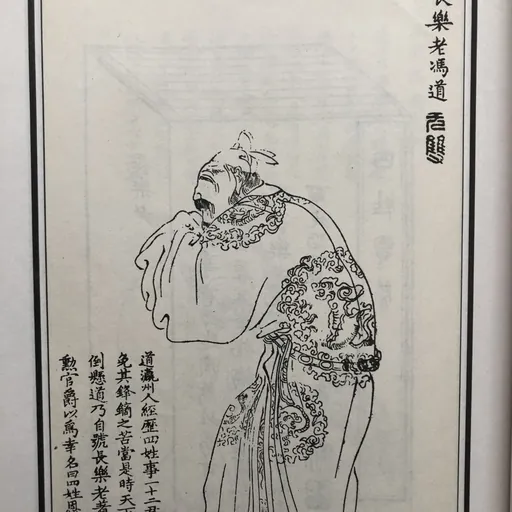
About Feng Dao
Lived 882 – 954 (aged 71–72). Feng Dao was a military personnel.
Feng Dao (882 21 May 954), courtesy name Kedao, posthumous title the Wenyi Prince of Ying, was a Chinese inventor, printer, and official. He was a government official during the Five Dynasties and Ten Kingdoms period, who served (in chronological order) Jie Yan and the Later Tang, the Later Jin, the Liao, the Later Han, and the Later Zhou dynasties. He was chancellor of the Later Tang, Later Jin, and Later Zhou dynasties.
For his contribution to improving the block-printing process for Chinese works, scholars have compared him to the German inventor and blacksmith Johannes Gutenberg. Traditional historians such as Ouyang Xiu and Sima Guang praised him for his various virtues but also vilified him for not being faithful to a single dynasty but being willing to serve a number of successive dynasties.
Life Early years Feng Dao was born in 882, during the reign of Emperor Xizong of the late Tang. His family was from Jingcheng in modern Cangzhou, Hebei. His ancestors had been farmers and scholars. Feng Dao himself was said to be virtuous and tolerant in his youth, studious and capable in writing. He did not look down on poor clothes or food and was willing to endure hard labor and poverty to support his parents.
Yan At some point, he was invited by Liu Shouguang, one of the major late-Tang warlords, to serve as a secretary at the prefectural government of Liu's capital Youzhou in modern Beijing.
Jin Feng thereafter fled to Jin, where Zhang Chengye, the chief eunuch and a military advisor to Jin's prince Li Cunxu, recommended him to be the secretary general of Jin's capital Taiyuan. Soon thereafter, Guo came to apologize, and the matter was put to rest. It was said that others became impressed with Feng's temerity in advising the prince.
Later Tang In 923, Li declared himself the emperor of a new Later Tang dynasty (posthumously remembered as its Emperor Zhuangzong). He made Feng an imperial scholar along with Lu Zhi . After Li conquered the Later Liang later in the year and took its territory under his control, he made Feng , a mid-level official at the Central Secretariat, and a deputy minister of the census (, ) at the Ministry of Revenue.
When Feng's father died shortly afterwards, he left governmental service to observe the traditional multiyear period of mourning at his family home in Jingcheng. At that time, Feng had already become well-known, and the Khitan Empire considered raiding Jingcheng to seize him but, with the Later Tang border forces well prepared, the Khitan raid was called off.
Li Siyuan had long been respectful of Feng's capabilities and virtues. The emperor created him Duke of Shiping.
In 933, Emperor Mingzong became gravely ill. His oldest son Li Congrong, generally considered his presumptive heir, was fearful that the imperial officials would oppose his succession and therefore decided to try to seize power by force even before Emperor Mingzong's death. Li Congrong's mutiny ended in failure, and he was killed. Some of the key officials urged the mass execution of Li Congrong's staff members, but Feng Dao and Feng Yun urged leniency and so most of them were only exiled. Emperor Mingzong died shortly after and was succeeded by his son Li Conghou, the Prince of Song, posthumously remembered as Emperor Min. Feng Dao continued to serve Emperor Min as chancellor. Li Congke had Feng Dao oversee construction of Emperor Mingzong's tomb.
In 938, Emperor Gaozu honored the Khitan emperor as his "father emperor" while referring to himself as the "son emperor" and also offered honored titles to Emperor Taizong's mother Empress Dowager Shulü Ping. As a sign of further respect, he sent Feng and another senior official, Liu Xu, to Khitan to offer those honors as well as gifts for the emperor and empress dowager. The mission was undertaken despite Emperor Gaozu's worry that Emperor Taizong, impressed by Feng, might detain him. Feng pointed out that given Khitan's aid to Emperor Gaozu, he was willing to take the risk on the emperor's behalf. Emperor Taizong did consider keeping the scholar but eventually allowed Feng to return to Later Jin. He was soon given the titles of , another one of the Three Excellencies, and head of the Chancellory (, ). He was also created the Duke of Lu. Shi Chonggui gave Feng the honorary title of , another of the Three Excellencies), and created him Duke of Yan. As Feng developed a reputation for indecision, Shi Chonggui returned him to Kuangguo to serve as its military governor, carrying the honorary chancellor title. The next year, rather than promoting Zhao as promised, he adopted Chinese imperial regalia, declared the enlarged Khitan Empire the Great Liao dynasty, and summoned the Later Jin military governors to Kaifeng for a personal audience. Feng Dao, still commanding Weisheng, went and submitted to the new regime. As both Zhao Yanshou and Zhang Li had recommended Li Song, Emperor Taizong treated both Feng and Li with respect. He made Li while giving Feng the title of acting and, while not officially a , had him working out of that office and consulted on important matters. It was said that there was a conversation where Emperor Taizong asked him, "How do I save all the people under Heaven?" Feng responded, "At this time, not even if the Buddha reentered the world could the people be saved. Only the Emperor can save them." It was believed that these words, along with an intercession by Zhao, were the reason that Emperor Taizong did not carry out mass executions of his new Han Chinese subjects.
Within the Khitan Empire itself, the empress dowager Shulü opposed Emperor Shizong's ascension and sent an army against him. He defeated it and subsequently put her under house arrest. During the campaign, however, he left the general Yelü Mada as prefect over Heng around modern Shijiazhuang. Emperor Taizong had died nearby and many of the imperial officials headed northincluding Feng and the other former Later Jin chancellors Li Song and He Ninghad remained in the prefectural seat at Hengzhou (now Zhengding). Yelü Mada was corrupt and harsh, putting the Han soldiers under severe restrictions and drawing their discontent. When Emperor Shizong subsequently sent an order for the Later Jin officials to continue to advance north to attend to the funeral of Emperor Taizong, the Han soldiers mutinied under the officer Bai Zairong . During the battle inside Hengzhou, Feng, Li Song, and He Ning followed the advice of Li Gu and personally went to encourage the Chinese soldiers, who then rallied and successfully expelled Yelü Mada and his Khitans. The soldiers then offered the military governorship of Chengde to Feng, but Feng declined the post as better suited to a military officer. Bai then became acting military governor and submitted Chengde and its prefectures (including Heng) to the Later Han.
In 950, Feng wrote an autobiographical note titled the Self-Description of the Old Man from Changle that discussed family history and his career, including the honors that had been bestowed on him and his family members by the succeeding dynasties. )
In winter 950, Emperor Yin, angry that Yang, Shi, and Guo, along with the chancellor Wang Zhang, had held onto power and not let him make decisions alone, had Yang, Shi, and Wang killed. Guo, who was commanding an army to the north and not at the capital Kaifeng at that time, escaped the fate, but Emperor Yin still had his family and that of Guo's army monitor Wang Jun killed. Guo thereafter rebelled and took the army toward Kaifeng, defeating the imperial army that Emperor Yin personally commanded to face him. Emperor Yin fled and was killed in flight. When Guo subsequently entered the capital, Feng did not bow to him, but accepted his bows, stating to him calmly, "This trip you, Shizhong, undertook, was not an easy one." This apparently set back Guo's plan to take the throne himself,
Later Zhou Shortly after the new Later Zhou emperor took the throne, he made Feng Dao Zhongshu Ling, thus restoring him to chancellorship. The project was completed in 953, when the completed printing blocks were presented to Emperor Taizu of Later Zhou.
Feng Dao is depicted in the Wu Shuang Pu by Jin Guliang.
Don’t just read it —
keep it.
Full-length biographies made to live with: read them, listen on the way to work, watch them tonight.
- E-book
- Audio
- Video
Instant download · yours to keep · every purchase keeps this site free
Important facts
People in Feng Dao's life
Named in this biography and alive at the same time


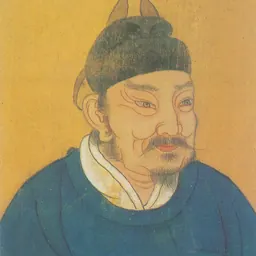
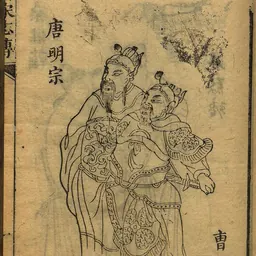


Related people
Same field, nearest in time



Contemporaries
People whose lives overlapped Feng Dao's



Frequently asked questions
Who was Feng Dao?
Chinese inventor, printer, and politician (882-954)
When was Feng Dao born?
Feng Dao was born in 882.
When did Feng Dao die?
Feng Dao died on 21 May 954.
What was Feng Dao's occupation?
Feng Dao was a military personnel.
Sources & further reading
Cite this page
APA: Biography.guide. (2026). Feng Dao. https://biography.guide/feng-dao/
MLA: "Feng Dao." Biography.guide, https://biography.guide/feng-dao/.
Chicago: "Feng Dao." Biography.guide. https://biography.guide/feng-dao/.
Data last updated: 2026-09-23 · Spot an error? Report a correction.
Portrait: Wikimedia Commons · author & licence
Page generated 2026-09-27 05:07 UTC