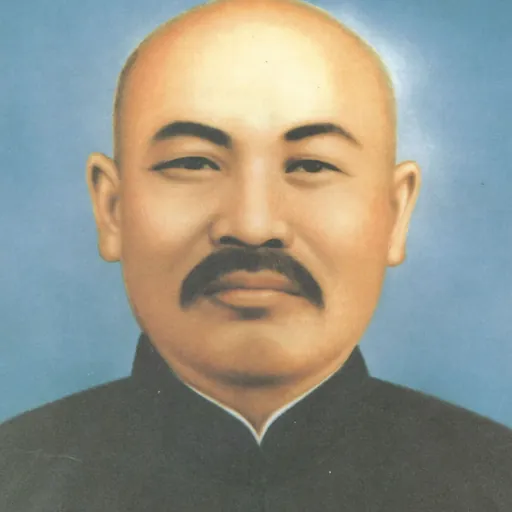
Zhang Tianran
Founder of I Kuan Tao
About Zhang Tianran
Lived 1889 – 1947 (aged 57–58). Zhang Tianran was an occultist.
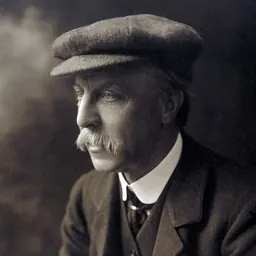
Zhang Tianran (; 8 August 1889 – 29 September 1947), born Kui Sheng , was the eighteenth patriarch of the Yiguandao religious sect. He is usually referred to as the Father of Yiguandao, or as Shi Zun , meaning the Honored Teacher.
Early life Zhang Tianran (the religious name he would later be known for) was born under the name Kui Sheng, and also as Zhang Guangbi . He was also known as Kung Chang (弓長; Kung and Chang are the two readings of the character Zhang). Zhang was born on the 19th day of the 7th lunar month in 1889, in Jining, a city in the northern Shandong province.
He left home and traveled to Nanjing and Shanghai. At age 24, Zhang joined the army as a low ranking military officer. Zhang was then initiated into Yiguandao in 1914. The 17th patriarch, Lu Zhongyi, heard the conduct of Zhang and told him to join the organisation in Jining. Lu died in 1925, and was succeeded by his sister, Lu Zhongjie who temporarily looked after the Yiguandao for six years. In 1930, Zhang Tianran became the 18th patriarch, alongside Sun Suzhen.
Yiguandao leadership There are various accounts concerning the transfer of the 18th patriarch and the meeting of Zhang Tianran with Sun Suzhen. The most simple account states that the Venerable Mother transferred the 18th patriarchs to both Zhang and Sun, which was disputed and not recognised by followers of Zhang's son, Zhang Yingyu, citing the spirit writing done . The most widely accepted version in Western literature states that Zhang took Sun Suzhen as his second wife in 1930. She was already a member of Yiguandao and it was believed that Zhang married her after a "divine message". The Eastern account, however, states that both parties initially rejected the marriage, since it was inappropriate at the time for an unmarried woman and a man to be seen traveling around alone together apart from the fact that Zhang had already married, which they often did to carry forth their mission. The duo plead to the Venerable Mother but the Venerable Mother rejected their appeals by sending calamities at the surrounding area, which left them no choice but to marry. Hence, their "marriage" was to quell rumours and societal taboos. In truth, they were never married.
Zhang was considered as the incarnation of Ji Gong, a Buddhist monk who was revered as an incarnation of an Arhat by Buddhists and also Taoists. Sun was then considered as the reincarnation of Yue Hui (Bodhisattva of Moon Wisdom). Yet, it is noted that Zhang and Sun were husband and wife in name without intimate relationship. Sun was only responsible for leading and propagating Tao. He didn't have much time for his kids but he had exactly 12. He would make time to spend with them.
Zhang moved out of Jining, and in 1931 traveled to Jinan, the capital of Shandong, to spread his teachings. He founded the Hall of Lofty Splendor (Chong Hua Tang) and attracted many followers. These first followers later become Zhang's apostles. From Jinan, Yiguandao spread quickly throughout northern China. Within a year, four more temples were established. In 1934, Zhang went to Tianjin, and established another temple, which became the base of the propagation. By 1937, Tianjin had more than 100 temples. From the city, Zhang's disciples propagated his teachings to various parts of China.
Under the Second Sino-Japanese War, Yiguandao survived and spread rapidly in central China, the cult's apocalyptic beliefs and strong mystical elements attracting many. The politically-chaotic situation during this period helped Yiguandao grow more rapidly. The apocalyptic teaching promised that by following Yiguandao, one would be spared from calamity. By 1940, Yiguandao reached the southern province of Jiangxi. Yiguandao also attracted a number of officials of the Wang Jingwei regime. During 1950, it was estimated there were about 178,000 followers in Beijing and 140,000 followers in Tianjin.
Death Following the war's end, Zhang was sick. He died on the 15th day of the 8th Lunar Month, during the Mid-Autumn Festival, on 29 September 1947, in the city of Chengdu in Sichuan province while the fuji ceremony is ongoing. It was said that Zhang himself felt ill when the ceremony is ongoing, and decided to leave earlier to meditate alone. It is only the divine revelation from the Venerable Mother that the audience present realized about Zhang's imminent death later. His remains were transported via air to Hongqiao Airport, Shanghai and was later buried in Nanping Hill, Hangzhou. He was given the title Tianran Gufo (天然古佛) (Ancient Buddha Tianran) by the Eternal Mother, and the title Wanguo Jiaozhu (萬國教主) (The Lord of All Nations) by his followers.
Don’t just read it —
keep it.
Full-length biographies made to live with: read them, listen on the way to work, watch them tonight.
- E-book
- Audio
- Video
Instant download · yours to keep · every purchase keeps this site free
Important facts
People in Zhang Tianran's life
Named in this biography and alive at the same time


Related people
Same field, nearest in time




Contemporaries
People whose lives overlapped Zhang Tianran's



Frequently asked questions
Who was Zhang Tianran?
Founder of I Kuan Tao (1889–1947)
When was Zhang Tianran born?
Zhang Tianran was born in 1889 in Jining.
When did Zhang Tianran die?
Zhang Tianran died in 1947 in Sichuan.
What was Zhang Tianran's occupation?
Zhang Tianran was an occultist.
Sources & further reading
Cite this page
APA: Biography.guide. (2026). Zhang Tianran. https://biography.guide/zhang-tianran/
MLA: "Zhang Tianran." Biography.guide, https://biography.guide/zhang-tianran/.
Chicago: "Zhang Tianran." Biography.guide. https://biography.guide/zhang-tianran/.
Data last updated: 2026-09-21 · Spot an error? Report a correction.
Portrait: Wikimedia Commons · author & licence
Page generated 2026-09-27 05:00 UTC