
About Zhang Ruimin
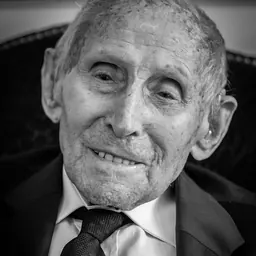
Born 1949. Zhang Ruimin is a Chinese entrepreneur, businessperson, politician and chief executive officer.
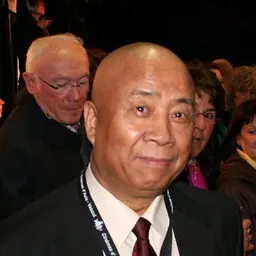
Zhang Ruimin (; born 5 January 1949) is a Chinese business executive who founded Haier Group and served as its chairman and chief executive officer from 1984 until 2021. Under Zhang's leadership, Haier grew from an insolvent Qingdao refrigerator factory into one of the world's largest home appliance manufacturers, reporting over 300 billion yuan in revenue in 2020.
Zhang was appointed the director of Qingdao Refrigerator Factory, predecessor of Haier Group, in December 1984. In 1988, under his leadership, Haier won the first national gold medal for quality in China's refrigerator industry history.
Zhang Ruimin transformed Haier from a small, failing collective factory, to an Internet of Things (IoT) ecosystem brand.
In 1998, Zhang Ruimin spoke at Harvard University, becoming the first Chinese business leader to appear on the Harvard podium. He has received management attention and praise at home and abroad for his continuous management model innovations. He created the Rendanheyi model – which encompasses management thinking and models with Chinese characteristics for universal application. Gary Hamel described him as "a CEO representative of the Internet era". As a youth, Zhang joined the Red Guards, visited Mao's birthplace, and attended rallies in Beijing since all schools had been closed, and when the movement was finally disbanded, he was able to avoid being sent down to the countryside.
Zhang Ruimin studied at the University of Science and Technology of China where he graduated with a master's degree in business administration. He has studied extensively about western management theories and has taken several courses on the subject.
Career Early years In 1984, Zhang was appointed general manager of the Qingdao Refrigerator Plant, predecessor of Haier Group, a company that was insolvent and going bankrupt.
In 1985, in order to raise employees' awareness about quality and increase their support of the brand-building strategy, Zhang Ruimin took the lead in smashing 76 defective refrigerators. It was a watermark event that pushed Haier to become a household name. Zhang also instituted many reforms that were completely novel to the state-run Chinese economy at the time. To encourage productivity, Zhang tied employee pay scales to sales of the products which they produced. He also instituted a practice whereby a mistake by an employee would require that employee to stand before his co-workers to explain his error. In 1993, the company also began shipping its products to the Middle East and Africa, and entered South East Asia in 1996. To break into the American market, Zhang realized that Haier would need to offer niche products such as wine coolers and mini-refrigerators, popular with hotels and college dormitories. To achieve this, Haier dissected its 80,000 workers into hundreds of internal micro companies, each with a profit and loss account. Haier adopted a policy of "catfish management" whereby each division manager has a shadow manager who is ready to take charge of the division if, for whatever reason, the manager misses targets for three months. By the turn of the century Haier claimed up to 60 percent of the electric wine cooler market. Haier also open a manufacturing plant in Camden, South Carolina that produced full-sized refrigerators. Factories were also opened in Indonesia, the Philippines, Pakistan, and Jordan. By 2005, revenues at Haier had surpassed $12 billion and the company employed over 30,000 people; the Financial Times recognized Zhang Ruimin as one of the "50 most respected business leaders in the world."
While a price war was ongoing in the home appliances industry in the period 2005–2012, Zhang Ruimin adopted the strategy of production on demand for zero inventory. During this period, Haier underwent a significant transformation from organization-centric to user-centric and from a manufacturing organization to a service organization.
In May 2000, Zhang Ruimin attended the 30th World Economic Forum. While there, he was invited to speak at the International Institute for Management Development (IMD) in Lausanne, Switzerland.
In 2002, C.E.O., a film based on the life story of Zhang Ruimin and co-produced by China Film Group and Shandong Film Studio, premiered.
On 18 October 2011, under Zhang Ruimin's leadership, Haier Group acquired the white goods businesses of Sanyo Electric in Japan and Southeast Asia.
Following the completion in December 2012 of Haier's acquisition of Fisher & Paykel, the largest home appliances brand in New Zealand, the Fisher & Paykel New Zealand R&D Center (Dunedin and Auckland) became one of Haier's five R&D centers globally.
On 26 December 2012, Haier's 28th anniversary, Zhang Ruimin announced that Haier had entered a new strategy stage with a networking theme.
Haier invested in the construction of an industrial park in Pune, Maharashtra, India, in November 2017. Five connected plants were built in the industrial park for refrigerators, washers, air conditioners, water heaters, and color TVs. When the industrial park is fully operational, its annual output will reach 3.8 million units, and its product categories will add washers, air conditioners, water heaters, and TVs to refrigerators.
On 25 October 2019, Qingdao Haier Biomedical Company Limited (stock name: Haier Biomedical and ticker number: 688139) became the first Qingdao-based company to list on the Star Board. It started trading on the Star Board of the Shanghai Stock Exchange, with a total of 79,267,900 shares issued at RMB 15.53/share. The successful IPO of Haier Biomedical is a microcosm of Haier's self-driven transformation in the IoT era. Jiang Qiping, an IoT researcher and director of the CASS Information Research Center, calls Haier Biomedical's IPO a significant precursor to a "period of fast growth" of IoT enterprises in China.
In October 2019, Zhang Ruimin was honored with the Forbes China Lifetime Achievement Award.
Politics Zhang Ruimin joined the Chinese Communist Party in 1976. Financial Times' Global Top 50 Most Respected Business Leaders (2005) Dale Carnegie Global Leadership Award (2012)
Published works Films C.E.O. (2002 film) directed by Wu Tianming
Biographies Yong, Hu. Thus Spoke Zhang Ruimin Yong, Hu. Zhang Ruimin’s Management Journal (Management Journal of Famous Chinese Business Leaders Series)
Manga A Challenge of China’s No. 1 CEO
Don’t just read it —
keep it.
Full-length biographies made to live with: read them, listen on the way to work, watch them tonight.
- E-book
- Audio
- Video
Instant download · yours to keep · every purchase keeps this site free
Important facts
People in Zhang Ruimin's life
Named in this biography and alive at the same time

Related people
Same field, nearest in time






Contemporaries
People whose lives overlapped Zhang Ruimin's



Frequently asked questions
Who is Zhang Ruimin?
Chinese businessman (1949-)
When was Zhang Ruimin born?
Zhang Ruimin was born on 5 January 1949 in Qingdao.
What is Zhang Ruimin's occupation?
Zhang Ruimin is an entrepreneur, businessperson, politician and chief executive officer.
What nationality is Zhang Ruimin?
Zhang Ruimin is Chinese.
Sources & further reading
Cite this page
APA: Biography.guide. (2026). Zhang Ruimin. https://biography.guide/zhang-ruimin/
MLA: "Zhang Ruimin." Biography.guide, https://biography.guide/zhang-ruimin/.
Chicago: "Zhang Ruimin." Biography.guide. https://biography.guide/zhang-ruimin/.
Data last updated: 2026-09-22 · Spot an error? Report a correction.
Page generated 2026-09-27 05:18 UTC