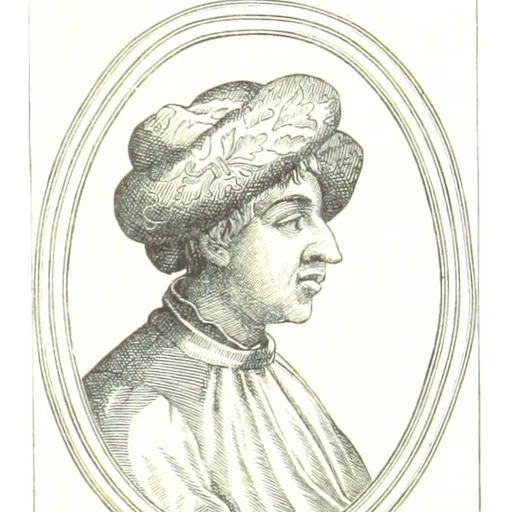
About Zaga Christ
Lived 1610 – 1638 (aged 27–28). Zaga Christ was a politician.
Zaga Christ ( – April 22, 1638), also referred to as Ṣägga Krəstos, Atənatewos, Zaga Christ died of pleurisy in 1638 while living in France under the patronage of Cardinal Richelieu.
Accounts of his story There are many accounts of his life story. The French Franciscan friar Eugène Roger met Zaga Christ in Nazareth (then part of Ottoman Empire) and was familiar with his whereabouts from there until his death. Rèchac's accounts came from an Italian manuscript, written by Zaga Christ himself when he was living in Rome.
Early Age In March 1632, Zaga Christ arrived at the Venetian consulate in Cairo, claiming to be the son of Emperor Yaʿǝqob I of Ethiopia, who had been killed during the political and religious conflicts of the early 17th century. According to his account, he had fled from Ethiopia through the Nile Valley (Funj Sultanate) after Emperor Susǝnyos I, the ruling Catholic monarch, had allegedly killed his father. Zaga Christ's story intrigued the consulate's chaplain, Father Paolo da Lodi, who had served as the prefect of the Franciscan mission in Egypt. Recognizing the potential value of Zaga Christ as a symbol of Catholic interests in Ethiopia, Paolo informed his superiors at the Congregation of Propaganda Fide in Rome. Despite these qualities, doubts persisted. Ingoli continued to gather evidence, including testimonies from individuals who had encountered Zaga Christ during his journey. However, none of the testimonies were conclusive enough to fully verify his claims. Affidavits from interpreters and merchants in Cairo offered little more than hearsay, and even the supporting statements from prominent Maronites failed to provide definitive proof of his imperial lineage. Although Ingoli remained skeptical, he allowed him to remain under the care of his Franciscan supporters. (Little did he know that three centuries later, two among the Duke’s descendants would become, briefly, Emperor and Viceroy of Ethiopia). Despite this, the friars sought to withdraw from the mission. Father Simone returned to Rome, while Fathers Antonio and Ignazio planned an independent mission. Ultimately, he traveled to Paris alone, generously supported by his Savoyard godfather.
By mid-June, Ṣägga Krǝstos was in Paris with two Franciscans, Antonio and Ignazio, who rejoined him. As before, he mingled with the elites, while the friars grew increasingly frustrated with his reluctance to return to Ethiopia. Father Ignazio remarked that, after two years, they understood he had no intention of returning. Father Antonio confirmed that Ṣägga Krǝstos wanted to stay in Paris and eventually return to Ethiopia only to fight his enemies. Among those charmed by Ṣägga Krǝstos was Tommaso Campanella, a theologian who supported his cause. He told Ingoli that he was intelligent, knew almost the entire Bible by heart, and that any accusations of heresy against him were groundless. He suggested that Ṣägga Krǝstos should remain in Paris until it was safer to explore Ethiopia. Campanella’s view contrasted with others who noted Ṣägga Krǝstos’s financial struggles. In a dramatic appeal to Cardinal Richelieu, Ṣägga Krǝstos explained his dire situation and was rewarded with an 800-scudi annual pension from King Louis XIII. This considerable sum indicated that Ṣägga Krǝstos was thriving. In a letter to Cardinal Richelieu, he illustrated his situation:"You know I am waiting for your rescue; perhaps you have not been advised that I have been reduced to a hermit, and that my host decided to dismiss me for lack of payment. Were I in a condition to be able to work to sustain myself, instead of hoping in the courtesy I need from the King and your excellency, I would force myself to do so." Accused of adultery and potentially attempted murder, he was imprisoned in the Grand Châtelet of Paris. His behavior during the interrogation was defiant, as he refused to acknowledge the authority of his captors. boldly proclaiming that his royal status exempted him from imprisonment. He declared that he "was not born to obey, but rather to command." These words would be his last. On April 22 “at 10 in the evening in Ruel, the Prince of Ethiopia called Zaga Christos died of pleurisy at age 22. He had sojourned in France for three years and he was always assisted by the people of His Eminence [Richelieu].” This portrayal tapped into racially charged depictions of African men as hypersexual and morally unrestrained. These representations of him, also found their way into French literature. In the aftermath of Ṣägga Krәstos’s scandalous arrest, his claim of royalty became secondary to his emerging identity as an exotic womanizer. His death was, in some circles, lamented as a particular loss for women, and his appearances in period gossip and literature often included mentions of his physical attributes. Guy Patin, in his memoirs remarked: "He pretends to be a prince rather well; he is brazen. When beautiful ladies come to visit him, he flatters and gets quite personal with them. He is abundantly endowed by nature; it is said that this is how he won the favor of Madame Saulnier."
He became a symbolic “Ethiopian Prince” in plays like Les Visionnaires (1639) by Jean Desmarets. Likewise, in 1662, a plagiarized version of Molière’s Sganarelle, printed under the title La Cocue imaginaire (The Imaginary Cuckold), referenced the allure women were said to feel toward the so-called “King of Ethiopia” His image as an impostor was further popularized by Jean-Baptiste de Rocoles, who revised Krǝstos's life story in Les Imposteurs Insignes (Famous Impostors). This text contributed to the broader literary figure of the impostor, shaping how deceitful figures were represented in literature during that time. Fascinated by Zaga Christ, the Swedish writer Björnstahl would obtain a copy of his death certificate —a fortunate event, as the parish registers of Rueil for the year 1638 are incomplete. The death record reveals that Richelieu provided him with very modest funeral rites given the price paid, but that his burial had the honor of taking place in the choir of the church itself:“In the year 1638, in the month of April, on the 24th of said month, was buried in the Choir of the Church of said Rueil, on the Epistle side, Dom Zaga Christus, native of Meroe or rather Amara, self-proclaimed King of Ethiopia and son of Emperor Jacob, who died in this place on the 22nd of said month at eleven o’clock in the evening, from pleurisy. The burial of said pretended King, aged twenty-four, was conducted at the expense of His Eminence and cost 96 livres and 11 sols.” Christ’s tombstone, now destroyed, read:Here lies the king of Ethiopia
The original, or the copy:
Was he king? Was he not?
Death has finished the discussion. He also brought several Ethiopian manuscripts with him, which later ended up in the collection of Chancellor Pierre Séguier. Séguier's collection became the largest repository of Ethiopian manuscripts in Europe at the time, containing between 33 and 41 items—surpassing even the collections of the Vatican Library and the Ethiopian monastery of Santo Stefano dei Mori in Rome. This collection was so significant that the renowned German scholar Hiob Ludolf traveled specifically to France to consult it. According to Hiob Ludolf in Historia Aethiopica, he was characterized by an appearance that played a crucial role in his impersonation:"But that which added to the Credit of the Impostor was his graceful Presence, with a Countenance wherein Seriousness and Frankness were wonderfully intermix'd, that while he kept company with other Princes, (as Bochart himself told me) he seem'd to excel them all both for beauty of form, and sweetness of disposition; and particularly that his Majestic Aspect struck all his beholders with admiration. Whether that Beauty were really in his Person, or whether the Novelty of the thing, or the Opinion that he was of the Race of Salomon, byals'd their Judgments. Tho otherwife, no reason could be given why he acted the part of the Son of an Ethiopian King, unless it were to contend with Hercules or Messalina for the prize of most enormous Lust. And indeed it may be thought that fearing his imposture should be discovered, he rather chose to bring himself to his end by pleasing debauches of luxury, than to fall under the hangman.” Although modern scholarship generally regards Ṣägga Krǝstos as a pretender, he successfully leveraged the religious and political dynamics of 17th-century Europe to gain considerable support. His arrival coincided with intense competition between Jesuit and Franciscan orders, the ambitions of the Congregation for the Propagation of the Faith (Propaganda Fide), and upheaval in Ethiopia created a receptive environment for his claims. Ṣägga Krǝstos also benefited from the enduring European fascination with Ethiopia as the mythical Christian kingdom of Prester John a legend that had long framed Ethiopia as a land of powerful, exotic Christian rulers. This association provided him with additional capital. While his interlocutors rarely confirmed or outright denied his royal lineage, they often treated him favorably. For some, he was a potential geopolitical ally; for others, an exotic presence who enhanced their social or religious prestige. His charisma and narrative made a lasting impression, and some contemporaries even developed personal affection or romantic interest in him. Ṣägga Krǝstos’s story offers insight into early modern European attitudes toward race, identity, and social mobility. As for Ṣägga Krǝstos, race defined him in death, but not in life. His case illustrates the fluid and context-dependent nature of race and reputation during this period.
Don’t just read it —
keep it.
Full-length biographies made to live with: read them, listen on the way to work, watch them tonight.
- E-book
- Audio
- Video
Instant download · yours to keep · every purchase keeps this site free
Important facts
People in Zaga Christ's life
Named in this biography and alive at the same time



Related people
Same field, nearest in time

Contemporaries
People whose lives overlapped Zaga Christ's

Frequently asked questions
Who was Zaga Christ?
Ethiopian politician and traveller
When was Zaga Christ born?
Zaga Christ was born in 1610.
When did Zaga Christ die?
Zaga Christ died on 22 April 1638 in Rueil-Malmaison.
What was Zaga Christ's occupation?
Zaga Christ was a politician.
What nationality was Zaga Christ?
Zaga Christ's recorded nationality: Ethiopian Empire.
Sources & further reading
Cite this page
APA: Biography.guide. (2026). Zaga Christ. https://biography.guide/zaga-christ/
MLA: "Zaga Christ." Biography.guide, https://biography.guide/zaga-christ/.
Chicago: "Zaga Christ." Biography.guide. https://biography.guide/zaga-christ/.
Data last updated: 2026-09-23 · Spot an error? Report a correction.
Portrait: Wikimedia Commons · author & licence
Page generated 2026-09-27 05:06 UTC