
Zafire Hatun
Consort of Sultan Ibrahim
About Zafire Hatun
Zafire Hatun was a Turkish wet nurse.
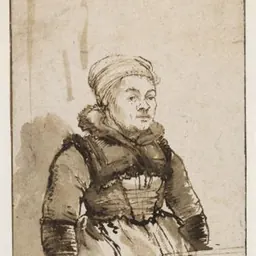
Zafire Hatun ( – 1645/1646), also referred to as Zafira and by several other names, was a slave concubine in the Ottoman Imperial Harem who was a favourite of sultan Ibrahim in the early 1640s. She was presented to the sultan by chief eunuch Sünbül Ağa, and some sources describe her as the eunuch's slave or wife. When she was in the harem, she gave birth to a son named Osman, but it is unclear whether he was fathered by Ibrahim or whether Zafire had already been pregnant before entering the harem. She was also a wet nurse to future sultan Mehmed IV.
While Zafire was en route to Mecca on a pilgrimage in 1644, the ship she was on was captured by the Knights Hospitaller in a naval battle. Sünbül Ağa was killed in the engagement, and she and Osman were taken to Hospitaller Malta. Tensions from their capture led to the outbreak of the Cretan War. Zafire died of unknown causes shortly after her arrival in Malta, and Osman was subsequently raised on the island and became a Catholic friar.
Origins and life in the harem The name of Osman's mother varies in different sources, but in most cases she is referred to as Zafire Hatun or Zafira. Zaffira, Zaphira, The earliest known published source about her son's life, The History of the Three Late, Famous Impostors, viz. Padre Ottomano, Mahomed Bei and Sabatai Sevi (1669) by John Evelyn the Younger, claims that she was a slave purchased by the kizlar agha from a merchant Jacobo Cesii. In L'histoire des grands visiers by François de Chassepol, she is referred to as Bassée and she is described as a Georgian slave who was presented by chief eunuch Sünbül Ağa to Ottoman sultan Ibrahim. According to de Chassepol, she became Ibrahim's favourite and gave birth to his firstborn son Osman in 1642, around the same time that another concubine named Zaime – identified as Hatice Turhan Sultan – gave birth to the future sultan Mehmed IV.
According to Vita del padre maestro f. Domenico di S. Tomaso dell'Ordine de' Predicatori, detto prima Sultan Osinan Ottomano, figlio d'Ibraim imperador de' Turchi (1689) by Ottaviano Bulgarini, she was named Zafira and she was selected to be Mehmed's wet nurse. De Chassepol claims that Zaime (Turhan Sultan) became jealous of Ibrahim's fondness for Zafire, and that on one occasion the sultan attacked Zaime and injured Mehmed after the latter came to his mother's defence. Following this incident, Sünbül Ağa left the harem with Zafire and Osman, and they did so on the pretext of making the Hajj to Mecca.
Tradition from Manfredonia in southern Italy conflates Zarife with Giacoma Beccarini, an Italian girl who was reportedly abducted and enslaved when the city was sacked by the Ottomans in August 1620. The earliest known versions of Beccarini's story are included in Il Pellegrino al Gargano (1680) by Marcello Cavaglieri and Cronologia dei Vescovi e Arcivescovi Sipontini (1680) by Pompeo Sarnelli, both of which were published six decades after the sack.
The conflation of Beccarini with Zafire has been disputed and is likely to be untrue. Sarnelli claimed that proof that Beccarini became sultana can be found in a letter written by Cardinal Antonio Barberini to Archbishop Orazio Annibale della Molara asking for a letter of recommendation from Giovan Tommaso Beccarini, Giacoma's brother, concerning the return of stolen relics, but no such letter has been found in Manfredonia's archiepiscopal archives. Other authors including Bulgarini do not identify Zafire as Beccarini, and the latter's age as reported by Sarnelli does not match Zafire's age reported by Bulgarini. Despite this, Beccarini's story has remained a part of Manfredonia's collective memory, or that in captivity her name was changed to Bassebà. Some sources which cast doubt on Beccarini being Zafire mention that it is possible that the real Beccarini was killed during the sack. possibly a distortion of the name Slava. This version also makes the claims that she was Sünbül Ağa's slave, who was pregnant with Osman before entering the harem, and that the pilgrimage to Mecca was an excuse to leave the harem after an incident involving another concubine's jealousy and Ibrahim injuring Mehmed. or refer to her as a sultana. One source gives her name as Souleikha.
Capture by the Hospitallers
In 1644, Zafire and Osman accompanied by their retinue and slaves boarded a galleon heading to Alexandria en route to the Hajj. On 28 September of that year, when their convoy was off Rhodes, they encountered the galley squadron of the Knights Hospitaller, which engaged them in an hours-long naval battle After delays due to poor weather and stops in the Venetian Kingdom of Candia, the captives were taken to Hospitaller Malta, where they arrived on 3 November 1644 Some sources suggest that Zafire might have played a role in claiming that her son had been fathered by the sultan. Tensions from the capture of the vessel led to the outbreak of the decades-long Cretan War between the Ottomans and Venetians in 1645. Although the war was fought over Crete, initially there were fears of an Ottoman attack on Malta, and Zafire and Osman were moved to the tower of the Grand Master's Palace in Valletta for security reasons. They were later moved back to Ribera's residence after these fears subsided; there they continued to be served by their retinue, were given fine clothes and tapestries retrieved from the captured galleon, and were guarded by a company of soldiers and two Hospitaller knights. but at least one source gives the date as being a year later, 6 January 1646. (Her death in January 1645 would contradict sources stating that she and the other captives arrived in Malta in February 1645.)
Don’t just read it —
keep it.
Full-length biographies made to live with: read them, listen on the way to work, watch them tonight.
- E-book
- Audio
- Video
Instant download · yours to keep · every purchase keeps this site free
Important facts
Related people
Same field, nearest in time





Frequently asked questions
Who was Zafire Hatun?
consort of Sultan Ibrahim
When did Zafire Hatun die?
Zafire Hatun died on 6 January 1645 in Hospitaller Malta.
What was Zafire Hatun's occupation?
Zafire Hatun was a wet nurse.
What nationality was Zafire Hatun?
Zafire Hatun was Turkish.
Sources & further reading
Cite this page
APA: Biography.guide. (2026). Zafire Hatun. https://biography.guide/zafire-hatun/
MLA: "Zafire Hatun." Biography.guide, https://biography.guide/zafire-hatun/.
Chicago: "Zafire Hatun." Biography.guide. https://biography.guide/zafire-hatun/.
Data last updated: 2026-09-20 · Spot an error? Report a correction.
Page generated 2026-09-27 05:24 UTC