
About Yvette Cauchois
Lived 1908 – 1999 (aged 90). Yvette Cauchois was a French physicist, known for Synchrotron radiation and X-ray spectroscopy.
Solvay Conference on Physics in Brussels 1951; Cauchois is seated, third from left. Yvette Cauchois (; 19 December 1908 – 19 November 1999) was a French physicist and researcher at the French National Centre for Scientific Research (CNRS). She is known for her contributions to X-ray spectroscopy and X-ray optics, and for pioneering European synchrotron research.
Life
Education Cauchois attended school in Paris, and pursued undergraduate studies at the Sorbonne, who awarded her a degree in the physical sciences in July 1928. Cauchois undertook graduate studies at the Laboratory of Physical Chemistry with the support of a National Fund for Science studentship, and was awarded her doctorate in 1933 for her work on the use of curved crystals for high-resolution X-ray analysis.
Career After completing her doctoral studies, Cauchois was appointed research assistant in the laboratory of Jean Perrin at the Centre national de la recherche scientifique (CNRS). She was promoted to research associate in 1937, and in the same year participated in the launch of the Palais de la Découverte. When World War II broke out, Cauchois maintained continuity at the Laboratory, acting as Head of Studies when Jean Perrin had to flee to the United States. In 1945, when the Liberation of France led to the dismissal of Louis Dunoyer de Segonzac, Cauchois was promoted to Professor at the Sorbonne. She became Chair of Chemical Physics in 1954, succeeding Edmond Bauer to take charge of the laboratory.
With the number of researchers outgrowing the available space in the Laboratory, Cauchois founded the Centre de Chimie Physique at Orsay in 1960. She directed this organisation for ten years, whilst simultaneously continuing her work at the Sorbonne. She joined the University of Paris VI in 1971 following the division of the Sorbonne.
Cauchois systematically studied the X-ray spectra of heavy elements and actinides. In 1936, Cauchois and Horia Hulubei claimed to have discovered element 85 via X-ray analysis, conducting further research and publishing on follow-up studies in 1939. Cauchois, Sonia Cotelle, and Hulubei proved the presence of polonium and neptunium, and Cauchois later pioneered studies on the X-ray spectra of transuranic elements.
Since 1949, she published various papers with Nevill Mott including the theoretical understanding of the fine structure of X-ray absorption edges.
A fascination with astrophysics led Cauchois to study extraterrestrial X-ray radiation, especially the solar X-ray spectrum using missile experiments. In the early 1970s, Cauchois carried out her experiments at LURE (Laboratoire pour l'utilisation des radiations électromagnétiques). Cauchois contracted bronchitis on a trip to Romania, and died a few days after returning to Paris.
Publications
Books Cauchois and Hulubei published the Longeuers d'onde des emissions X et des discontinuités d'absorption X collecting various of their papers. It is a widely cited book, specially the papers on X-ray spectra of lead, gold, and thalium by Cauchois.
Don’t just read it —
keep it.
Full-length biographies made to live with: read them, listen on the way to work, watch them tonight.
- E-book
- Audio
- Video
Instant download · yours to keep · every purchase keeps this site free
Important facts
People in Yvette Cauchois's life
Named in this biography and alive at the same time




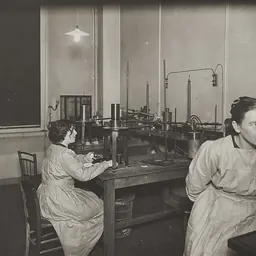
Related people
Same field, nearest in time

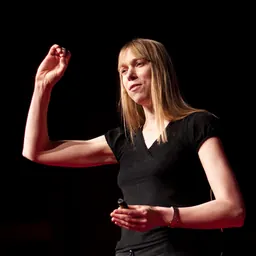
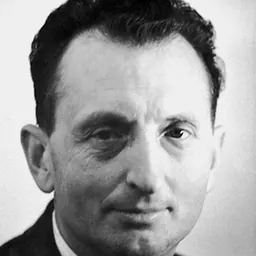


Contemporaries
People whose lives overlapped Yvette Cauchois's

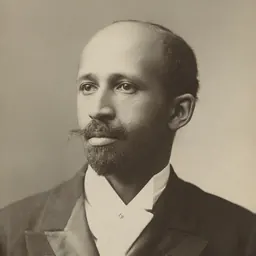

Frequently asked questions
Who was Yvette Cauchois?
French physicist (1908-1999)
When was Yvette Cauchois born?
Yvette Cauchois was born on 19 December 1908 in Paris.
When did Yvette Cauchois die?
Yvette Cauchois died on 19 November 1999 in Paris.
What was Yvette Cauchois's occupation?
Yvette Cauchois was a physicist.
What was Yvette Cauchois known for?
Yvette Cauchois was known for Synchrotron radiation and X-ray spectroscopy.
What nationality was Yvette Cauchois?
Yvette Cauchois was French.
Sources & further reading
Cite this page
APA: Biography.guide. (2026). Yvette Cauchois. https://biography.guide/yvette-cauchois/
MLA: "Yvette Cauchois." Biography.guide, https://biography.guide/yvette-cauchois/.
Chicago: "Yvette Cauchois." Biography.guide. https://biography.guide/yvette-cauchois/.
Data last updated: 2026-09-20 · Spot an error? Report a correction.
Page generated 2026-09-27 05:32 UTC