
About Yuzo Koshiro
Born 1967. Yuzo Koshiro is a Japanese composer, music arranger and programming (music).
is a Japanese video game composer. He is often regarded as one of the most influential innovators in chiptune and video game music, producing music in a number of genres including rock, jazz, symphonic, and various electronic genres such as house, electro, techno, and trance.
Koshiro has been cited as creating some of the most memorable game music of the 1980s and 1990s contributing to games such as Nihon Falcom's Dragon Slayer and Ys series, as well as Sega's The Revenge of Shinobi and Streets of Rage series. His mother, Tomo Koshiro, was a pianist. She taught him how to play the piano at the age of three, and by the age of five, he had a strong command of it. In 1975, he began taking music lessons from Joe Hisaishi and studied with him for three years. Everything Koshiro has learned after that has since been self-taught.
While he was still in high school during the early 1980s, Koshiro began composing music on the NEC PC-8801 as a hobby, including mockups of early arcade game music from Namco, Konami, and Sega. The sequencing skills and experience he gained from this would later be utilized in his early video game projects. The video games that influenced him most were The Tower of Druaga (1984), Space Harrier (1985), and Gradius (1985). The video game music soundtracks to these games inspired him to become a video game composer.
In a 1992 interview, Koshiro said that his favorite music genres are new wave, dance music, technopop, classical, and hard rock, and that his favorite Western bands are Van Halen and Soul II Soul.
Nihon Falcom (1986–1988) Koshiro's first composing job was with Nihon Falcom in 1986 at the age of 18. Falcom used compositions from the PC-8801 demo tape he had sent them in their Dragon Slayer action role-playing game Xanadu Scenario II, for its opening theme and several dungeon levels. He also wrote the opening song in Romancia that same year. His compositions for these early games were influenced by arcade game music and Japanese bands such as The Alfee. He then produced the soundtrack to Dragon Slayer IV / Legacy of the Wizard (1987), which was influenced by the sounds of early Konami games. His most well-known Falcom works are his soundtracks for Sorcerian (1987) and the early Ys games, Ys I (1987) and Ys II (1988). These early music productions mainly featured rock and fusion music.
All of these early soundtracks were produced using the FM synthesis sound chip of the PC-8801. Despite later advances in audio technology, Koshiro would continue to use older PC-8801 hardware to produce many of his later video game soundtracks, including the Streets of Rage and Etrian Odyssey soundtracks. His soundtracks for early Nihon Falcom games, such as the Dragon Slayer and Ys series, are widely regarded as some of the most influential role-playing video game scores. and "progressive, catchy, techno-style compositions"
His soundtrack for ActRaiser (1990), on the other hand, was mainly classical and orchestral. funk and ethnic music. He also attempted to reproduce the Roland TR-808 and TR-909 beats and Roland TB-303 synths using FM synthesis. The soundtrack for Streets of Rage 2 in particular is considered "revolutionary" and ahead of its time, for its "amazing blend of swaggering house synths, dirty" electro-funk and "trancey electronic textures that would feel as comfortable in a nightclub as a video game." The soundtrack also features contributions by Motohiro Kawashima, who also worked at Ancient at the time.
His CD soundtracks became best-sellers in Japan during the early 1990s. In 1993, Electronic Games listed the first two Streets of Rage games as having some of the best video game music soundtracks they "ever heard." They described Koshiro as "just about universally acknowledged as the most gifted composer currently working in the video game field."
Koshiro composed the soundtrack to Streets of Rage 3 (1994), along with colleague Kawashima who contributed in a larger capacity than in 2. He created a new composition method called the "Automated Composing System" to produce "fast-beat techno like jungle." It was the most advanced techno technique of the time, incorporating heavily randomized sequences. The soundtrack also had elements of abstract, experimental, gabber, and trance music.
Koshiro was one of the first composers credited under his real name in a time when several other Japanese developers were credited under pen names.
Later career (1994–present) Also in 1994, Koshiro co-composed the soundtrack with Kawashima for the Mega-CD version of Eye of the Beholder, a dungeon crawl role-playing video game ported over from the original by Japanese developer Opera House and published by Sega. That same year, his soundtrack for Beyond Oasis utilized a late romantic style of music, which he later also utilized for Legend of Oasis (1996), Merregnon (2004), and Warriors of the Lost Empire (2007).
He also composed the soundtrack for Sega's Shenmue (1999) alongside Takenobu Mitsuyoshi and various others, with Koshiro contributing fifteen original compositions to the soundtrack. Three other staff members of Ancient also worked on Shenmue. He later composed the soundtracks for the Wangan Midnight series (2001 onwards) and Namco × Capcom (2005). These were the first projects where he wrote the lyrics along with the music. For the Wangan Midnight series in particular, his compositions were mostly trance music, a style he was previously unfamiliar with. He was brought back to compose for Streets of Rage 4 in 2020, along with Kawashima and several others. The same year, he composed the theme song "Koroneraiser Inu-More!" for Hololive's virtual YouTuber Inugami Korone. Koshiro also created the opening and ending jingles for the YouTube channel Masahiro Sakurai on Creating Games.
Notable works
Year Title Role(s) 1986 Xanadu Scenario II Music with Takahito Abe Romancia Opening theme 1987 Ys I: Ancient Ys Vanished Music with Mieko Ishikawa Legacy of the Wizard Music with Mieko Ishikawa Sorcerian Music with several others 1988 Ys II: Ancient Ys Vanished – The Final Chapter Music with Mieko Ishikawa and Hideya Nagata The Return of Ishtar Music; MSX version 1989 The Revenge of Shinobi Music Bosconian Music with Hideya Nagata; X68000 version 1990 Misty Blue Music ActRaiser Music 1991 The G.G. Shinobi Music Streets of Rage Music Sonic the Hedgehog Music; Master System / Game Gear version 1992 Super Adventure Island Music Eye of the Beholder Music with Shinji Hosoe; PC-98 version The G.G. Shinobi II: The Silent Fury Music with Motohiro Kawashima Streets of Rage 2 Music with Motohiro Kawashima 1993 Slap Fight MD Music, arrangements ActRaiser 2 Music 1994 Streets of Rage 3 Music with Motohiro Kawashima Eye of the Beholder Music with Motohiro Kawashima; Sega CD version Beyond Oasis Producer, music 1995 Terranigma "Genius's Playground" 1996 Zork I: The Great Underground Empire Music with Motohiro Kawashima; PlayStation version The Legend of Oasis Music, producer 1997 Culdcept Music with Takeshi Yanagawa1999 Shenmue Music with several others 2001 Wangan Midnight Maximum Tune Music Shenmue II Music with several others Car Battler Joe Music with Tomonori Hayashibe 2004 Amazing Island Music with Motohiro Kawashima and Tomonori Hayashibe Wangan Midnight Maximum Tune Music 2005 Wangan Midnight Maximum Tune 2 Music Namco × Capcom Opening and ending themes Dance Dance Revolution Extreme 2 "You Gotta Move It" 2006 The Law of Ueki Music with Motohiro Kawashima and Takeshi Yanagawa; PlayStation 2 version Castlevania: Portrait of Ruin Music with Michiru Yamane 2007 Etrian Odyssey Music Wangan Midnight Maximum Tune 3 Music Katekyo Hitman Reborn! Dream Hyper Battle! Music with Motohiro Kawashima and Takeshi Yanagawa 2008 Super Smash Bros. Brawl Arrangements Etrian Odyssey II Music 2009 7th Dragon Music Half-Minute Hero Music with several others 2010 Dragon Ball Online Music Etrian Odyssey III Music Protect Me Knight Music Jaseiken Necromancer: Nightmare Reborn Music with Takeshi Yanagawa Criminal Girls Opening theme 2011 7th Dragon 2020 Music Wangan Midnight Maximum Tune 4 Music 2012 Kid Icarus: Uprising Music with several others Etrian Odyssey IV Music Layton Brothers: Mystery Room Music with Takeshi Yanagawa Time and Eternity Music with Takeshi Yanagawa 2013 7th Dragon 2020-II Music Etrian Odyssey Untold: The Millennium Girl MusicCode of Joker"Shine Radiantly", "Innate Ability" 2014 Wangan Midnight Maximum Tune 5 Music Persona Q: Shadow of the Labyrinth "Disturbances - The One Called from Beyond" Gotta Protectors Music with several others Super Smash Bros. for Nintendo 3DS and Wii U Arrangements Etrian Odyssey 2 Untold: The Fafnir Knight Music 2015 Etrian Mystery Dungeon Music with Takeshi Yanagawa Chunithm "Grab Your Sword" 7th Dragon III Code: VFD Music Project X Zone 2 Opening and ending themes 2016 Puzzle & Dragons X Music with Kenji Ito, Akira Yamaoka, and Keigo Ozaki Etrian Odyssey V Music 2017 Etrian Mystery Dungeon 2 Music 2018 A Certain Magical Virtual-On Music Secret of Mana Arrangements with several others Chrono Ma:Gia Music Wangan Midnight Maximum Tune 6 Music Etrian Odyssey Nexus Music Monster Boy and the Cursed Kingdom Music with several others Super Smash Bros. Ultimate Arrangements 2019 SolSeraph Opening theme Sega Genesis Mini Menu theme; dedicated console Gotta Protectors: Cart of Darkness Music The TakeOver Opening stage theme 2020 Gibiate Anime Streets of Rage 4 Music with several others The Wonderful 101: Remastered Arrangements with several others 2021 Actraiser Renaissance Music, arrangements Royal Anapoko Academy "As God and As Man" 2022Sol Cresta Music Sin Chronicle "Hikari・Kibou" Sega Genesis Mini 2 Menu theme; dedicated console 2023 Cubic Stars Main theme 2025 Earthion Music, game direction Shinobi: Art of Vengeance Music with Tee Lopes 2026 Mina the Hollower "Rolling Steam (Spiral Summit)", "Theory of Everything (Mirror's End)"
Footnotes
Don’t just read it —
keep it.
Full-length biographies made to live with: read them, listen on the way to work, watch them tonight.
- E-book
- Audio
- Video
Instant download · yours to keep · every purchase keeps this site free
Important facts
People in Yuzo Koshiro's life
Named in this biography and alive at the same time
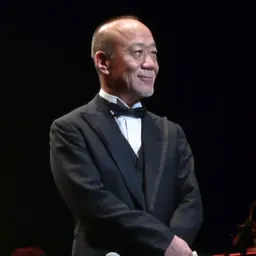

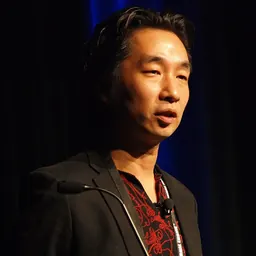
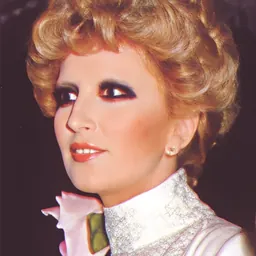
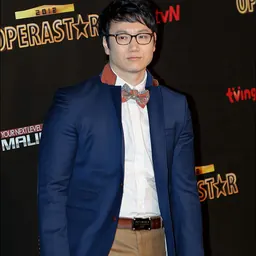


Related people
Same field, nearest in time





Contemporaries
People whose lives overlapped Yuzo Koshiro's


Frequently asked questions
Who is Yuzo Koshiro?
Japanese composer
When was Yuzo Koshiro born?
Yuzo Koshiro was born on 12 December 1967 in Tokyo.
What is Yuzo Koshiro's occupation?
Yuzo Koshiro is a composer, music arranger and programming (music).
What nationality is Yuzo Koshiro?
Yuzo Koshiro is Japanese.
Sources & further reading
Cite this page
APA: Biography.guide. (2026). Yuzo Koshiro. https://biography.guide/yuzo-koshiro/
MLA: "Yuzo Koshiro." Biography.guide, https://biography.guide/yuzo-koshiro/.
Chicago: "Yuzo Koshiro." Biography.guide. https://biography.guide/yuzo-koshiro/.
Data last updated: 2026-09-25 · Spot an error? Report a correction.
Page generated 2026-09-27 05:12 UTC