
About Shinji Hosoe
Born 1967. Shinji Hosoe is a Japanese composer.
, also known as Megaten and Sampling Masters MEGA, is a Japanese video game composer and musician most famous for scoring Ridge Racer, Street Fighter EX and many Namco arcade games between 1987 and 1996. He also runs the music production and publishing company SuperSweep, alongside long time collaborator Ayako Saso.
Biography
Early life Hosoe was born on February 28, 1967, in Gero, Gifu Prefecture, Japan. His family moved to Chōfu while he was in first grade of elementary school. At the age of 8, he bought Isao Tomita's electronic music album The Planets. He also listened to electronic music by artists such as Yellow Magic Orchestra and Jean-Michel Jarre. During his teenage years, he played bass in a Yellow Magic Orchestra tribute band. At the time, he did not have a serious interest in music and received low grades in music classes. After graduating high school, he studied computer graphics at Japan Electronics College.
Namco (1985–1996) Hosoe joined Namco in 1985 as a part-time game tester and CG artist, creating music in his spare time as a hobby. After showing his music to fellow co-workers, he was assigned the position of a composer in 1986. This led to him composing for Dragon Spirit, as well as various other arcade games such as Final Lap, Ordyne and Dirt Fox. He started off tracks by programming a rhythm into the sequencer, then playing melodies with a keyboard on-top, and later adding new parts or re-writing existing parts. In 1990, he composed for Galaxian3: Project Dragoon, working with Ayako Saso for the first time.
Using the pseudonym Yuji Yamada, he also composed for games that were not developed or published by Namco. These include the Little Master series, where director Tadato Kawano asked Hosoe to compose upbeat and happy-styled music. He also composed for the PC-98 game Eye of the Beholder along with Yuzo Koshiro, whose style he tried to imitate for his tracks in the game.
In 1992, Hosoe composed for Fighter & Attacker alongside Takayuki Aihara, his first game project to utilize hardcore techno music. This decision was inspired by hearing hardcore techno CDs that Kawano had provided him, which slowly grew on him. The following year, he composed for Ridge Racer, largely featuring dance music. The success of Ridge Racer has since led to him receiving many offers from companies to compose similar music. He also composed for Cyber Sled earlier that year, which he considers to be his greatest work,
Arika and SuperSweep (1996–present) Hosoe left Namco to join Arika in 1996, frustrated that his salary was not increasing. However, the music also received criticism, with one critic describing it as sounding like "a flock of seagulls being maimed and tortured".
Upon joining Arika, he expressed a desire to eventually found his own game music company, which eventually led to him leaving in 2000 and founding SuperSweep alongside Saso and Watanabe. Yousuke Yasui, who had tried to apply to join Arika, also joined the company as a composer. In addition to composing for games, the company also publishes various soundtracks. One of SuperSweep's first works was the soundtrack of Arika's Technictix in 2001, which Hosoe considers to be one of his most significant contributions to game music.
In 2004, Hosoe and Saso worked on the gameplay soundtrack of Xenosaga Episode II: Jenseits von Gut und Böse, with Yuki Kajiura composing the cutscene music. Kajiura worked entirely separate from Hosoe and Saso, and did not meet during the game's production. For the gameplay tracks, Hosoe composed those with the sound hardware of the PlayStation 2, and opted to use an electronic sound over orchestral due to the limited memory available to work with, in an attempt to mask the difference in sound quality between the gameplay and cutscene soundtracks. as a result, he had no interest in releasing a soundtrack CD at the time and did not return to compose for Xenosaga Episode III: Also Sprach Zarathustra, although his work eventually received a more positive reception from fans.
Along with Saso, Kenji Kawai and other composers, he scored Folklore in 2007. The game features a serious, dark cinematic score, which he found easy to compose due to not having to focus on sound design. In 2009, he served as the sole composer of Nine Hours, Nine Persons, Nine Doors, which features dark, intense electronic music. Although he found the composition process straightforward, as it was composed to play on the Nintendo DS sound hardware, Yasui assisted him in ensuring that the music sounded close to the quality of recorded music. He would go on to compose for later titles in the Zero Escape series, including Zero Escape: Virtue's Last Reward in 2012 and Zero Time Dilemma in 2016.
In 2016, game company Breaking Bytes announced that if its shoot 'em up game Xydonia is successfully funded, then Hosoe and Keishi Yonao will contribute additional tracks to the game. Saso and Yasui are also planned to be additional composers for the game if the stretch goal of €32,000 is reached. However, as of 2024 the game has yet to be released.
Side projects In addition to his career as a composer for games and other media, Hosoe has also participated in a number of side projects. He founded the record label Troubadour Record in 1991. The label released a number of game soundtrack-inspired concept albums, featuring other prolific video game composers such as Hitoshi Sakimoto and Hayato Matsuo, as well as vocal and cover albums. He was also part of the group Oriental Magnetic Yellow (O.M.Y.), parodying Yellow Magic Orchestra, alongside fellow Namco composers Sano, Aihara, and Hiroto Sasaki. He has also released albums under the Sampling Masters name with Saso, including the Over Drive Hell series of albums. He has also participated in the Nanosweep album series, which features original tracks by composers from both SuperSweep and Hiroshi Okubo's circle nanosounds.
Notable works
Video games
As lead composer
As a contributor
Anime Year Title Notes 2012 The Pet Girl of Sakurasou Music with various others 2014 Sgt. Frog Music with Ayako Saso, Takahiro Eguchi and Yousuke Yasui No Game No Life Music with Ayako Saso, Takahiro Eguchi and Fumihasa Tanaka 2015 Taboo Tattoo Music with Ayako Saso and Takahiro Eguchi
Footnotes
Don’t just read it —
keep it.
Full-length biographies made to live with: read them, listen on the way to work, watch them tonight.
- E-book
- Audio
- Video
Instant download · yours to keep · every purchase keeps this site free
Important facts
more
Gold SensationPeople in Shinji Hosoe's life
Named in this biography and alive at the same time



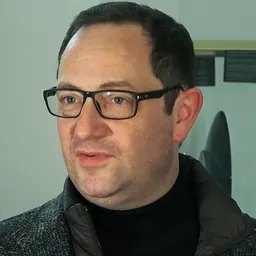
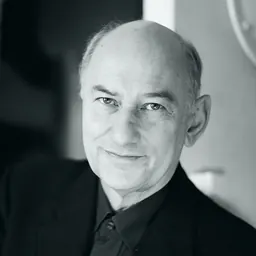
Related people
Same field, nearest in time




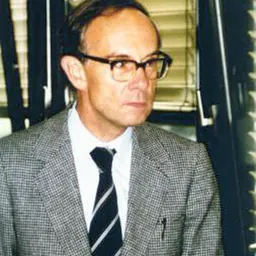
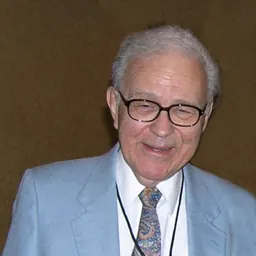
Contemporaries
People whose lives overlapped Shinji Hosoe's


Frequently asked questions
Who is Shinji Hosoe?
Video game composer and musician
When was Shinji Hosoe born?
Shinji Hosoe was born on 28 February 1967 in Gero.
What is Shinji Hosoe's occupation?
Shinji Hosoe is a composer.
What nationality is Shinji Hosoe?
Shinji Hosoe is Japanese.
Sources & further reading
Cite this page
APA: Biography.guide. (2026). Shinji Hosoe. https://biography.guide/shinji-hosoe/
MLA: "Shinji Hosoe." Biography.guide, https://biography.guide/shinji-hosoe/.
Chicago: "Shinji Hosoe." Biography.guide. https://biography.guide/shinji-hosoe/.
Data last updated: 2026-09-20 · Spot an error? Report a correction.
Page generated 2026-09-27 05:16 UTC