
About Yury Verlinsky
Lived 1943 – 2009 (aged 65). Yury Verlinsky was a Russian geneticist and embryologist, known for Prenatal diagnosis.
Yury Verlinsky (1 September 1943 – 16 July 2009) was a Russian-American medical researcher specializing in embryonic and cellular genetics (genetic cytology). He is best known as a pioneer in prenatal diagnosis for detecting genetic and chromosomal disorders six weeks earlier than standard amniocentesis. The founding father of pre-implantation genetic diagnosis (PGD) and embryo analysis prior to in-vitro fertilization (IVF), Verlinsky used his polar body biopsy technique to detect potential birth defects in offspring. It is now accepted worldwide as the standard for the most efficient and effective means of analyzing the chromosomal status of an embryo.
With the help of his research, PGD can be used to prevent more than 200 different genetic disorders and diseases.
Early years and education Verlinsky was born in Ishim, Tyumen Oblast, Siberia, in the former Soviet Union, one of two sons of Simon Verlinsky and Dora Verlinskaya. His mother was an accountant and his father was a disabled veteran of the Soviet Army. Yury received his Ph.D. in embryology and cytogenetics from Kharkiv University, in the Ukrainian SSR, in 1973. While there, he met his wife Luba, a biologist. They married in 1967.
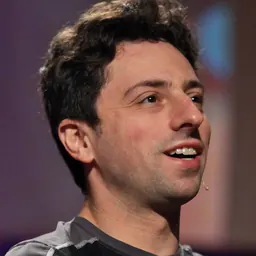
Emigrating to the United States After graduating with his Ph.D., he submitted research proposals which were all rejected by government committees. He chose to emigrate to the United States when the Soviet government continued to refuse his requests to fund further research into PGD, a field in which he was an early practitioner. This became difficult as he was forced to pay back the cost of his education before receiving his exit visa ("diploma tax"), which required that he borrow money from friends. He eventually left for the United States with his wife, their nine-year-old son, and just "two suitcases." He arrived in 1979, one of the many thousands of other Soviet Jews that were allowed to leave that same year, including a young Sergey Brin, who later co-founded Google, Inc.
Genetics researcher Soon after arriving, he was offered a research position with the Michael Reese Hospital in Chicago, Illinois, where he ran the cytogenetics laboratory. When asked how he so easily obtained the position, he replied "of my previous experience and because a chromosome in any language is a chromosome and a microscope is a microscope." He took time outside of his job to work at identifying chromosome polymorphisms in Down syndrome families and also to analyze chorionic villus sampling. His goal was to develop a modified technique for performing chromosomal analysis.
His diagnostic techniques have become widely accepted and are routinely used by prospective parents, especially couples with a history of genetic abnormalities or where the woman is over the age of 35, when the risk of genetically related disorders is higher. As the tests could be performed up to six weeks earlier than amniocentesis, which uses a technique called chorionic villus sampling, the prospective parents were often more comfortable considering an abortion if any major abnormalities or risk factors were discovered. In addition, by allowing parents to select an embryo without known genetic disorders, they also had the potential of saving the lives of siblings that already had similar disorders and diseases.
Establishing a clinic In 1990, he established the private Reproductive Genetics Institute in Chicago to provide prenatal testing. According to his colleague, Dr. Norman Ginsberg, he was "a hard-working scientist. . . . the first in the lab in the morning and the last out at night." Profits from his work were plowed back into research. "Rather than just make himself rich, he used this money to do a whole range of testing," Ginsberg added. The case was declared a "medical milestone" as the first use of genetic testing to prevent an early onset form of Alzheimer's disease.
Significance of research As a result of Verlinsky's pre-implantation genetic diagnosis (PGD) methods, experts today are able to more easily test for over 200 different genetic disorders and diseases, including hemophilia, sickle cell anemia, Fanconi anemia, Alzheimer's disease, cystic fibrosis, thalassemia, Down syndrome, Tay–Sachs disease, muscular dystrophy, and Huntington's disease. Experts have credited him with "some of the firsts" in applying PGD, such as tissue typing to determine genetic defect risks and to allow the use of stem cells from newborns to treat other diseased family members. Dr. Andrew La Barbera, the scientific director for the American Society for Reproductive Medicine, said that Verlinsky's research had a "far-reaching impact on reproductive medicine" and he was a "giant in the field" by enabling couples to have children free of genetic diseases and making his methods "available to clinics around the world." "If it wasn't for Yury," said Dr. Jamie Grifo, program director at the New York University Fertility Center, "who knows how far this field would have come?"
Death Verlinsky died in Chicago of colon cancer on July 16, 2009, at the age of 65. He is survived by his wife, Luba, a son, Oleg, his brother, Vitaly, and three grandchildren.
Don’t just read it —
keep it.
Full-length biographies made to live with: read them, listen on the way to work, watch them tonight.
- E-book
- Audio
- Video
Instant download · yours to keep · every purchase keeps this site free
Important facts
People in Yury Verlinsky's life
Named in this biography and alive at the same time
Related people
Same field, nearest in time


Contemporaries
People whose lives overlapped Yury Verlinsky's


Frequently asked questions
Who was Yury Verlinsky?
Russian-American geneticist and embryologist (1943–2009)
When was Yury Verlinsky born?
Yury Verlinsky was born on 1 September 1943 in Ishim.
When did Yury Verlinsky die?
Yury Verlinsky died on 16 July 2009 in Chicago.
What was Yury Verlinsky's occupation?
Yury Verlinsky was a geneticist and embryologist.
What was Yury Verlinsky known for?
Yury Verlinsky was known for Prenatal diagnosis.
What nationality was Yury Verlinsky?
Yury Verlinsky was Russian.
Sources & further reading
Cite this page
APA: Biography.guide. (2026). Yury Verlinsky. https://biography.guide/yury-verlinsky/
MLA: "Yury Verlinsky." Biography.guide, https://biography.guide/yury-verlinsky/.
Chicago: "Yury Verlinsky." Biography.guide. https://biography.guide/yury-verlinsky/.
Data last updated: 2026-09-20 · Spot an error? Report a correction.
Page generated 2026-09-27 05:01 UTC