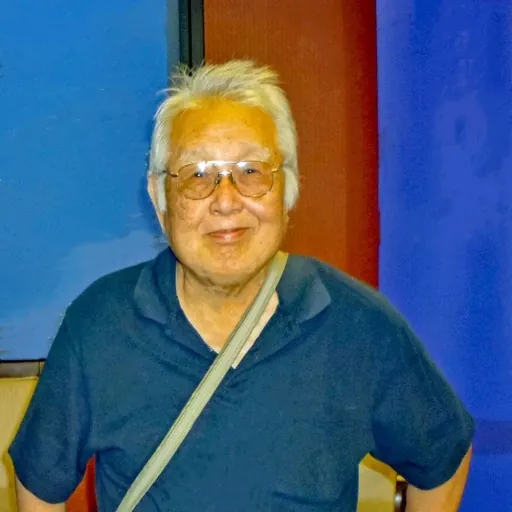
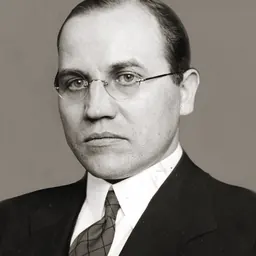
Young Suh Kim
Korean physicist, academic, author and researcher
About Young Suh Kim
Born 1935. Young Suh Kim is a physicist, scientist and university teacher.
Young Suh Kim (born 1935) is a South Korean physicist, academic, author and researcher. He is a Professor Emeritus at the University of Maryland.
Kim focused his research on quantum mechanics in Einstein's relativistic world, particle theory, and optical sciences. He has authored several books, including Theory and Applications of the Poincaré Group, Phase Space Picture of Quantum Mechanics, Physics of the Lorentz Group, New Perspectives on Einstein's E = mc2, and Mathematical Devices for Optical Sciences.
Kim is an honored member of the International Association of Top Professionals (IAOTP).
Early life and education Kim was born in 1935 in Korea, Empire of Japan. His family moved to Seoul (South Korea) in 1946. After high school graduation in Seoul, he moved to the United States in 1954 to become a freshman at the Carnegie Institute of Technology in Pittsburgh. There, Kim received his bachelor's degree in 1958. He then went to Princeton University for graduate study in physics. There, Kim received his PhD degree in 1961. He spent one additional year at Princeton as a postdoctoral fellow.
Career Following his post-doctoral fellowship, Kim was appointed as an assistant professor of physics at the University of Maryland in 1962. At the time, he was the youngest person to become assistant professor at the university. Kim was promoted to Associate Professor and to Full Professor of Physics later. In 2007, he became an Emeritus Professor of Physics at the University of Maryland. Kim was not the first one to recognize the existence of this problem. Paul Dirac made his life-long efforts to construct the quantum mechanics of bound states (like the hydrogen atom) in Einstein's relativistic world. On this problem, Dirac published four important papers in 1927, 1945, 1949, and 1963. Kim integrated the first three of those four papers using the mathematical formalism provided by Eugene Wigner. In so doing, Kim provided the resolution to the Bohr-Einstein issue of the moving hydrogen atom, or quantum mechanics of moving bound states in Einstein's relativistic world.
Harmonic Oscillator Wave Functions for moving Bound States In his study regarding quantum mechanics, Kim discussed the role of harmonic oscillators in dealing with bound states. He, together with Marilyn E. Noz, studied Murray Gell-Mann’s quark model, and highlighted that the oscillator wave function can explain the mass spectrum of similar particles observed in high-energy experiments. While following Paul Dirac's papers, he constructed the wave function for the moving bound state. This wave function is known as the "Lorentz-covariant harmonic oscillator wave function" or "Covariant oscillator wave function."
In 1977, Kim and Noz published a paper in the Physical Review discussing that the covariant oscillator wave function can synthesize the quarks and the partons. In 1989, Kim reinforced this result in his paper in Physical Review Letters. Kim also suggested the possibility to address the Bohr-Einstein issue of moving hydrogen atom with the synthesis of quarks and partons. His studies suggested that this set can also serve as the closed set of commutators for the ten generators for the Lorentz group applicable to three space coordinates and two time variables if it is possible to contract the second time variables to convert them into four translation generators along the three space coordinates and along the first time variable.
Lorentz Group for Optical Sciences Kim and his co-workers made heavy investments in the Lorentz group. They noted that Dirac's two-oscillator system is directly applicable to two-photons systems in quantum optics. The two-photon coherent state or the squeezed state of light is a representation of the Lorentz group and shares the same set of mathematical formulas with the Lorentz-covariant harmonic oscillators for moving bound states. Kim and his co-workers also explained how the Lorentz group is applicable to those instruments, including the laser cavities, multilayers, and polarization optics. On this subject, they published a book entitled Mathematical for Optical Sciences in 2019.
Awards and honors 2020 - Academic Excellence Award, Top 100 Registry 2021 - Recognized among Top Scientists, Fortune Magazine 2021 - Lifetime Achievement Award, Marquis Who’s Who 2021 - Nominated in the timeline of Professional Milestones, Marquis Who's Who 2021 - Nominee, Who's Who Distinguished Leaders
Don’t just read it —
keep it.
Full-length biographies made to live with: read them, listen on the way to work, watch them tonight.
- E-book
- Audio
- Video
Instant download · yours to keep · every purchase keeps this site free
Important facts
People in Young Suh Kim's life
Named in this biography and alive at the same time

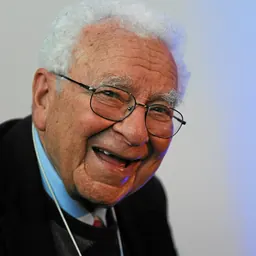
Related people
Same field, nearest in time

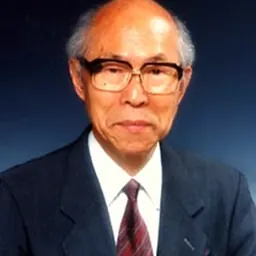



Contemporaries
People whose lives overlapped Young Suh Kim's




Frequently asked questions
Who is Young Suh Kim?
Korean physicist, academic, author and researcher
When was Young Suh Kim born?
Young Suh Kim was born in 1935.
What is Young Suh Kim's occupation?
Young Suh Kim is a physicist, scientist and university teacher.
Sources & further reading
Cite this page
APA: Biography.guide. (2026). Young Suh Kim. https://biography.guide/young-suh-kim/
MLA: "Young Suh Kim." Biography.guide, https://biography.guide/young-suh-kim/.
Chicago: "Young Suh Kim." Biography.guide. https://biography.guide/young-suh-kim/.
Data last updated: 2026-09-23 · Spot an error? Report a correction.
Portrait: Wikimedia Commons · author & licence
Page generated 2026-09-27 05:07 UTC