
About Yoo Ju-hyun
Lived 1921 – 1982 (aged 60). Yoo Ju-hyun was a South Korean novelist.
Yoo Juhyun (; 1921–1982) was a South Korean novelist. He was a prolific writer, having written 26 full-length novels and over 100 novellas and short stories. His early works were mostly devoted to social issues, but the majority of his works since the 1960s are historical novels. Unlike conventional historical novels that focus on entertainment, his novels feature profound historical perspectives. His representative work Joseonchongdokbu (조선총독부 Joseon Government-General) (1964–1967) has received critical attention for its realistic depiction of the Korean people’s sufferings during the 36 years of Japanese colonial rule.
Biography Yoo was born in 1921. At the age of 15, he moved to Seoul all by himself without any specific goals other than making money. There, he came across his sixth-grade homeroom teacher, who helped him dream of becoming a writer. The teacher landed him a job at a business run by one of his relatives, praising Yoo’s writing capability. In particular, Yoo’s teacher encouraged him by saying that he would someday become a literary great like Yi Kwang-su, which Yoo kept in his heart. In February 1939, he moved to Tokyo, Japan, where he attended the Liberal Arts Department of Waseda University.
After returning from Japan, he began writing novels while working as a schoolteacher. He made his formal literary debut on October 1, 1948, by publishing “Beonyoui geori” (번요의 거리 Bustling Streets). In 1950, as soon as he published “Gunsang” (군상 The Crowd), the Korean War broke out. When South Korean forces recaptured Seoul, Yoo became an editor for the Education and Information Division of the Ministry of National Defense. Afterward, he relocated to Daegu and became a member of the Republic of Korea Air Force Military Writers Corps, where he began his literary activities in earnest.
For two decades, from 1952 to 1973, he served as an editor for the Sintaeyang magazine. In 1954, he returned to his family in Seoul. Here, he produced a number of works, including “Taeyangui yusan” (태양의 유산 The Heritage of the Sun) (1958) and received an Asian Liberation Literary Award (아세아자유문학상) (1958). He continued to pursue his literary ambition actively and was awarded numerous prizes, including a Korea Book Award (1968) and a Korea Culture and Art Award (1976). In 1970, he became a member of the Central Committee for the Korean Chapter of the International P.E.N. Club and a board member of the Korean Writers’ Association. In 1974, he was appointed as the first chairman of the Korean Novelists’ Association. Later he suffered from spinal fractures. On May 26, 1982, he died due to osteomyelitis and other complications.
Writings Early works Yoo Juhyun published his first novel in the late 1940s. Until the 1950s, his novelistic themes revolved around the gap between “I” and society. His early works are mostly short stories. Their settings are either the ruined reality of the postwar world or the absurd and insecure society. In particular, in his autobiographical debut novel “Beonyoui geori,” the main character Hyeong-sik moonlights as a book seller to earn his tuition fees and living expenses. At one point in the novel, a female college student, whom Hyeong-sik has feelings for, gives alms to the poor, in fact, to avoid getting bad luck. This story is the author’s satire of hollow humans seeking their own good fortune. In this respect, Yoo’s novels from this period focus, as a crucial theme, on the imbalance of human existence caused by social absurdity and insecurity.
Middle works The second term of his literary career is thought to have begun with the publication of “Jangssi Ilga” (장씨 일가 The Jang Family). In this short story, the author fiercely criticizes the corrupt and depraved society through a father, a member of the National Assembly during the later days of the rule of the Liberation Party, and his son, a colonel in the reserve. an epic novel set during the Japanese colonial period, which provides an accurate description of history while shedding light on the history of Korea in a three-dimensional way through the appearance of more than 2,000 characters. This epic novel realistically depicts the tyranny and exploitation of the Japanese colonial rule, by focusing on the Residency-General and Government-General, two organizations set up by the Japanese for colonial aggression. Furthermore, the work reveals the fierce struggles of Korean independence fighters and the horrible everyday reality of Koreans. A representative work of Yoo Juhyun, Joseonchongdokbu has received positive critical reviews.
Later works After the 1970s, the literary world of Yoo Juhyun undergoes transformation to contemplate the destiny of “I” from a truth-seeker’s perspective. The focus of his later works shifts from the attention to the external, represented by social and historical consciousness, to the internal world of an individual, the fantastic and the mysterious, death and afterlife. 柳周鉉, 現代韓国文学選集 : 第4卷. 短篇小説, 冬樹社, 1974. (공편) 《장미부인》, 민음사, 1967 / 薔薇夫人, 上海译文出版社, 1991 Ju-hyŏn Yu, Postwar Korean short stories, Seoul National University Press & The Center for Korean Studies at the University of Hawaii, 1983. (전후한국단편소설선) (공편)
Awards Asian Liberation Literary Award (아시아자유문학상) (1958) Korea Book Award (1968) Korea Culture and Art Award (1976)
Don’t just read it —
keep it.
Full-length biographies made to live with: read them, listen on the way to work, watch them tonight.
- E-book
- Audio
- Video
Instant download · yours to keep · every purchase keeps this site free
Important facts
People in Yoo Ju-hyun's life
Named in this biography and alive at the same time
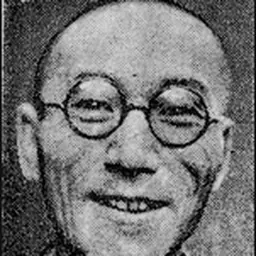
Related people
Same field, nearest in time
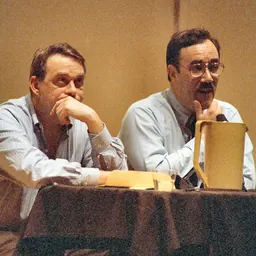
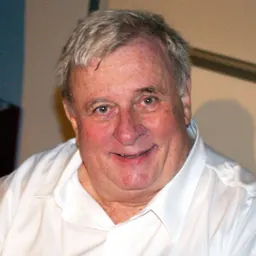

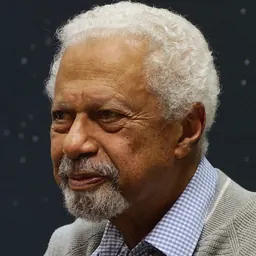

Contemporaries
People whose lives overlapped Yoo Ju-hyun's




Frequently asked questions
Who was Yoo Ju-hyun?
South Korean novelist
When was Yoo Ju-hyun born?
Yoo Ju-hyun was born on 3 June 1921.
When did Yoo Ju-hyun die?
Yoo Ju-hyun died on 26 May 1982.
What was Yoo Ju-hyun's occupation?
Yoo Ju-hyun was a novelist.
What nationality was Yoo Ju-hyun?
Yoo Ju-hyun was South Korean.
Sources & further reading
Cite this page
APA: Biography.guide. (2026). Yoo Ju-hyun. https://biography.guide/yoo-ju-hyun/
MLA: "Yoo Ju-hyun." Biography.guide, https://biography.guide/yoo-ju-hyun/.
Chicago: "Yoo Ju-hyun." Biography.guide. https://biography.guide/yoo-ju-hyun/.
Data last updated: 2026-09-20 · Spot an error? Report a correction.
Page generated 2026-09-27 05:06 UTC